
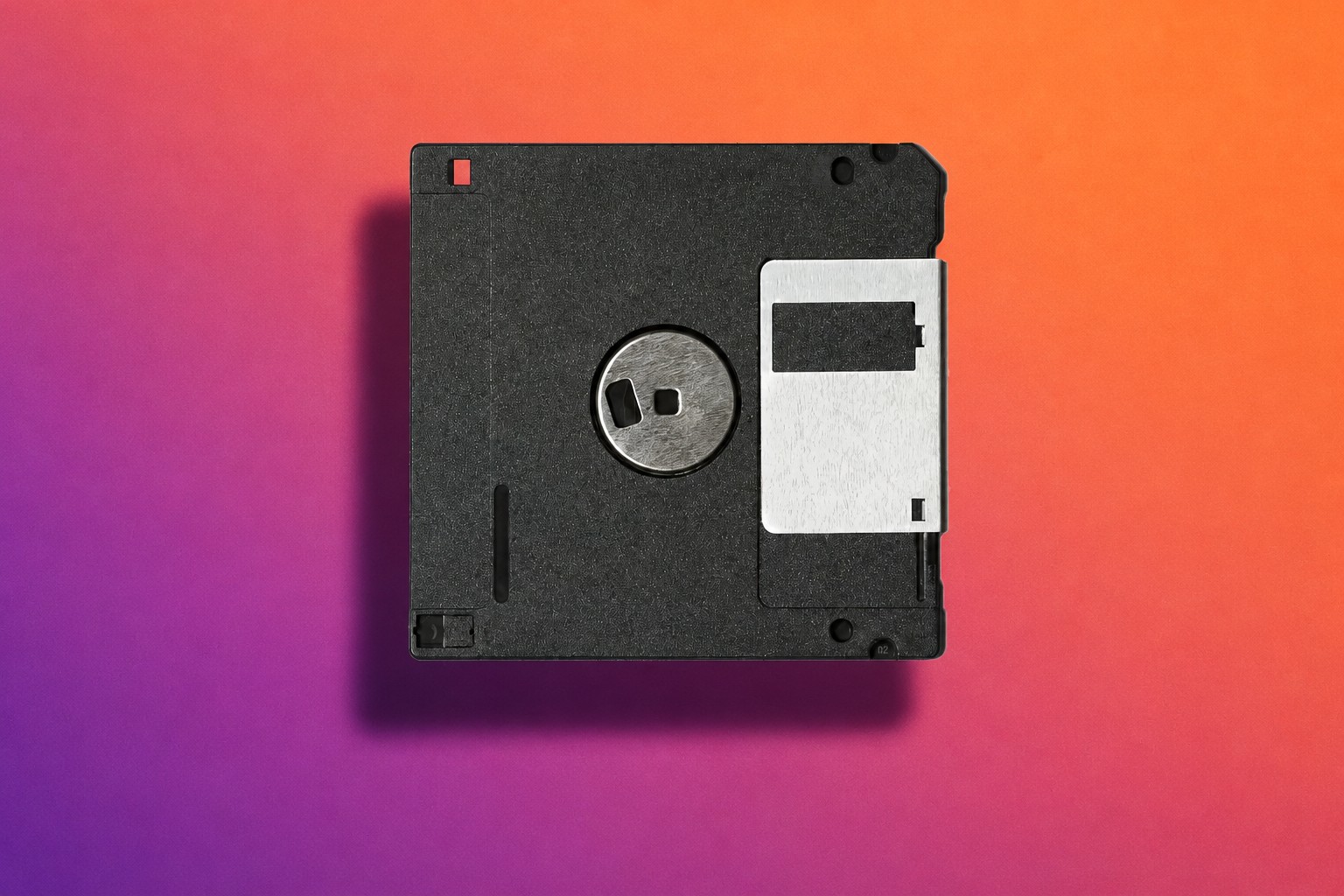
A model with 367,000 parameters takes up just 380 KB and fits on a floppy disk. It runs on MS-DOS computers and needs 540 KB of memory to launch. The model was trained on 3,500 facts, so its answers are often wrong: it can correctly identify whales as mammals and Alexander Graham Bell as the inventor of the telephone, but claims that 17 × 23 = 96. The project shows how small a language model can be, even if its capabilities remain limited.
A 380 KB AI model runs on an MS-DOS computer
A model for an old computer
The project was covered by Hackaday. The model was written in Turbo C 2.0 and runs on MS-DOS, Microsoft’s operating system, widely used on personal computers in the 1980s and early 1990s. According to the project’s creator, Anthropic Fable 5.2 was used for development and Opus 5.5 for training. In other words, a compact model was created with the help of larger models.
The model has 367,000 parameters — far fewer than the several billion typically found even in “lightweight” models. Its weights take up 380 KB and are stored in an 8-bit format. It requires 540 KB of memory to run.
Correct facts and an invented king of France
The model has a retro interface. In one example, it correctly answers that whales are mammals and that Alexander Graham Bell invented the telephone. But when asked to multiply 17 by 23, it gives the answer 96.
Asked “Who is the king of France?”, it answered “Antarse Newton” with 100% confidence. The authors of the piece say they do not know whether anyone by that name ever existed.
Dataist’s take: the project shows that a language model can fit into the space available on a floppy disk and run on an MS-DOS-era computer. But a small size and low memory requirements do not guarantee reliable answers: the model was trained on just 3,500 facts and often makes things up.
Daily AI news
Every day we pick what actually matters in AI and explain it plainly — no hype, no filler. Subscribe if you want to follow where the industry is going.
Only what matters — every day
Follow on X