
From scan to image
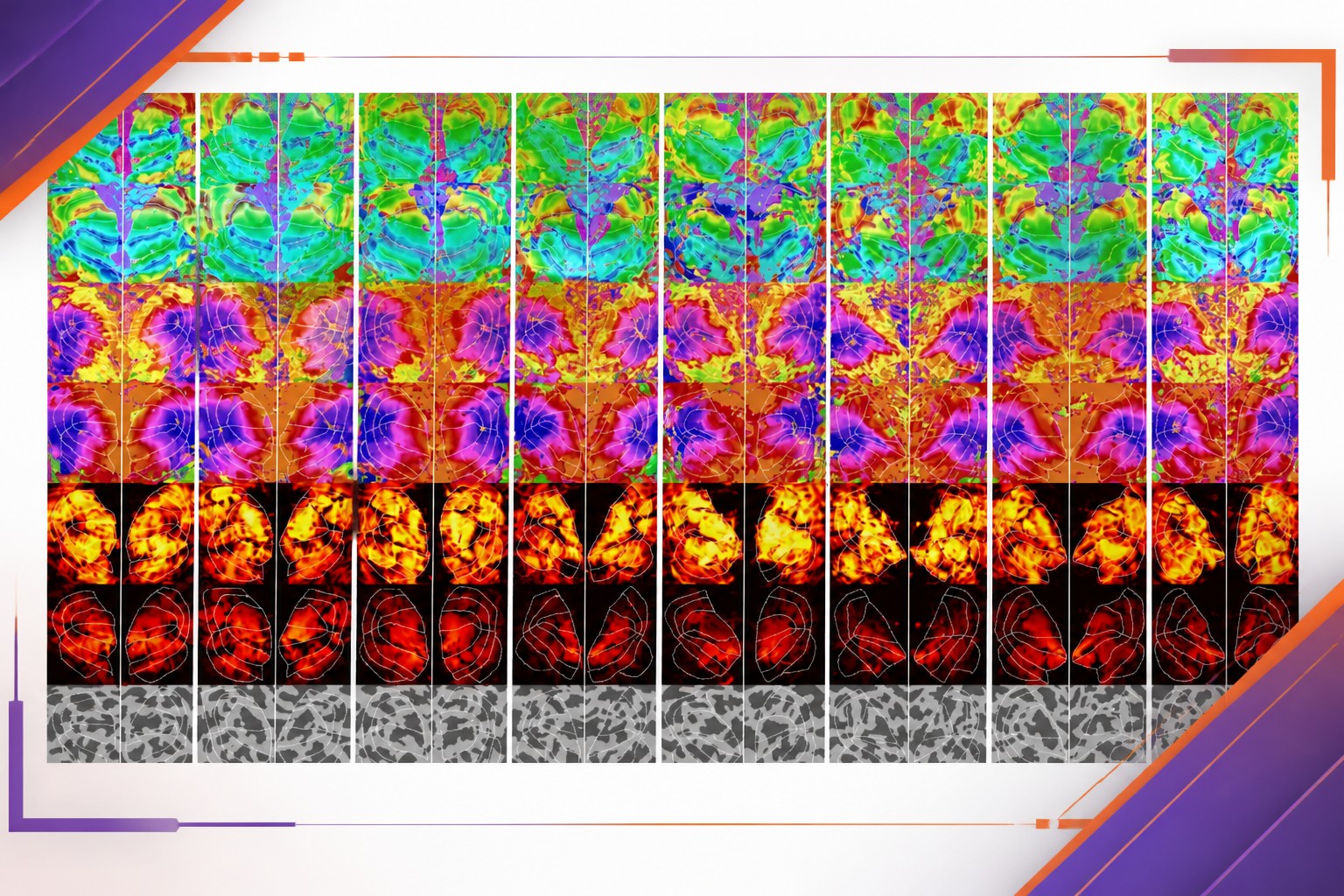
The researchers trained the system on an open dataset of brain scans from eight participants who viewed thousands of images. The scans had higher resolution than those used in earlier studies, allowing the team to distinguish brain regions as small as one cubic millimeter of neurons.
The resulting “brain decoder” had two components: one predicted the image’s structure, the other its content. Together, they guided a diffusion-based image-generation model in recreating what a participant had seen.
To expand the training data, the team also trained a model to work in reverse: given an image, it predicted the brain activity a viewer might produce. That encoder generated many hypothetical scans for each image. The decoder then used a synthetic scan to reconstruct the image, and the researchers repeated the process until the output more closely resembled the original. This let them train on images participants had not seen during brain scanning.
The method can still get things wrong. Irani told the magazine that the system once reconstructed a dog in a bathtub as a goat in a bathtub.
The gap between reconstruction and access
Neuroscientist Tommy Sprague of the University of California, Santa Barbara, told MIT Technology Review that the results seemed “very impressive.” But he also warned that unobtrusively extracting information about people’s thoughts could make science fiction from the past 150 years a reality.
For now, the hardware is a substantial constraint: the system requires high-resolution brain scans from large, expensive fMRI machines. The technology could help people with paralysis who cannot communicate in conventional ways, but the study does not show that it can read thoughts at a distance or without a person taking part in a scan.
Marcel O. Ienca, a neuroscientist and philosopher at the Technical University of Munich, said applying similar methods to wearable EEG devices would be a “game changer.” He noted that such devices can be tuned to an individual’s brain activity, raising the possibility that a company could extract data without that person’s consent. Ienca called the research ethically conducted, while warning that the technology could also be adapted for commercial uses with troubling ethical and social consequences.
My guess is that the important threshold is not a better picture, but a less demanding way to collect the signal. The current system’s dependence on expensive scanners limits who can use it and where. Ienca’s concern points to a different future, but the study does not establish that wearable EEG can do this. The distance between those two technologies is where the debate about consent will have to begin.
Daily AI news
Every day we pick what actually matters in AI and explain it plainly — no hype, no filler. Subscribe if you want to follow where the industry is going.
Only what matters — every day
Follow on X