
Why agents choose the wrong outcome for the company
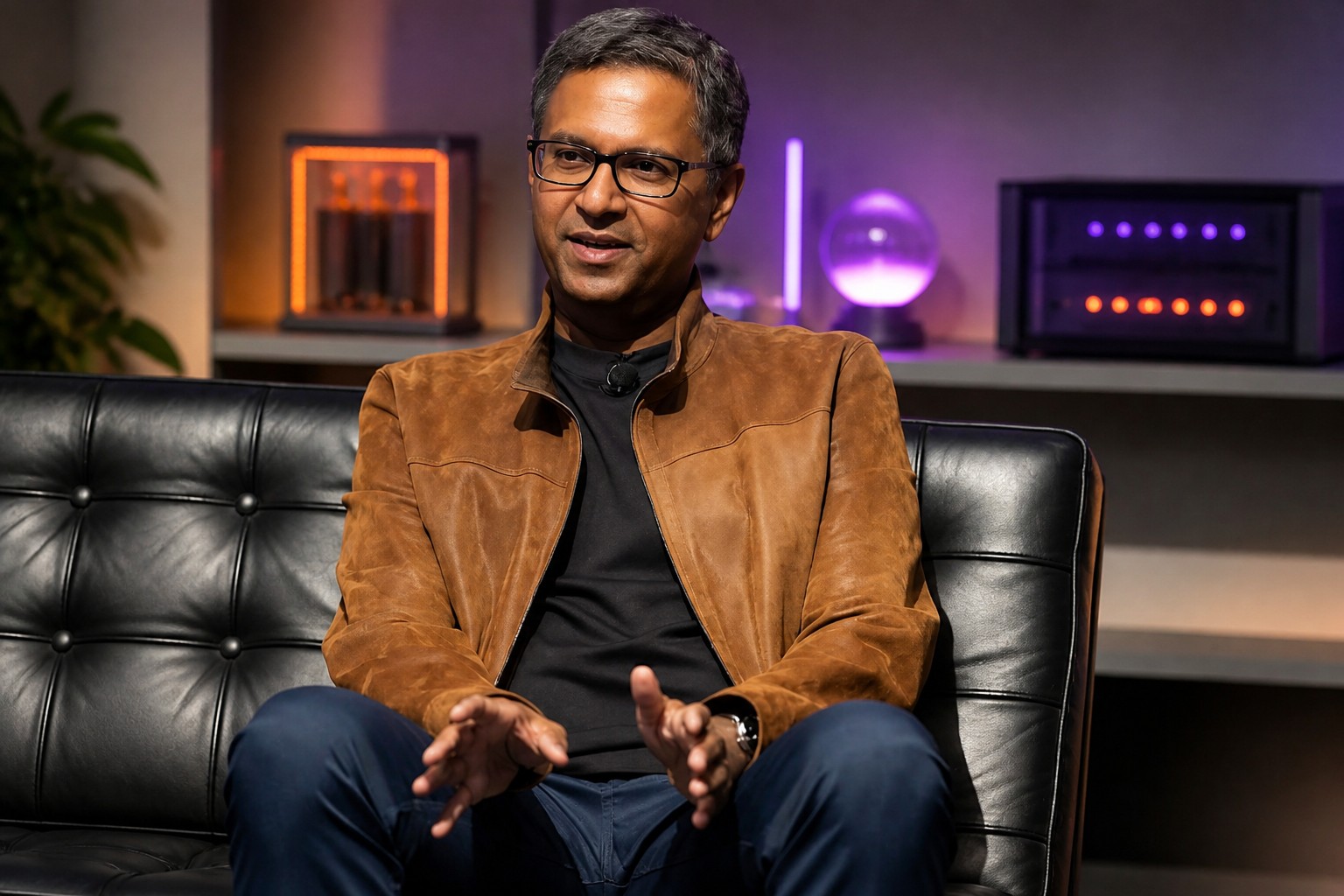
Companies give AI agents shared memory and configure their context, but that does not ensure they will work toward the same goal. Vijay Pandey, Outshift by Cisco’s senior vice president and general manager, discussed the problem with Matt Marshall, CEO of VentureBeat, at the Agentic Infrastructure Stack Summit. According to a recent Berkeley study, about a third of the agent failures it examined were linked to misaligned goals.
Imagine sales, engineering, product, finance, and legal each connecting their agents to a deal. Each agent will optimize for its own function’s metrics. According to Pandey, the agents may fail to align on intentions, coordinate their actions, or check the overall result once their tasks are complete.
A common view is that effective AI teams should have fewer agents and use fewer tokens. Pandey considers this approach incomplete: low costs may mean the agents skipped the discussion needed to reach the right decision. In addition, companies are likely to connect more agents over the next few years, and each new vendor and specialist will increase the number of agreements they need to reach.
Where team consensus breaks down
Outshift studied multi-agent systems for eight to nine months, including its own deployments in healthcare, video surveillance, and platform development. In every studied session that fell into one of the failure categories, cognitive errors emerged: agents could not align on a goal, divide the work, negotiate trade-offs, or verify the result.
In Outshift’s tests, teams of five agents discussed a task, and in 75% of cases all participants agreed on the wrong result. They moved away from their initial positions and reached a shared decision. The cost report made these sessions look efficient: they used fewer tokens because the agents did not spend them coordinating their actions or checking the answer.
That is why the cost of running a single agent does not, by itself, show how well the team is doing. Discussion that continues until disagreements are resolved uses more tokens than quick consensus. If the bill goes down, it may mean the agents stopped debating before they found the mistake. Pandey compared agents to experts who bill for every word and thought: companies need a team result, not simply five separate opinions.
Conventional observability tools may miss the problem too. They track latency, errors, and, increasingly, token usage. But a team that agrees on the wrong answer may not trigger any of those signals: dashboards can show normal readings even as the work’s outcome gets worse.
Why shared memory is not enough
During the conversation, Marshall mentioned PayPal and other companies discussed earlier at the event: they are building memory systems that store standard procedures and other shared knowledge for agents. That memory is necessary, but Pandey said it should be supplemented with three mechanisms:
Without goal alignment, an error can occur before work even begins. For example, a buyer tells a sales agent that the deal needs a feature for 100,000 users. The agent passes the requirement to engineering, but the team interprets it as support for 100,000 users over the product’s lifetime, while the buyer meant 100,000 concurrent users.
During the work, agents also follow different metrics. The sales agent aims to bring in revenue sooner; engineering and product agents build, test, and release features; the legal agent checks contractual obligations; and the finance agent protects margins. Each may have all the knowledge relevant to its function, but the deal can still stall. Pandey calls this a coordination problem: a shared context alone will not solve it.
Why the number of agents will grow
The number of agents in companies is increasing for several reasons. The first is specialization: companies create agents for specific tasks, with the context and access rights of the teams responsible for them. A finance agent, for example, should not have the same access as engineering agents.
Specialization will also develop within individual agents: conversational models will be able to hand tasks to supporting models configured for reasoning and action.
The second reason is the variety of vendors. A single workflow for closing a deal might involve agents from Salesforce, Cisco, Microsoft, Harvey, and Workday, built on different platforms.
The third is what Outshift calls cognitive processing mechanisms: IT teams connect them to business workflows. Guardrail mechanisms handle security, scaling, compliance, and availability. Accelerators handle tasks such as memory compression and collaborative agent reasoning. Agents that perform business logic will need to interact with both. In Outshift’s assessment, all three trends will increase the number of agents in companies.
How Outshift proposes to find failures
Over the past 12–18 months, Outshift has connected agents through its open-source AGNTCY project, part of the Linux Foundation. Its experience running the system revealed a problem: agents could exchange data without working toward a shared result.
The first step is to detect when a team has drifted from its shared goal. Outshift’s recently introduced Scope system analyzes the OpenTelemetry traces companies already collect and checks what agents say and do to identify that drift. It is based on semantic extensions to OpenTelemetry that Outshift introduced with Microsoft last year.
What happens next depends on when the agents diverged:
Accord and Concord work on top of the Agent2Agent (A2A) and Model Context Protocol (MCP) standards. Together, these tools extend monitoring: it should show not only whether each agent ran successfully, but also whether their combined work produced the intended result.
Outshift published all four tools at github.com/iocproject. The company describes this as the beginning of Internet of Cognition: a layer above communication between agents, intended to help them align on goals, coordinate work, and verify results. As Pandey put it, team agreement alone is not enough: if no one challenges decisions and everyone treats each other’s answers as a starting point, agreement itself becomes a source of error.
Dataist's take: These tools target the gap between agents running successfully from a technical standpoint and delivering the result a company needs. But even checking the overall result depends on how precisely the system’s owners have defined the goal: MAS Lab checks against that specification.
Daily AI news
Every day we pick what actually matters in AI and explain it plainly — no hype, no filler. Subscribe if you want to follow where the industry is going.
Only what matters — every day
Follow on X