
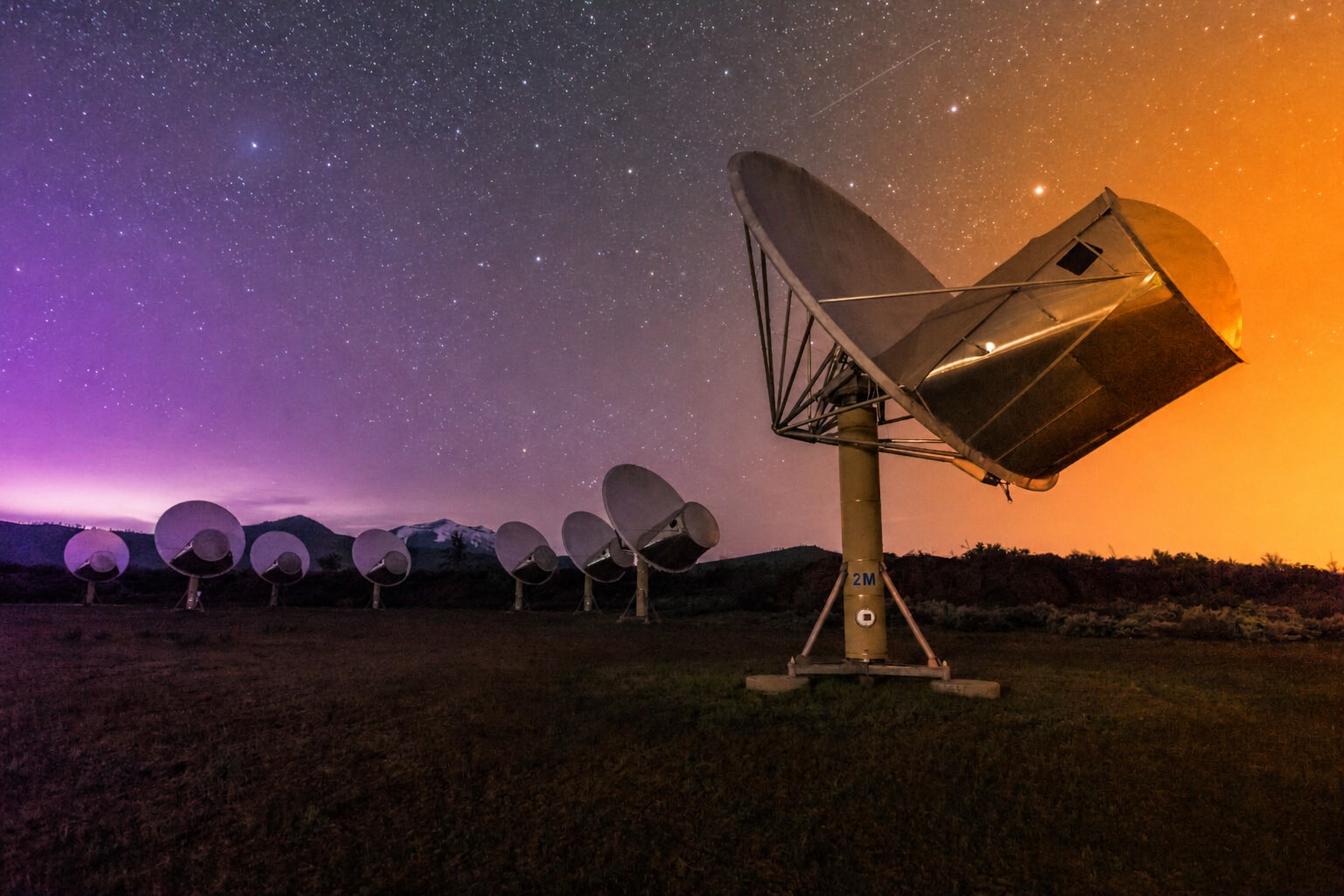
AI agents control a SETI telescope and analyze radio signals
Researchers still enter the telescope’s commands themselves. The SETI Institute and Breakthrough Listen use the system to process observation data. The team plans to test open-source software that can run locally on edge devices; in the future, this approach could be useful for sensors on the far side of the Moon.
Pulsars are rapidly rotating stellar remnants that send out regular signals. That makes them suitable for testing radio-signal detection systems. The detection of a pulsar in the Crab Nebula was the first result of its kind reported by the team.
SETI has searched for signals from extraterrestrial intelligence since its first experiment in 1960, but none have been detected so far. Whether this new approach will help find such signals remains unknown.
Dataist's take: AI is currently speeding up data processing and helping researchers test detection methods against known signal sources. But the system’s ability to operate in real time does not mean it has detected signs of extraterrestrial intelligence: no such findings have been made so far.
Daily AI news
Every day we pick what actually matters in AI and explain it plainly — no hype, no filler. Subscribe if you want to follow where the industry is going.
Only what matters — every day
Follow on X