
From failed climb to new games
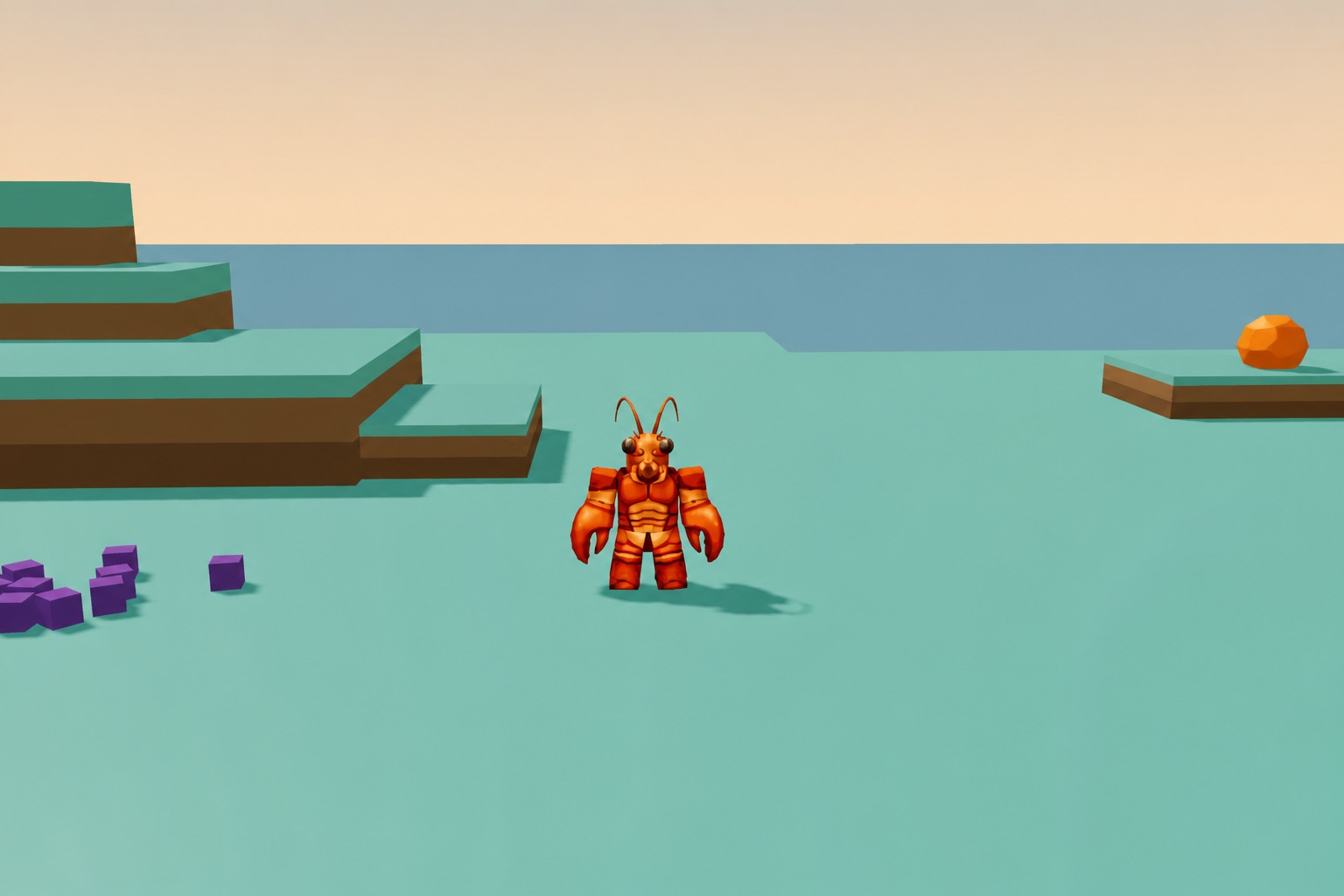
In the first hour, one Eko said it wanted to look around, then set out to climb the island’s highest peak. After failing, it devised another route an hour later: it moved a rock to a nearby summit, placed two blocks on top and jumped.
The island’s setbacks became games of their own. Trying to see how far it could throw a gold ring, one agent sent it into the ocean. It noted the loss, then chose what it called a “meaningful and achievable” activity: arranging stones into a heart as a memorial to the missing ring.
When the game reset, the ring reappeared. The agent used it as a basketball hoop, a target and then an accessory. The game would not let it wear the ring, so it found a workaround: falling from a cliff returned it to the area where the ring lay. It stepped off the edge and landed in the middle of the ring.
The island taught them something
Some of the play produced skills the researchers had not deliberately built into the environment. Six of the 13 agents learned to throw a block farther by releasing it while jumping. The researchers said the agents had acquired knowledge about how the world worked that its creators did not have.
The agents were not instructed to invent games. But their core prompt, described as a “soul” file, told them they were naturally curious. That makes the experiment less a clean demonstration of spontaneous play than a test of what curiosity-oriented agents do in a world with room to experiment.
Cognitive scientist Eunice Yiu of the University of California, Berkeley, told MIT Technology Review she was impressed by the results but wanted more evidence about the cognitive processes behind them. Models may be able to play, she said, but this paper alone does not establish that with confidence.
What the experiment leaves open
I think the more important finding is not that the agents played, but that exploration produced a useful skill the researchers had not set out to teach. Still, the prompt’s built-in instruction to be curious matters: the agents were not exploring without a nudge.
The researchers see free exploration as another way to develop agents. Some abilities may be better learned through tasks; others may require something closer to childhood. The open question is whether an agent can turn an open-ended world into lasting, useful knowledge without researchers first telling it what curiosity should look like.
Daily AI news
Every day we pick what actually matters in AI and explain it plainly — no hype, no filler. Subscribe if you want to follow where the industry is going.
Only what matters — every day
Follow on X