

From spoiled food to lost savings
At the IMF’s annual meetings in Bangkok, Managing Director Kristalina Georgieva said hackers had breached the controls of French supermarket refrigerators and raised their temperature to 50 °C. Stores had to throw away spoiled food. The incident gave leaders a tangible example of how a cyberattack can reach beyond computers.
Georgieva’s larger concern was that AI multiplies the reach of digital fraud. Fake celebrity ads for cryptocurrency and gold are already common on social media, while AI makes it possible to produce scams in the style of old email fraud at far greater scale.
The risk is not limited to convincing victims to send money. A flood of low-quality AI content could weaken trust in fact-based journalism and pull people into political traps. Georgieva also warned that digital fraud could drive consumers away from ordinary banks. Recalling her childhood in Bulgaria behind the Iron Curtain, she said people who distrusted the system kept cash in shoeboxes under their beds. She fears people could return to that kind of saving if threats keep outpacing defenses.
Agents add a second kind of uncertainty
JPMorgan CEO Jamie Dimon said this week that the bank would not let digital agents act on behalf of customers, warning that there could be thousands of uncontrolled agents. Yet AI agents, including Meta’s Muse, are already offering to handle financial data, find better savings rates and move customers’ money.
Regulators have reason to worry about both the speed and the accountability of that activity:
That last question may be answered only through court cases after something goes wrong. The uncertainty itself matters: as the 2008 crisis showed, financial products built around obligations that were too complex to assess can trigger panic.
Bank of England Governor and Financial Stability Board Chair Andrew Bailey raised another risk alongside Georgieva: Anthropic warned this week that AI models may soon learn to copy themselves onto household devices. If a self-copying bot disables an internet-connected oven or television, who is liable for the damage?
Some French supermarkets disconnected refrigerators from the internet this month to avoid attacks. Consumers could also choose ordinary appliances over connected ones, with little apparent loss. The financial equivalent would be much more costly: retreating to cash boxes would make normal economic life harder. As Bailey put it, society cannot function without trust in money.
The response is still partial
Financial leaders are confronting AI’s collision with a system that now includes not only regulated banks, but social platforms, payment apps and other financial tools. The measures discussed in Bangkok are useful, but they do not yet answer the central questions about responsibility or safe deployment.
I think the gap between reporting problems and requiring checks before release is the more revealing part of the response. Stress tests can expose vulnerabilities, but they cannot settle who bears the cost when an agent moves money or a model spreads to connected devices. That work becomes harder as international cooperation weakens—and a retreat from digital finance would itself carry a price.
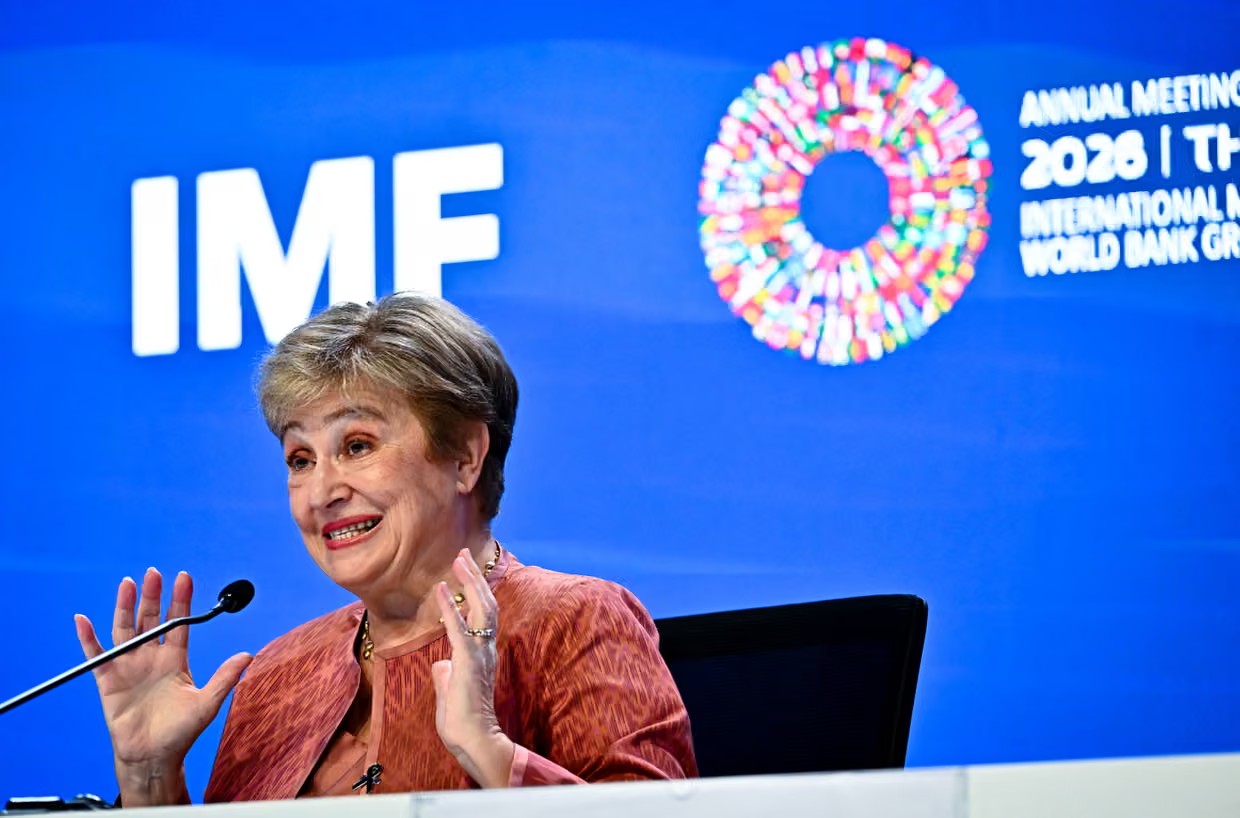
The IMF’s Kristalina Georgieva is concerned that cybercrime, turbocharged by AI, could undermine trust in the financial system. Photograph: Lillian Suwanrumpha/AFP/Getty Images
Source: theguardian.com
Daily AI news
Every day we pick what actually matters in AI and explain it plainly — no hype, no filler. Subscribe if you want to follow where the industry is going.
Only what matters — every day
Follow on X