
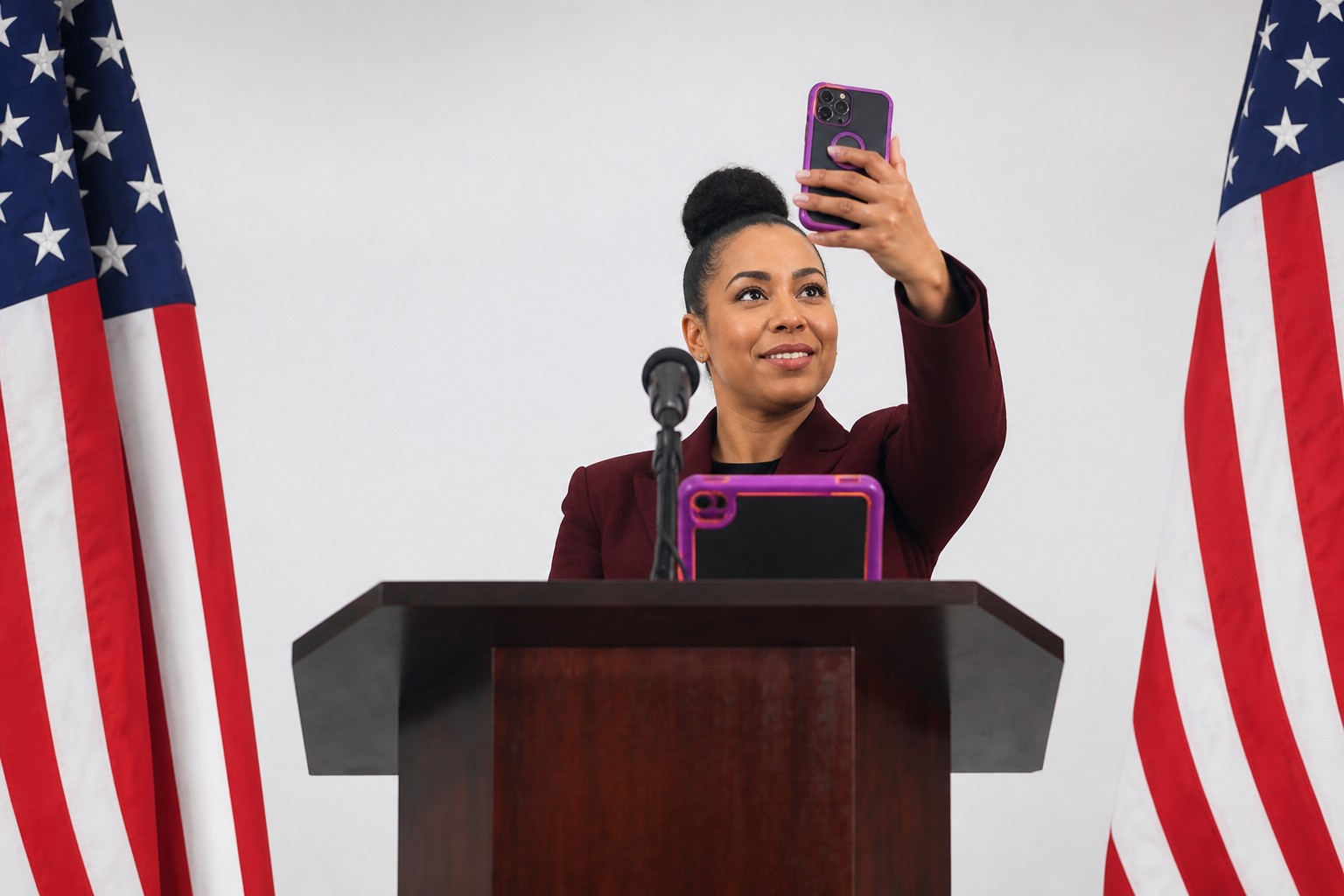
The threat is already visible
Broom called the image a sad reflection of the state of democracy and political debate. She also said it reinforced outdated stereotypes about women in leadership.
That concern is not limited to hypothetical attacks. In January, the White House’s official account on X posted an altered image of Nekima Levy Armstrong, who was arrested in connection with a protest that disrupted a church service in St. Paul, Minnesota. The original showed a Department of Homeland Security agent calmly escorting her. In the altered version, she appeared to be crying and her skin was darker. White House deputy communications director Kaelan Dorr later called it a “meme.”
In February, a parody account on X circulated fake photos of New York Mayor Zohran Mamdani and his mother with disgraced financier Jeffrey Epstein. Reuters debunked the images using Google’s SynthID tool, but other accounts had already reposted them as real, fueling conspiracy theories.
The survey by digital marketing agency Rad Campaign and Women Who Tech, an organization that supports women entrepreneurs, suggests voters are more worried about these harms than about AI’s effects on jobs or the economy. Rad Campaign founder and Women Who Tech co-founder Allison Kaptin said concern about deepfakes that sexualize women and children or influence elections was roughly three times greater than concern about jobs.
Source: theguardian.com
The gap between rules and reach
Georgia Democratic Senator Raphael Warnock said in a video posted on Facebook that deepfakes online had falsely depicted him as having health problems, surrounded by grandchildren he does not have, and with a full head of hair. The last one, he said, was funny, but still concerning.
Warnock warned that distinguishing fact from fiction would get harder as the tools improved. He is among Democratic senators modeling possible responses to election interference, including fake images and videos spread on social media. He asked how voters could know what was true if someone used AI to create a page with fabricated images and stories about candidates just hours before an election.
The policy response remains unsettled:
Georgia lawmakers discussed and proposed measures against deepfakes in 2024 and 2025, but have not passed a law.
What enforcement would mean
Broom thinks political opponents may have targeted her because they disliked her work as former president of the Georgia Municipal Association. She said she had tried to represent College Park as well as she could and would not let internet trolls shake her resolve. She is considering whether to sue under Georgia’s existing defamation law, but said lawmakers also have to weigh First Amendment protections.
I think that tension is the central policy problem here: a false image can spread before anyone has time to verify it, while rules against it can collide with free-speech protections. Broom wants consequences for attacks and hopes lawmakers can balance those protections with a person’s right not to be targeted by wholly false accusations. She called the current cases only the tip of the iceberg. The harder question is whether any legal remedy can keep pace with a lie designed to travel faster than its correction.
Daily AI news
Every day we pick what actually matters in AI and explain it plainly — no hype, no filler. Subscribe if you want to follow where the industry is going.
Only what matters — every day
Follow on X