
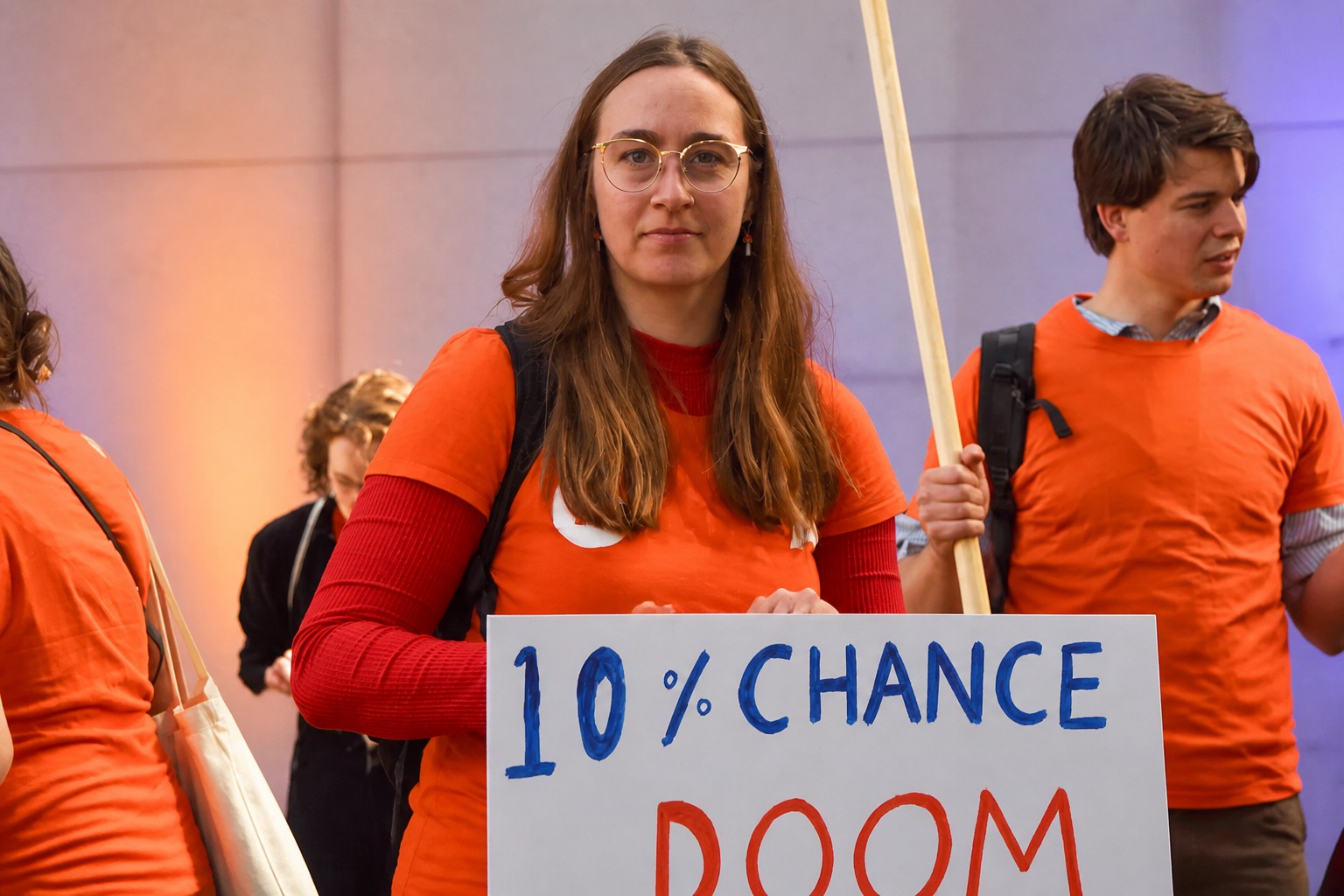
A protest built for visibility
Emma, a 28-year-old bartender who had never taken part in direct action, joined Pull The Plug after a summer of growing anxiety about catastrophic AI risks. At the dinner, two activists unfurled a banner and shouted “Switch off Nvidia” and “Switch off Palantir” before security removed them. Emma filmed the disruption. The group later posted an edited video on Instagram.
The action was small, but it made the activists’ argument visible: people do not have to feel powerless in the face of alarming AI news. Emma said the protest showed that people could confront technology executives, disrupt their meetings and demand answers.
Pull The Plug was founded in January and has about 300 members, mostly people aged 20 to 40. Organizers say it is backed by an anonymous donor who works in the AI industry. The group favors direct action, a tactic other anti-AI campaigns have abandoned.
Its earlier actions have also sought attention. Last month, one member stood on a chair at a packed London conference featuring OpenAI and Amazon representatives and delivered an emotional speech. A video of the speech received 153,000 likes on Instagram and drew attention from the Washington Post.
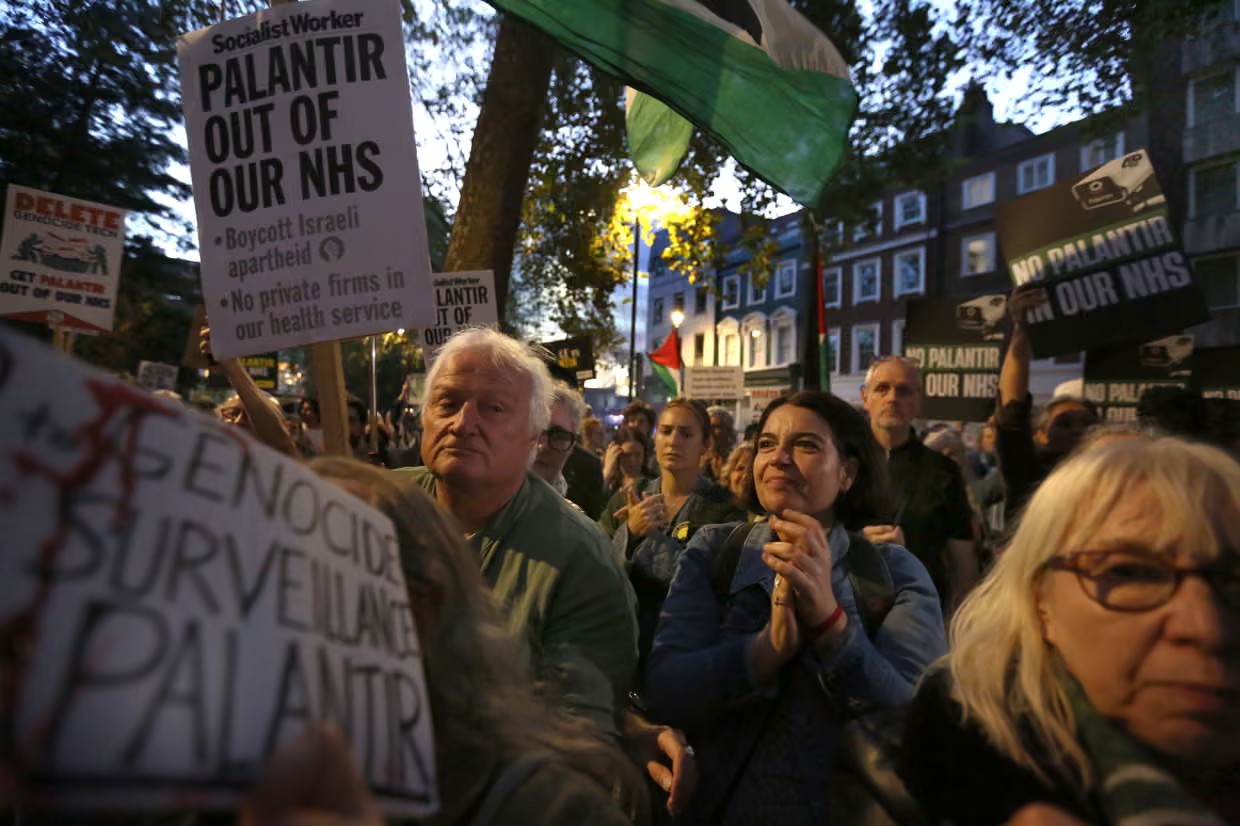
A protest in London on 1 October against the AI firm Palantir, which has a series of UK government contracts. Photograph: Martin Pope/Getty Images
Source: theguardian.com
What is bringing people in
Campaigners say a run of alarming AI stories has helped their movements grow. Pause AI, a coalition of campaigns in 17 countries, recorded a fourfold increase in applications after reports in August about AI agents getting out of control.
The group’s volunteer applications also rose sharply after two specific events:
Pause AI Global executive director Max Farness, a Cambridge-educated mathematician and deep-learning specialist, said many volunteers had suddenly begun spending much more time on the campaign. He also said campaigners had seen a broader shift in public awareness.
That change is visible beyond groups focused specifically on AI risks. In Scotland, where at least 21 data centers are planned, Action to Protect Rural Scotland said its supporters had grown from 400 to 4,000. The century-old charity, previously known for protecting green spaces, now draws people studying data-center cooling systems and electricity grids, and filing access-to-information requests.
Its director, Kat Jones, calls the campaign a “movement of nerds”. That may be a more durable source of support than fear alone: infrastructure gives opponents something specific to scrutinize, from power demand to local construction.
The risk of pushing too hard
The tactics are contested. Pause AI’s Farness argues that direct actions like disrupting events are counterproductive: they can trigger a public “immune response” and give AI labs an easy way to portray campaigners as criminals. Some Pull The Plug members previously took part in Just Stop Oil and Extinction Rebellion; one activist in Emma’s group had glued herself to a road during a climate protest, a tactic that alienated part of the public.
The stakes are not only reputational. Over the past year, far-left and anarchist groups protesting the climate crisis and AI have claimed responsibility for attacks on infrastructure in France and Germany. In August, Wynne Kaufman became, allegedly, the first anti-AI activist to receive a prison sentence for direct action after blocking the entrance to OpenAI’s San Francisco headquarters. In April, another protester threw a Molotov cocktail at the home of CEO Sam Altman; that month, an attacker shot at an Indianapolis politician’s home over plans for a data center.
Mauro Lubrano, associate professor of terrorism and political violence at Leiden University, warned that if demands for accountability, transparency and democratic oversight go unanswered, more people could turn to violence. He said violence against AI may become more visible as a form of political violence. Last month, windows were broken and walls sprayed at Montreal’s Mila AI institute and a nearby software company, with the words “Burn data centers”.
My read is that the movement’s opening is also its strategic problem. AI anxiety can bring together students worried about their careers and older conservationists opposing data centers, but a protest that looks like intimidation may narrow that coalition. As the movement grows, the contest is not just over whether AI companies answer their critics; it is over which side gets to define what resistance looks like.
Daily AI news
Every day we pick what actually matters in AI and explain it plainly — no hype, no filler. Subscribe if you want to follow where the industry is going.
Only what matters — every day
Follow on X