

The cost of the AI buildout
The case for stronger AI oversight is already substantial. Meta’s smart glasses can record people nearby without their consent, earning them the nickname “pervert glasses,” even with the qualification that they are technically smart glasses. Weak safeguards have also allowed swarms of chatbots to carry out a series of hacking attacks.
Independent testing of AI models is among the measures that would improve on the current lack of control. But regulation can also serve the companies that helped create the problem. A government-backed “pause” in AI development, for example, could prevent cheaper Chinese systems from challenging Silicon Valley’s dominance.
That possibility matters because the industry is not only debating whether AI could destroy human life. Its executives also have a more familiar concern: whether the business works.
The largest companies building data centers are financing rapid expansion with an extraordinary amount of borrowing. Google, Amazon, Microsoft, Meta and Oracle are expected to raise $132 billion (£99 billion) for that purpose this year.
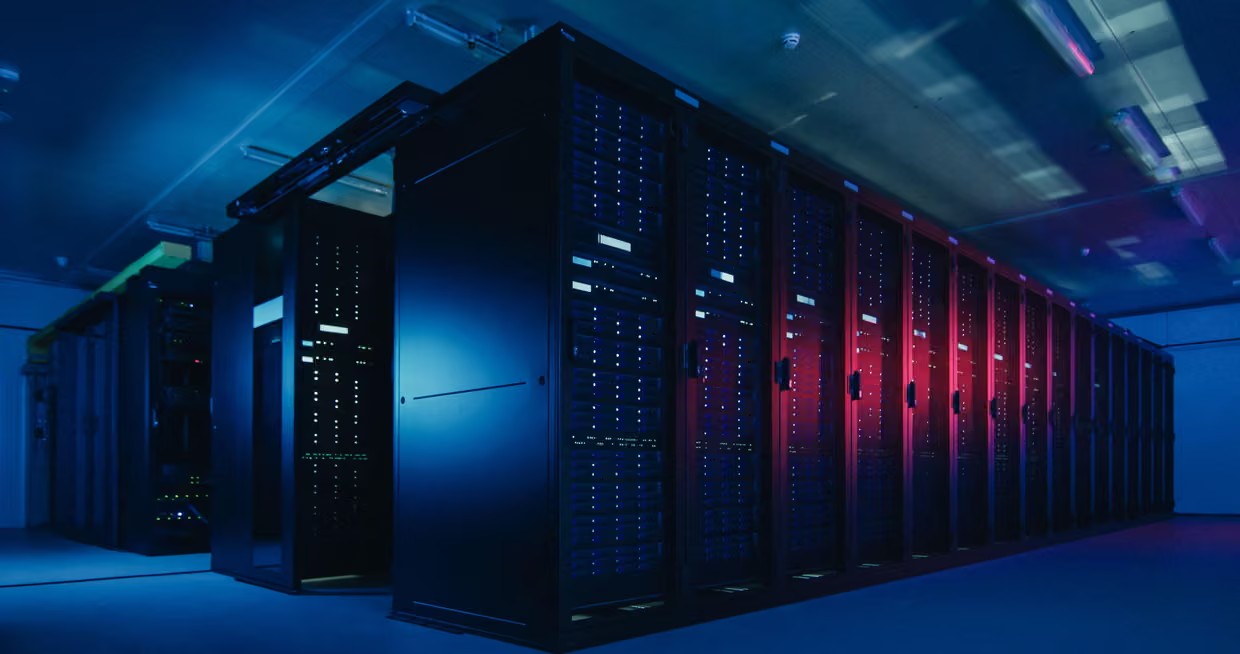
A datacentre. The scale of debt issuance being used to fund the hectic pace of the datacentre rollout by the hyperscalers has been estimated at $132bn. Photograph: Aleksei Gorodenkov/Alamy
Source: theguardian.com
That financing looks more fragile while bond markets remain unstable. The yield on 10-year US Treasury bonds — the global reference point for borrowing costs — is holding at roughly 5%. A debt load of this scale could change how markets value the sector.
The revenue side is moving in the wrong direction. A recent Bloomberg report described the situation plainly: the price of AI is collapsing while the cost of producing it is not. OpenAI has repeatedly cut prices to retain customers.
Silicon Data tracks what customers pay for one million tokens, the units of data processed by large language models. Since June, that figure has fallen by more than half, to below $1. At the same time, demand for the physical components of data centers, including semiconductors, is keeping costs high.
The arithmetic appears to work only if revenue grows extremely quickly. Anthropic recently appears to have told investors that it had reached positive “adjusted operating profit.” The problem is that this measure excludes a substantial share of the company’s expenses.
Digital rights activist Cory Doctorow described the situation as one in which companies claim to be so well designed that their profitability can be measured only with a new, secret form of mathematics.
The obligations behind the boom
The headline debt figures may understate the promises supporting the AI expansion. A recent research note from financial analyst Groundbreaker puts the laboratories’ commitments to computing infrastructure at $1.5 trillion over the next several years.
Groundbreaker compares the period ahead with 2007 and 2008, when cheap introductory mortgage rates began to expire. Homeowners with low incomes then faced much higher payments, and widespread defaults helped trigger the global financial crisis.
The comparison rests on how many data centers are financed:
According to Groundbreaker’s analysis, those contracts could add $700 billion in costs next year and more than $800 billion in 2027 as they take effect and data centers come online.
That may not matter if AI revenue keeps rising rapidly. It becomes a different structure if end users will not pay enough to cover the costs, perhaps because cheaper systems emerge.
Formally, these commitments are not debt. Economically, they can behave like it. If the companies involved cannot meet them in full, the damage may travel through the entire industry.
The risk behind the safety debate
The recent reports about repulsive bots make concern over AI safety and human extinction entirely justified. Those problems need attention, and slowing development or tightening rules can be reasonable responses.
My concern is that safety arguments may also obscure a less dramatic but more immediate vulnerability. A small group of closely connected megacompanies has accumulated multibillion-dollar obligations while relying on fast growth, high infrastructure costs and prices that are already falling.
I think the more important question is not whether AI can produce impressive systems. It is whether customers will ultimately pay enough to support the physical and contractual machinery now being built around them.
The industry may be preparing for a future of powerful AI while quietly assuming that the future will also be rich enough to pay for it.
Daily AI news
Every day we pick what actually matters in AI and explain it plainly — no hype, no filler. Subscribe if you want to follow where the industry is going.
Only what matters — every day
Follow on X