
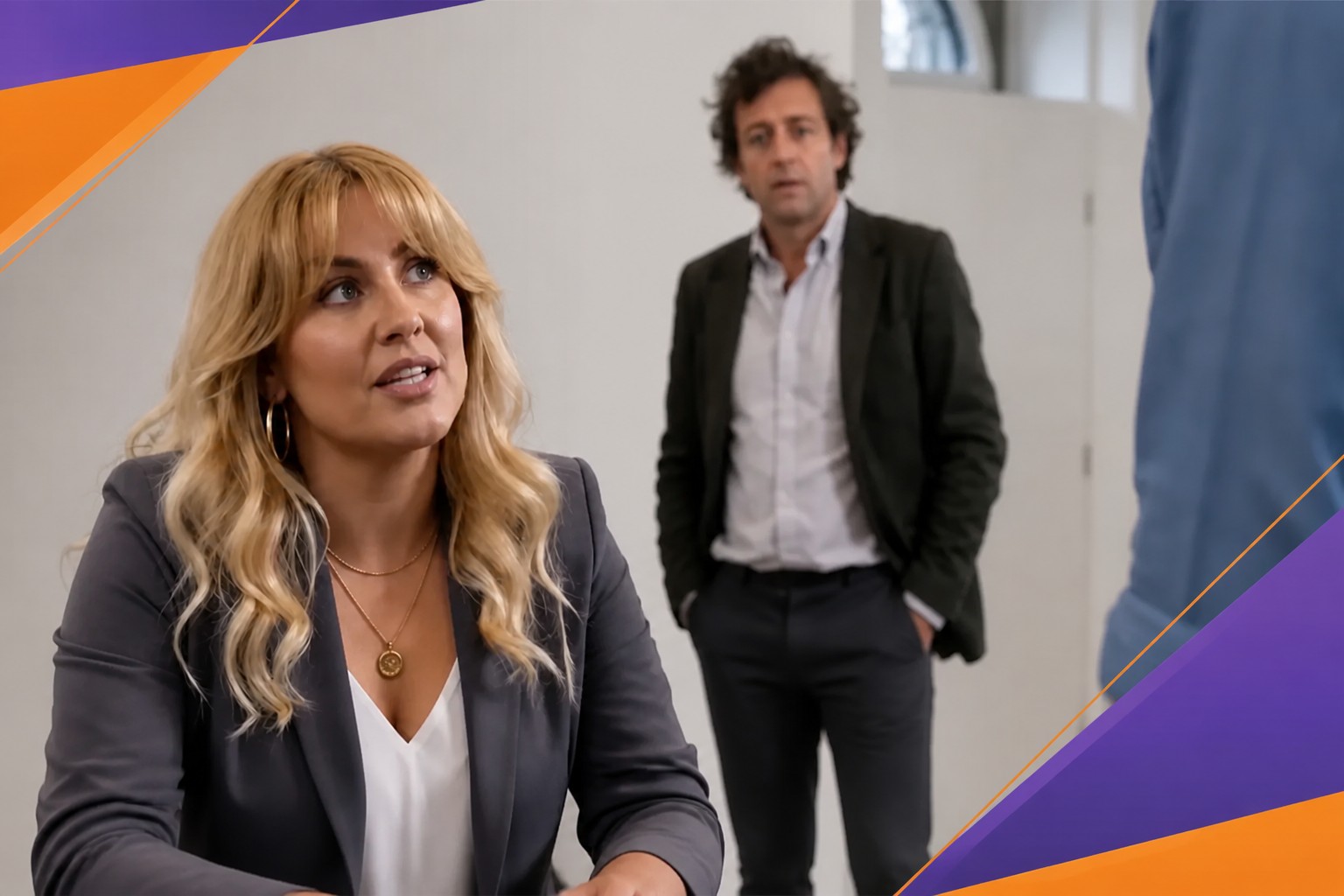
An AI-generated sitcom called No Big Deal went up on YouTube on Friday. The script is by Andrew Dickinson, a former angel investor; everything else — the characters, the locations, the scenes — was generated by a machine. An Anthropic researcher has put the chance that AI destroys humanity in its present form within the decade at better than one in ten. After one episode of this, that estimate looks cautious. Not because the show is dangerous. Because if I have to watch it again, the boredom gets there first.
I appear to have been the 376th viewer. This is not an invitation to become the 377th. Treat it as a warning: if the algorithm ever decides you deserve punishment and serves you this clip, do not open it.
No Big Deal bills itself as a cross between The Office and Dragons' Den — a workplace comedy in which a panel of angel investors sits through product pitches. The first episode includes a toilet that analyses the contents of your bowels and a sofa you can have sex on. The investors look like waxworks from a bad dream and deliver their lines with roughly the range of a satnav informing you that you have just missed your turn.
Anyone who has watched AI-generated video recently knows the failure modes. All of them are here. Characters land in a different spot every time the angle changes, because there is almost no continuity between shots. Background noise appears and vanishes as though the system is picking it at random. The performers occasionally resemble real actors closely enough that the whole thing curdles into something that feels like exploitation of their likenesses. They move with nothing alive behind the eyes. And once you know a machine made them, caring about any of them is impossible.
The most dispiriting part is that a human wrote it. Dickinson originally wanted to stage the show as a conventional television production, worked out that this would be slow and expensive, and turned to AI instead.
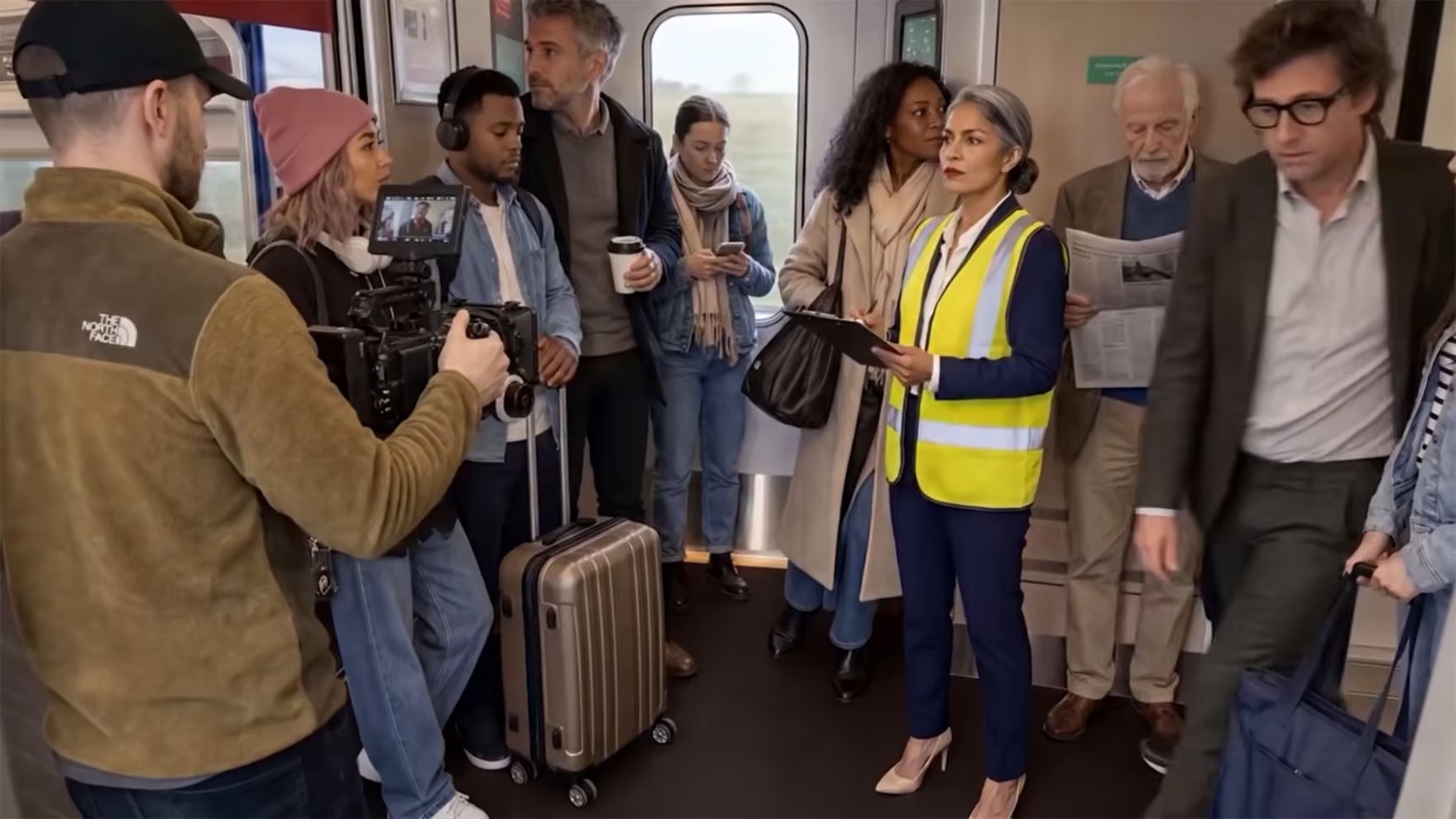
"I really cannot overstate how awful this is to look at" … Andrew Dickinson's AI sitcom No Big Deal
Source: theguardian.com
The decision is partly understandable. Getting a show on air is brutally hard. You can spend years on an idea and then watch it fade out because none of the eight producers who happen to hold the decision that month liked it. Seizing the means of production yourself, in an AI version, looks like the shortcut.
This is the case against the shortcut. No Big Deal is not funny. The humour is monotonous and crude and the jokes do not land. Going straight to AI, Dickinson skipped the development stage — the grind where the good version usually shows up. Handed to the best actors of their generation, this script would still be unwatchable.
Suppose, though, that he had somehow written the funniest sitcom ever made. It would have turned to ash the moment he handed it to these characters. The technology has visibly improved: pause on the right frame and a face can look photoreal. Watching those faces move is still genuinely painful. The lips do not match the lines. The motion is unsettlingly smooth. When a character has nothing to do in a scene, he simply sits there, motionless, like a robot someone switched off. The voices bark the text in a flat line, Siri reading out a pasta recipe. Even a fist-pump — a fist-pump, in a sitcom, in 2026 — comes out mangled, the character jerking and freezing as if he has just stepped on a live wire.
The number worth staring at is not the render quality, it is 376. Dickinson routed around the gatekeepers, and the audience went with them. The eight producers who kill projects are also the filter that would have told him the jokes were not working. Taking the cost out of production does not take the cost out of being wrong; it removes the person whose job was to say so before the money went in.
And the writer is next in line. Dickinson has decided he can do without actors and a crew. The distance between that and the technology deciding it does not need writers either is measured in nanoseconds. Every endorsement of AI-generated content, however small, moves him closer to his own deletion.
If this is what the future of entertainment looks like, the boredom will finish us long before the researcher's decade is up. Dickinson saved himself the actors, the crew and the eight producers. The one part he could not skip was somebody sitting down to watch it — and on Friday, that was me, at number 376.