
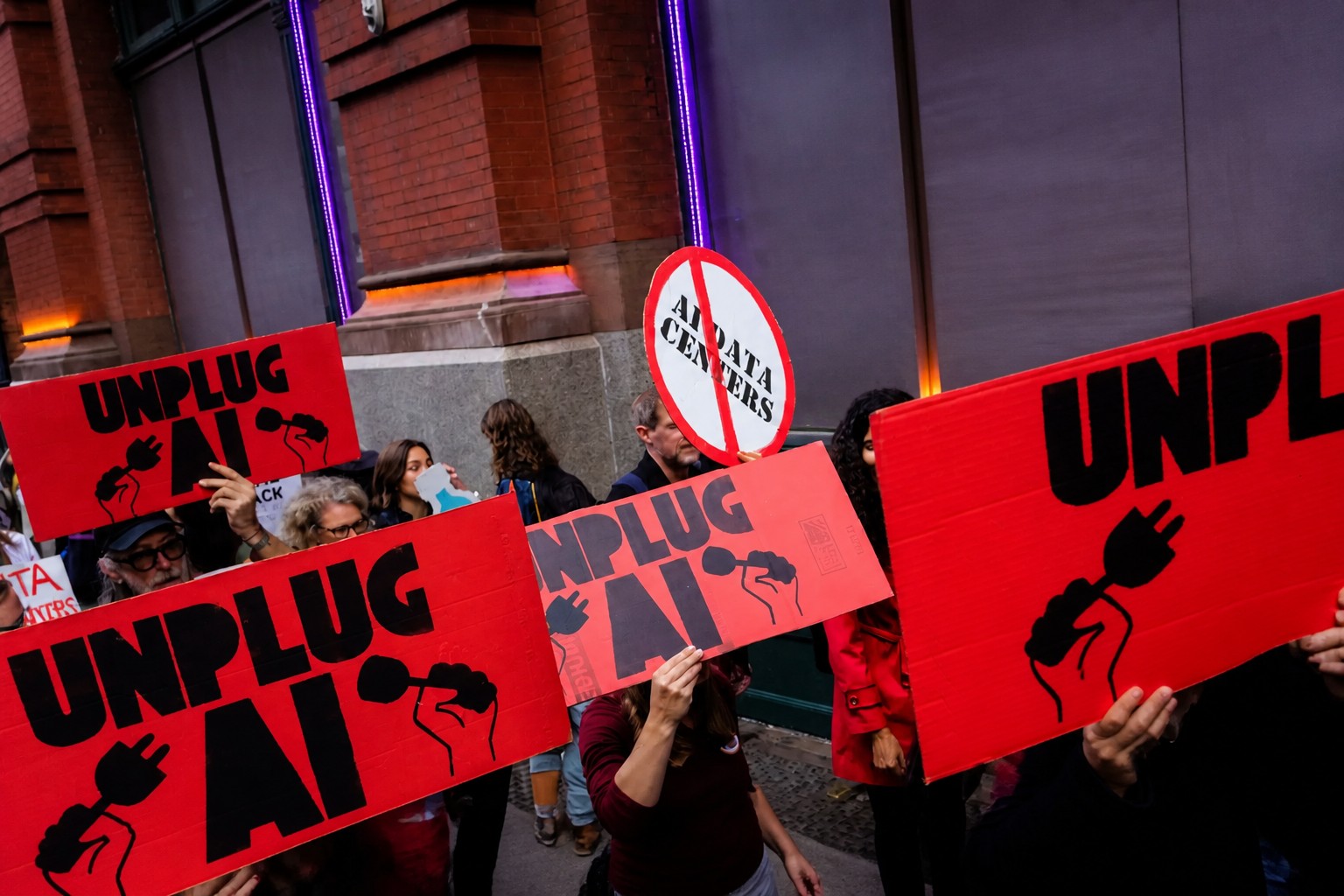
The fight is already local
Activists from Climate Defenders and the Stop Funding Billionaires campaign organized “Shut Down AI” actions during Climate Week in New York, an international gathering held alongside the UN General Assembly.
Their case is straightforward:
At least $64 billion in data-center projects were blocked by local activists between 2024 and 2026. Local or county-level bans have already been adopted in at least 18 states, and New York introduced a construction moratorium in the summer.
Jonathan Westin of Climate Defenders and Stop Funding Billionaires said technology companies make two claims that do not sit comfortably together: that AI could destroy humanity, and that they still cannot make it perform many of the large-scale tasks they promote.
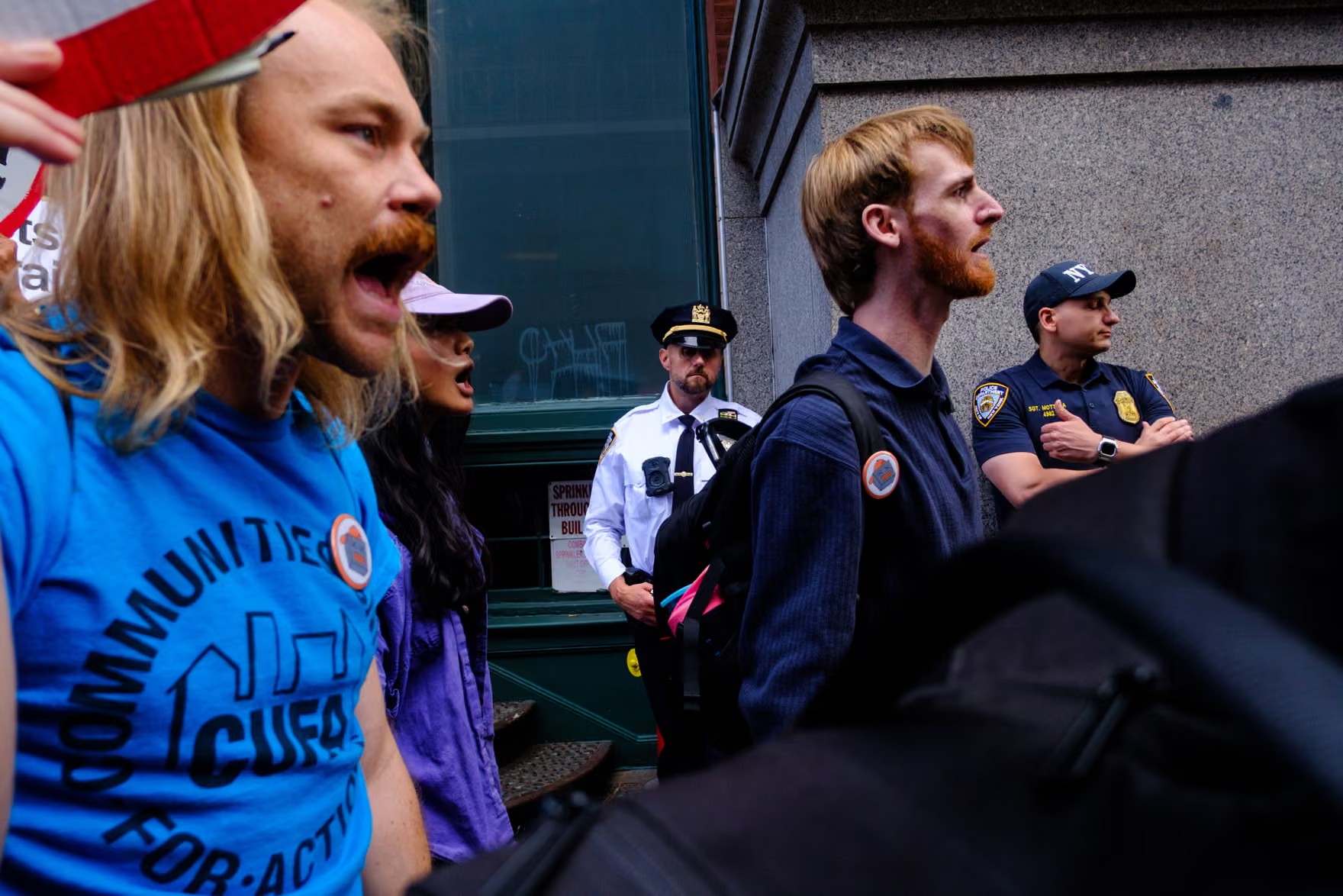
The protest outside OpenAI’s New York City office on Monday. Photograph: Julius Constantine Motal/The Guardian
Source: theguardian.com
The activists’ target is also broader than emissions. Some, including the anti-war group Code Pink, focused on cooperation between major technology companies and the US military. The United States used technology from Palantir, xAI and Anthropic to select targets and conduct airstrikes in the war in Iran; the systems were far from perfectly accurate.
Wall Street has also warned that the AI boom could bring down a new economic bubble. Westin said working Americans should not have to pay for billionaires and trillionaires playing with the economy as if it were “Monopoly.”
The communities carrying the risk
Several protesters who attended Monday’s action outside OpenAI’s office came from New Mexico. A planned data center there threatens the already depleted Rio Grande and a community enduring a twenty-year drought.
The Oracle Project Jupiter facility, being developed under contract with OpenAI, was presented as a source of jobs. Organizers say the companies have not explained how it will draw down the region’s limited water supplies.
Daisy Maldonado, a resident of Doña Ana County, where the data center is planned, said the companies had sold elected officials and local residents a great deal of misinformation. For New Mexico residents, she said, it is unfair for companies to enter the region and effectively lie about their plans and the benefits of their projects.
Alex Hanna, research director at the Dair Institute, which studies AI from the perspective of communities facing environmental damage and resource extraction, called the apocalyptic predictions from technology companies and former employees a distraction. She said they divert attention from the climate and environmental crisis, the rise of fascism connected to climate policy, the emergence of climate refugees and people’s growing inability to cover everyday expenses.
Hanna’s criticism gets at the central split in this protest movement: the industry talks about an extreme future, while residents are describing damage that is measurable in water reserves, pollution and household costs.
What “green AI” leaves unanswered
Five protesters were arrested on Tuesday at a sustainability conference in another part of the city after disrupting a keynote about using AI to solve problems in power grids. Activists called the presentation “greenwashing”—misleading language used to make something appear environmentally friendly or less harmful.
Adrosto de Silva, who had also traveled from New Mexico for the protest outside OpenAI’s office, said activists did not want such language used to cover for data-center construction and did not believe the harm from any data center could be reduced.
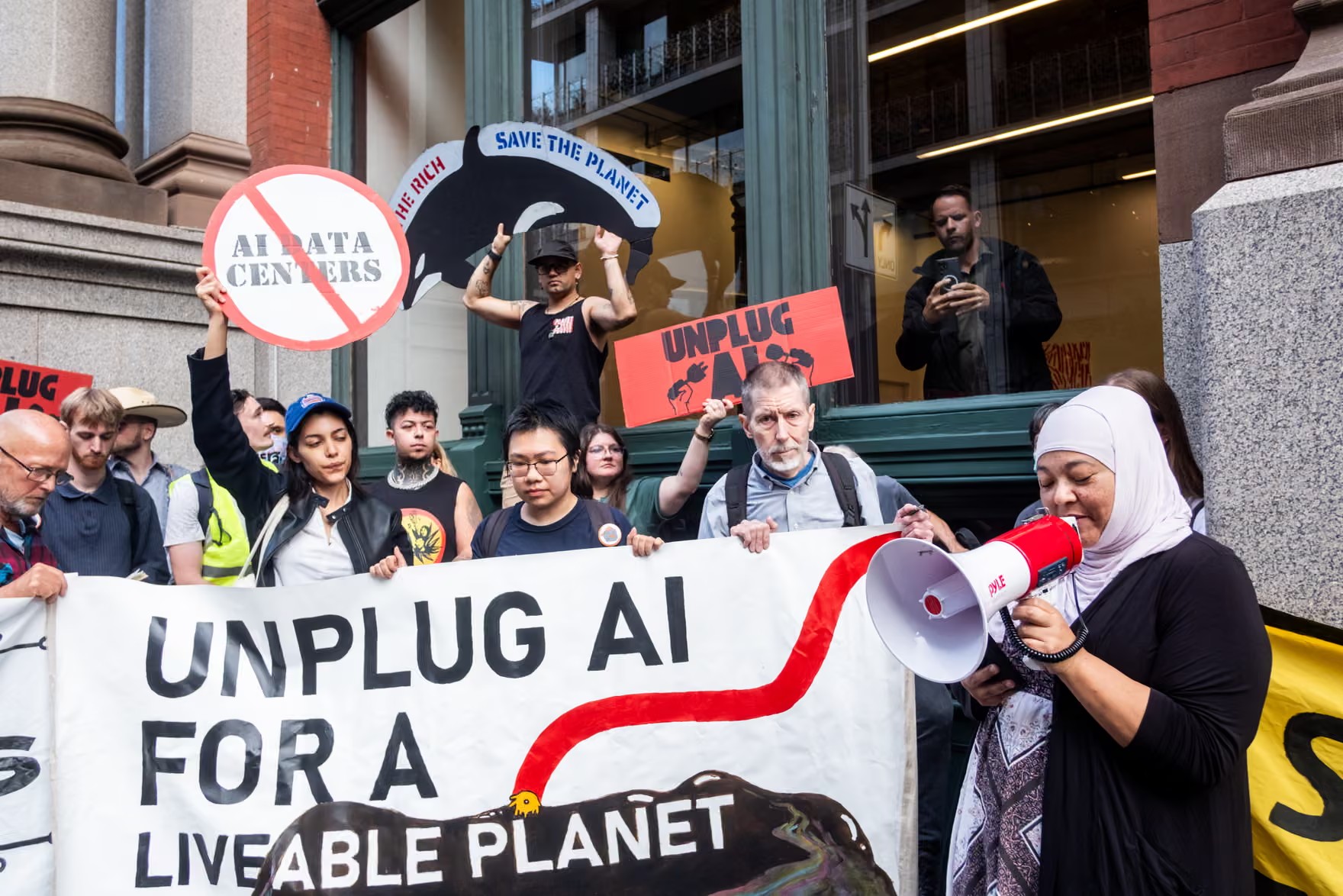
Daisy Maldonado (right) of New Mexico at the protest outside OpenAI’s office building in New York City on Monday. Photograph: Julius Constantine Motal/The Guardian
Source: theguardian.com
I think this is why the protests have gained traction beyond a familiar argument about AI hype. The question is not only whether the systems work as promised. It is whether communities are being asked to accept immediate environmental costs in exchange for benefits that companies describe more confidently than they measure.
Participants at Monday’s action, including Tennessee state representative Justin Jones, emphasized that many such conflicts take place in communities of color and poor neighborhoods. They said companies expected to face less local resistance there.
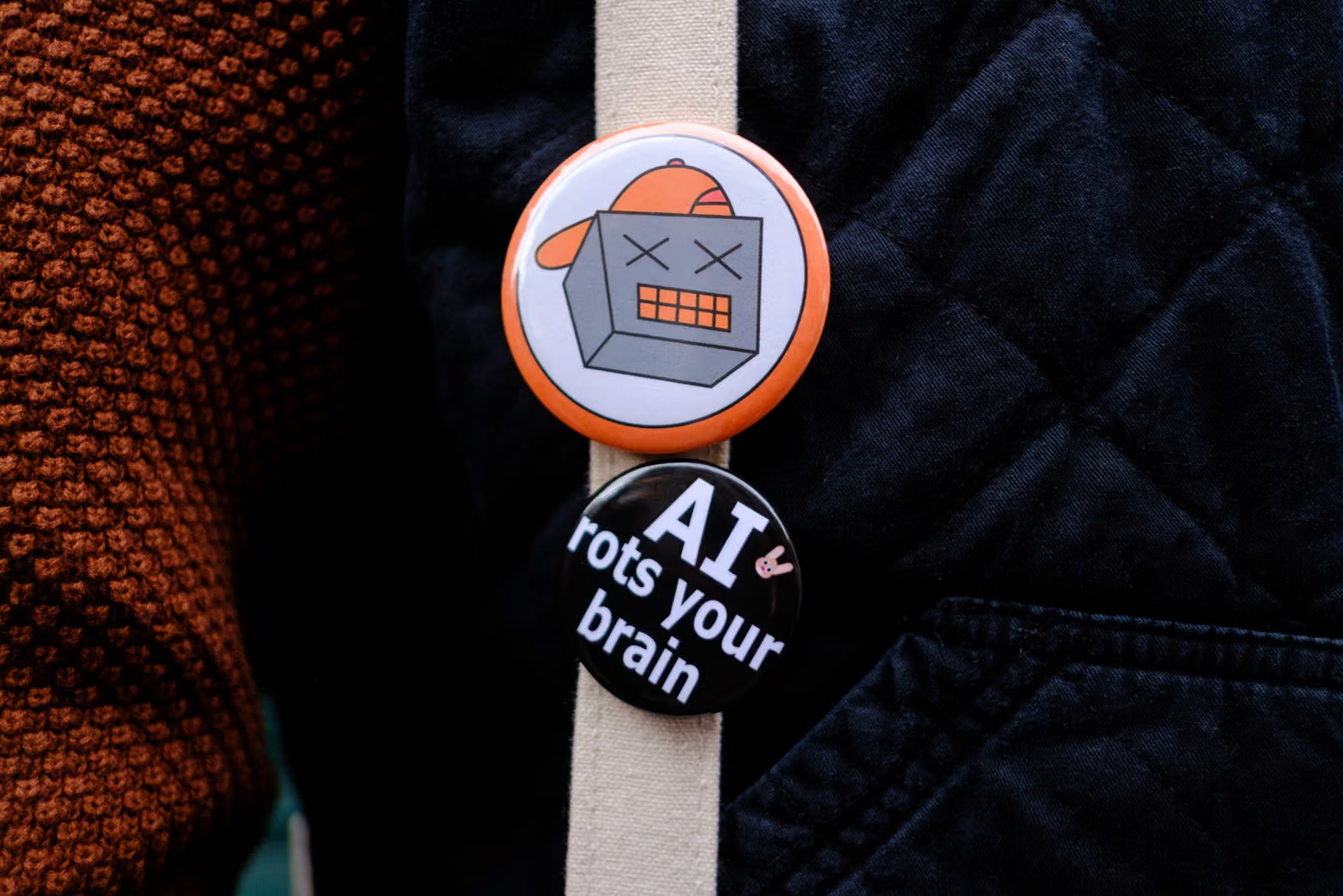
Justin Jones, the Tennessee state representative, wears anti-AI buttons on his bag at the protest on Monday. Photograph: Julius Constantine Motal/The Guardian
Source: theguardian.com
Jones, pointing to the OpenAI office behind him, called the building a threat to humanity. He said the merger of the technology oligarchy was dangerous for everyone, explaining his participation by arguing that an attack on one group ultimately becomes an attack on all.
The AI industry can frame its largest risks as hypothetical and its infrastructure as necessary. The people protesting it are forcing a different accounting: the future may be uncertain, but the water bill is already being assigned.
Daily AI news
Every day we pick what actually matters in AI and explain it plainly — no hype, no filler. Subscribe if you want to follow where the industry is going.
Only what matters — every day
Follow on X