
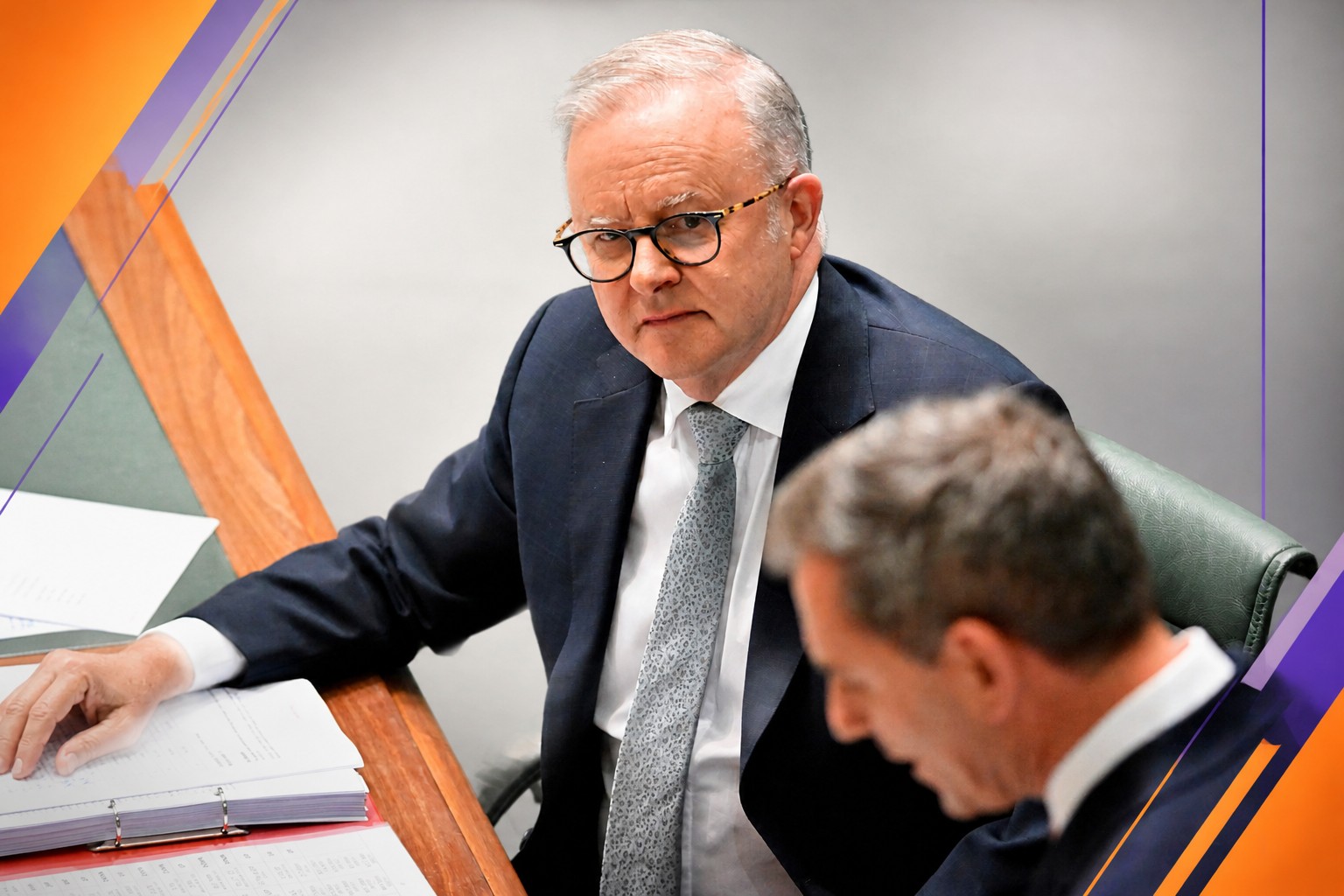
Approval ratings and the cost of living
Over the past week, Albanese has watched a string of international crises unfold: Donald Trump, Xi Jinping and Vladimir Putin held talks, annual climate negotiations ended in disarray, and the head of a company whose chips are used in the AI arms race returned to power. Peter Lewis writes that the treasurer’s economic statement conveyed frustration: although the Reserve Bank has criticised government spending, the rising cost of living is linked both to geopolitical shocks and to financial bubbles beyond Australia’s control.

Source: theguardian.com
Albanese’s approval rating has shifted sharply since late 2022, when approval and disapproval were reversed. Prime ministers rarely become more popular after taking office. In recent years, only Kevin Rudd, when he issued stimulus payments during the global financial crisis, and Scott Morrison, when the government supported the economy during the pandemic, saw their support rise.
The current economic crisis is different. The US-Israeli war against Iran, which the author considers a mistake, has pushed up oil prices. Almost everything in household budgets has become more expensive: food, fuel, housing and recreation.
Unpopular choices
The government is under pressure to cut spending, but an Essential poll found that most Australians want spending to increase, not decrease, across the main budget areas. The only area with significant support for cuts is the Aukus program, though the government is unwilling to touch it.
That is the politics of austerity: to curb rising prices, money has to be taken away from people who expect to receive it, whether that means the US military-industrial complex or a participant in the National Disability Insurance Scheme (NDIS). When payments stop, it is easy to identify who is to blame, Lewis notes.
The prime minister’s personal missteps
The economy is not the only source of frustration: Albanese has provided reasons of his own. In the author’s account, a series of awkward episodes began with an appearance onstage at a miners’ conference during the last election campaign, continued with the melon incident, and intensified after an ill-judged swear word began to look like a badge of honour. Lewis sees some personal growth in the prime minister’s admission that he made a joke while his microphone was on at the ill-fated Cop31 summit.
In the author’s view, these traits reflect a broader irritability in Albanese that emerges under pressure. Recently, the prime minister gave a sarcastic reply to musician Jimmy Barnes when Barnes asked about the government’s position on copyright and AI. Lewis suggests Albanese was trying to make a joke, but it fell flat.
Tensions could rise in the new year: independent candidate Hannah Ferguson will challenge Albanese in his electorate. She has her own social media team and the skills to put uncomfortable questions to him and draw attention to his answers.
AI is a test for the government
Lewis believes Albanese has not run out of political capital. The author describes his strengths as playing the long game, working through complex problems and finding a political way forward. The prime minister will need those qualities to develop a policy for AI’s growth and regulation.
In a speech at the University of Sydney, Albanese proposed a measured approach to regulating and applying the technology. Since then, however, the government has had to respond to demands from leading labs seeking to build model-training centres in Australia. Creative professionals argue that their copyrights have been infringed and must be respected. Workers are facing cuts attributed to the adoption of AI, while parents are calling for stricter restrictions.
Over the past 24 hours, Australia has passed laws establishing new safety obligations, and a joint select committee has offered the government a framework for a cross-party strategy to develop the industry. At the same time, a growing divide separates leaders who advocate rapidly rolling out AI infrastructure from residents concerned about the direction of a technology capable of changing the labour market and culture.
The election is 18 months away, and events around the world are moving fast. To develop the economy and national security around AI infrastructure that worries some members of the public, Albanese will have to draw on all his political experience, especially as economic difficulties persist.
Dataist’s take: Albanese’s support will depend not only on his personal conduct and response to rising prices. The government will have to convince the public that AI infrastructure development takes the concerns of workers, creative professionals and parents into account.
Daily AI news
Every day we pick what actually matters in AI and explain it plainly — no hype, no filler. Subscribe if you want to follow where the industry is going.
Only what matters — every day
Follow on X