
How CoreWeave’s model works
Major AI companies need computing power to run their products, but do not always want to build data centers themselves. Nvidia, CoreWeave’s main financial partner, sells them chips and helps finance their purchases. CoreWeave installs those chips in data centers and rents out the computing capacity.
Nvidia owns about 11% of CoreWeave. Under a separate $6.3 billion deal, it agreed to buy computing capacity that CoreWeave cannot sell to customers—effectively guaranteeing some of the demand. Nvidia has also invested in companies that rent CoreWeave’s capacity, including OpenAI and Anthropic, as well as nearly a dozen others. As a result, Nvidia’s money can pass through a customer onto CoreWeave’s balance sheet, then return to Nvidia as payment for chips.
This cycle supports the AI economy: CoreWeave and similar companies take on the costs and risks of construction, while Nvidia and AI companies can sell chips and develop models without paying directly to build facilities. It resembles a sandwich: Nvidia and major AI companies do not want to finance or build data centers costing, say, $1 trillion, so the risk falls on the company in the middle.
The industry sees CoreWeave as a capital-intensive business: infrastructure has to be built long before it starts generating revenue. Jordan Chaflin, head of technology at CreditSights, said this puts heavy pressure on free cash flow during construction. In his assessment, projects like these have to be financed with debt; that is how the business models of not only “neoclouds” but also major cloud companies work as they build data centers in anticipation of an AI economy that is still theoretical.
In filings with the U.S. Securities and Exchange Commission this summer, CoreWeave listed 18 types of debt totaling about $35 billion. In its latest financial results, where the debt was not broken down by type, the total rose by nearly $12 billion to $47 billion. The company expects interest payments to exceed $1 billion as soon as next quarter. More than $10 billion of debt comes due next year.
Last fall, creditors put the probability of CoreWeave defaulting—being unable to repay its debts—at more than 60% at some point over the next five years. Financial results published earlier in November briefly eased concerns. Chaflin said margins and revenue came in significantly above expectations.
But then Nvidia, the most valuable company in AI and a pillar of CoreWeave’s business model, ran into problems. Its CEO, Jensen Huang, acknowledged that he had a connection to a person suspected of spying for China. Huang stepped down; the consequences are not yet known. His business relationships have become part of the AI economy’s infrastructure, so any changes could hit CoreWeave particularly hard.
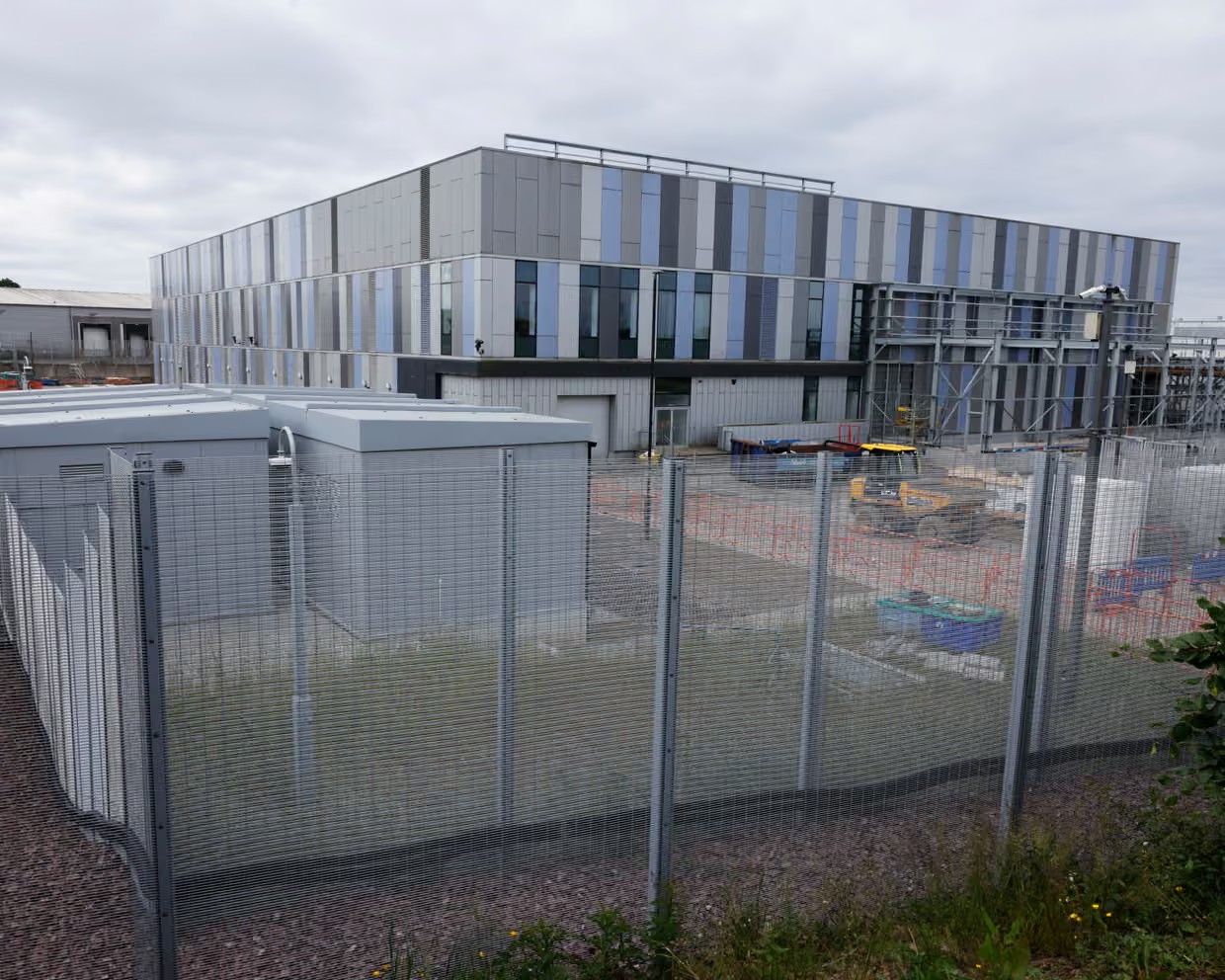
The Chapelhall datacentre in Scotland is to be built by CoreWeave and DataVita, an arm of a Glasgow property firm. Photograph: Murdo MacLeod/The Guardian
Source: theguardian.com
Debt backed by chips
One of CoreWeave’s newer forms of financing is loans backed by graphics processing units, or GPUs. The company borrows against its main assets—Nvidia chips—and presents customer contracts to lenders as additional collateral. This has enabled CoreWeave to borrow nearly $25 billion.
The idea initially drew skepticism: unlike real estate, chips lose value over time. In October 2025, The Verge called CoreWeave a “horror show” with no obvious path to profitability. But other companies—including Crusoe, Nscale and Lambda—also began taking out these loans. The market gradually accepted the practice: CoreWeave paid 15% interest on its first GPU-backed loan in 2024, while rates on some later loans fell to 9%.
In March, CoreWeave also secured an “investment-grade” rating for $8.5 billion of this debt and sold it to institutional investors, including insurance companies and pension funds.
Short sellers, who are betting the stock will fall, fear that the chips will lose value faster than CoreWeave assumes. The company allows for that to happen over six years, but some market observers think the period could be much shorter. If so, the value of the loan collateral could drop sharply.
Chaflin is optimistic: he said demand for AI infrastructure is very strong, and used chips are also in demand. CoreWeave also signs long-term contracts: customers commit to paying for most of the rented chips’ useful life. That arrangement works as long as customers, including OpenAI, remain able to pay. For some of them, that may depend on whether Nvidia continues to finance them.
CoreWeave has another kind of debt, too: senior notes, which the company began issuing last summer. Unlike GPU-backed loans, these notes are not secured by a specific asset that a lender could seize if the company fails to repay. In a bankruptcy, holders of senior notes should theoretically be paid first, but it is unclear where the money would come from: apart from its GPUs, CoreWeave has few assets, and it leases many of its data centers rather than owning them.
A CoreWeave representative said customers sign multiyear agreements to use previous-generation GPUs, with contract terms extending beyond the chips’ depreciation period and prices higher than in the original agreements. The representative said the company is diversifying its funding sources, lowering its weighted average cost of debt and, in most cases, does not depend on refinancing loans to repay them.
CoreWeave needs loans to expand: without them, it cannot finance construction. High spending on growth is part of its business model.
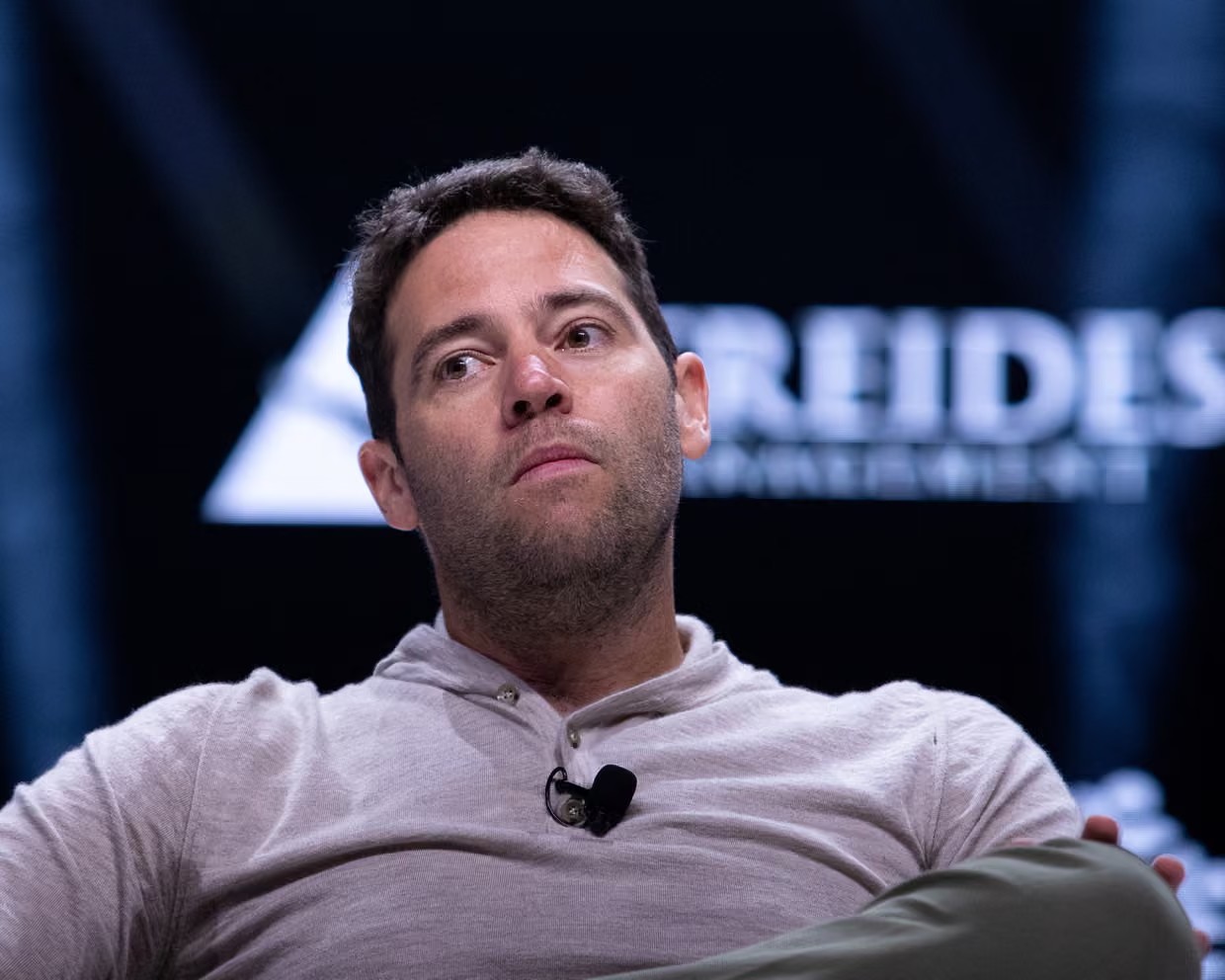
CoreWeave co-founder and chief development officer Brannin McBee at the TomorrowX conference in Austin, Texas on 18 November. Photograph: Kaylee Greenlee/Reuters
Source: theguardian.com
Dependence on customers and construction timelines
It is unclear whether CoreWeave has a long-term future. Analysts and short sellers have to assess a web of obligations and dependencies: whether the company will have enough cash to make its payments, who will step in if it runs short, and which other market participants would be hurt if it defaults.
CoreWeave loses hundreds of millions of dollars each quarter while paying interest. This year’s revenue may come in below the company’s expectations. At the same time, CoreWeave says it has more than $100 billion in contracts in its backlog.
One distinctive feature of its agreements is that, unlike most competitors, it receives large upfront payments for multiyear contracts. As a result, annual revenue includes income from services the company has not yet provided. Brian Hopkins of the research firm Forrester said about two-thirds of the cash the business “generated” came from customers paying in advance, rather than from services already delivered.
That means its current customers may not be enough to sustain revenue, which totaled $3.4 billion last quarter. CoreWeave has already recognized a significant share of the value of its existing agreements, so it will have to keep finding new customers.
The ability of its customers to pay is also in question. Major AI companies, including OpenAI and Anthropic, are running large losses. So far, they have paid for CoreWeave’s computing capacity using loans and investments, including funding from Nvidia. Whether that money will keep flowing is unknown. Recent reports have suggested that after Jensen Huang’s departure, Nvidia could step back from its role as the “central bank of AI.”
A CoreWeave representative said demand for its AI cloud platform is backed by $132.5 billion in contracts with leading AI labs and companies. The representative said the company reached 1.7 GW of active capacity last quarter and is operating in a very favorable pricing environment.
Political obstacles that delay or freeze data center projects are another risk. Hopkins noted that CoreWeave pays interest even when a facility is not brought online on time, while it earns revenue only after capacity is delivered to customers. Local restrictions and permitting disputes could widen that gap; the company already expects to pay more than $1 billion in interest per quarter.
For pension and insurance companies that own CoreWeave debt, the question is what happens if the company misses a payment or defaults. According to Amir Zabbeti, managing director at Mancala Capital, CoreWeave CEO Michael Intrator remains one of the company’s few assets that have not been pledged as collateral. Mancala Capital is currently betting that CoreWeave’s stock will fall.
Over the next three years, CoreWeave’s debt payments, Hopkins estimates, are already equal to two years of company revenue. The company still needs money to build data centers that will serve its customers and is preparing to raise more debt. Hopkins warned that any delay would leave CoreWeave with very little room to maneuver.
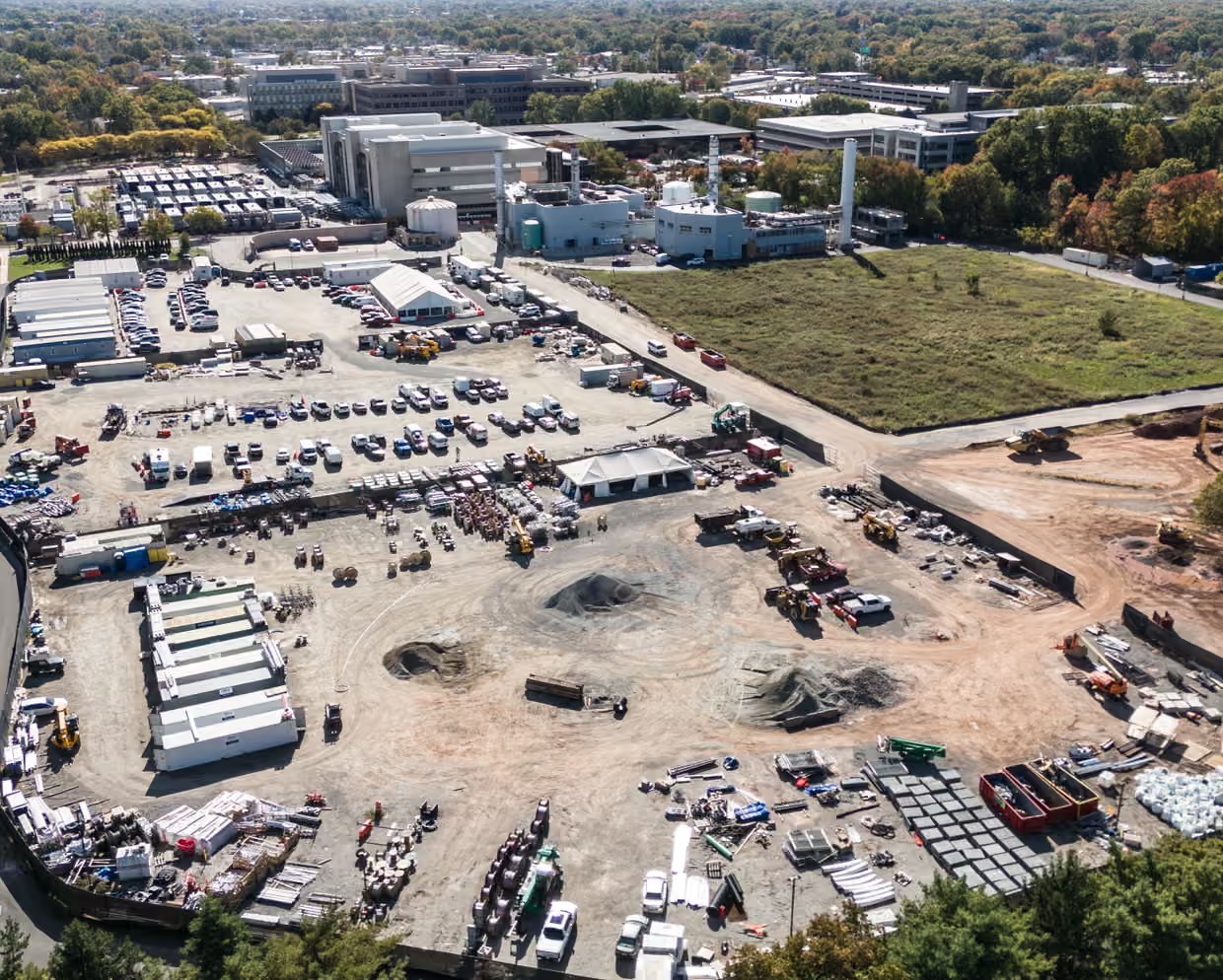
A CoreWeave AI datacentre under construction last month in Kenilworth, New Jersey. Photograph: Stephanie Keith/Getty Images
Source: theguardian.com
Dataist’s take: CoreWeave depends not only on demand for computing capacity, but also on whether its customers can keep paying, Nvidia can keep financing the industry, and data centers can come online on schedule. Even a large contract backlog does not remove these risks: a significant share of revenue arrives upfront, while debt payments continue regardless of construction timelines.
Daily AI news
Every day we pick what actually matters in AI and explain it plainly — no hype, no filler. Subscribe if you want to follow where the industry is going.
Only what matters — every day
Follow on X