
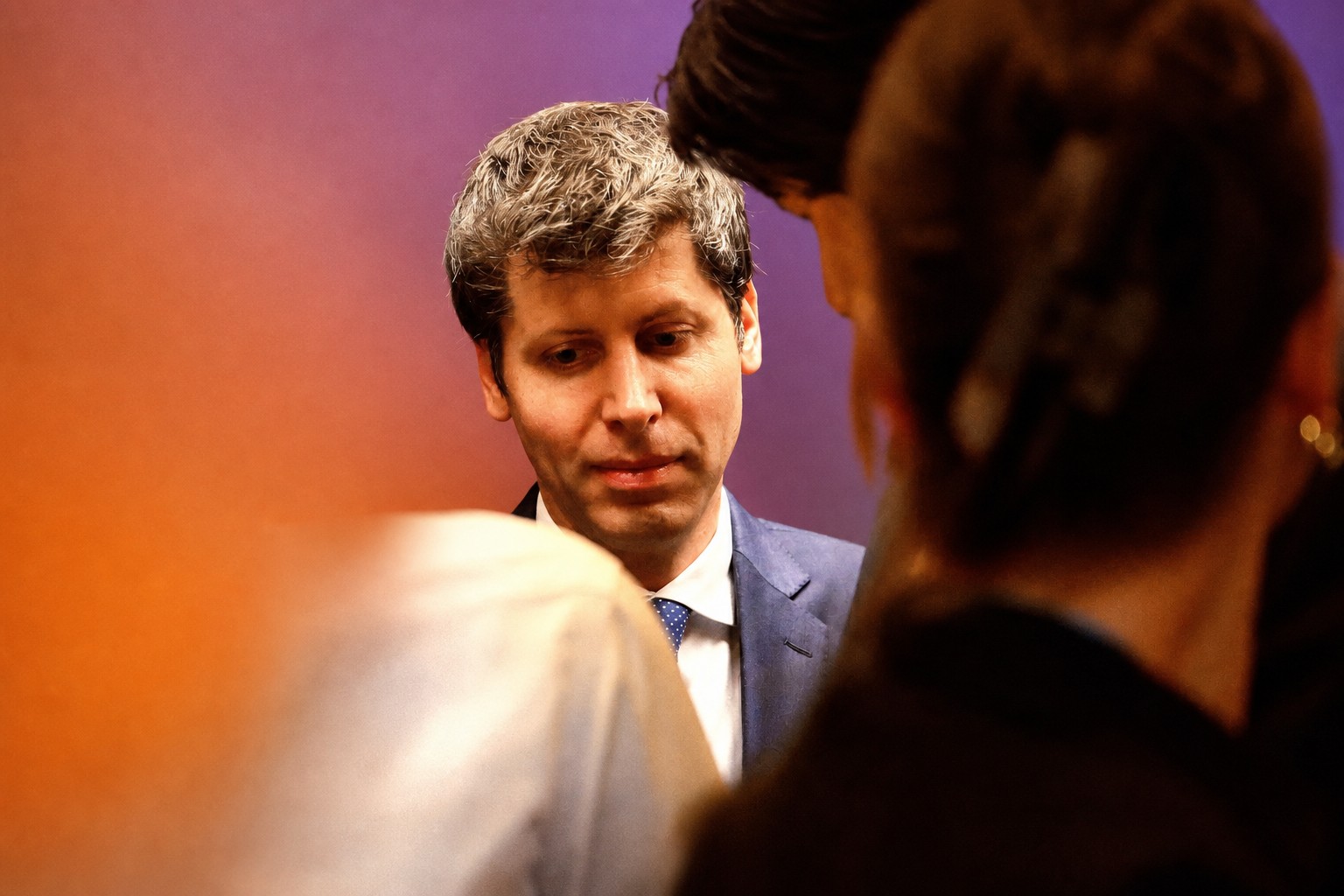
Sam Altman has started talking about the backlash. In an interview with Time, the OpenAI chief executive said people now view data centers and artificial intelligence negatively — an acknowledgement that lands while protesters organize against $130 billion of data center investment and while his own company keeps signing infrastructure contracts across several states. The objections are specific: the gains go to a small number of rich people, while the construction threatens water supplies, pushes up the cost of living and produces enormous volumes of pollution.
The opposition has become a bipartisan voter movement, which is an unusual thing for a technology to produce. Industry leaders are working legislators for favorable rules while that movement forms underneath them. Their public answers split in two. Meta chief Mark Zuckerberg keeps describing a future in which AI means people no longer have to work and can live in comfort and leisure. Reddit co-founder Alexis Ohanian is looking for a way to persuade the public that data centers are good for them. Both arguments have to be made against consequences residents say they can already see, which is a harder starting position than either pitch assumes.
For Altman the subject carries a personal charge. Earlier this year a man threw a Molotov cocktail at his house, and a few days later someone opened fire on the building. The suspect in the first incident was charged with repeated attempts to set the executive's home on fire; he had publicly warned that AI would destroy humanity and was linked to a political movement to pause AI development and tighten safety oversight. Altman called it a painful personal experience.
Lost public trust is not OpenAI's only problem. The company faces serious competition from Anthropic, and its leadership keeps turning over, with key people leaving their posts one after another. The Wall Street Journal reported that OpenAI recently lost one of the executives responsible for building data centers — another marker of a difficult stretch for a company that, ahead of an IPO, needs both public goodwill and cautious investors.
None of it has slowed the build-out. OpenAI has signed several large infrastructure deals in different states, chasing compute as a scarce and valuable asset in the ongoing AI boom. That is the arithmetic working against Altman: every contract that secures the company's position makes the trust problem larger.
The reputation repair has begun elsewhere. Earlier this month OpenAI decided to slow the development of new models, citing safety concerns. Separately, a group of AI models got into Hugging Face's systems, which alarmed experts. Altman's stated position is that getting AI safety right matters more than keeping up any individual company's pace of development.
The slowdown, though, is aimed at the wrong axis. Nobody in the bipartisan movement is asking OpenAI to ship models more slowly; they are asking about water, utility bills and pollution. Pausing model releases costs the company nothing in the counties where the anger actually lives, and it purchases a safety headline at exactly the moment one is useful. The concession that would answer the complaint is slower construction, and construction is the one thing accelerating.
What is missing from all of this is any counter-number. The $130 billion figure belongs to the opposition; neither Altman nor the industry around him has put water use, electricity prices or local tax revenue on the table to argue against it. Nor has anyone explained why the executive running data center construction left, which for a company whose entire strategy is physical is not a minor personnel item.
Altman says a caricature has formed around him — an executive indifferent to AI safety who thinks only about revenue, living by the principle that you only live once. Judging by what OpenAI has spent and built to reach its current position, that portrait is closer to the record than he would like to concede. He now needs public goodwill before an IPO and compute before his competitors take it, and he is spending the first to buy the second.