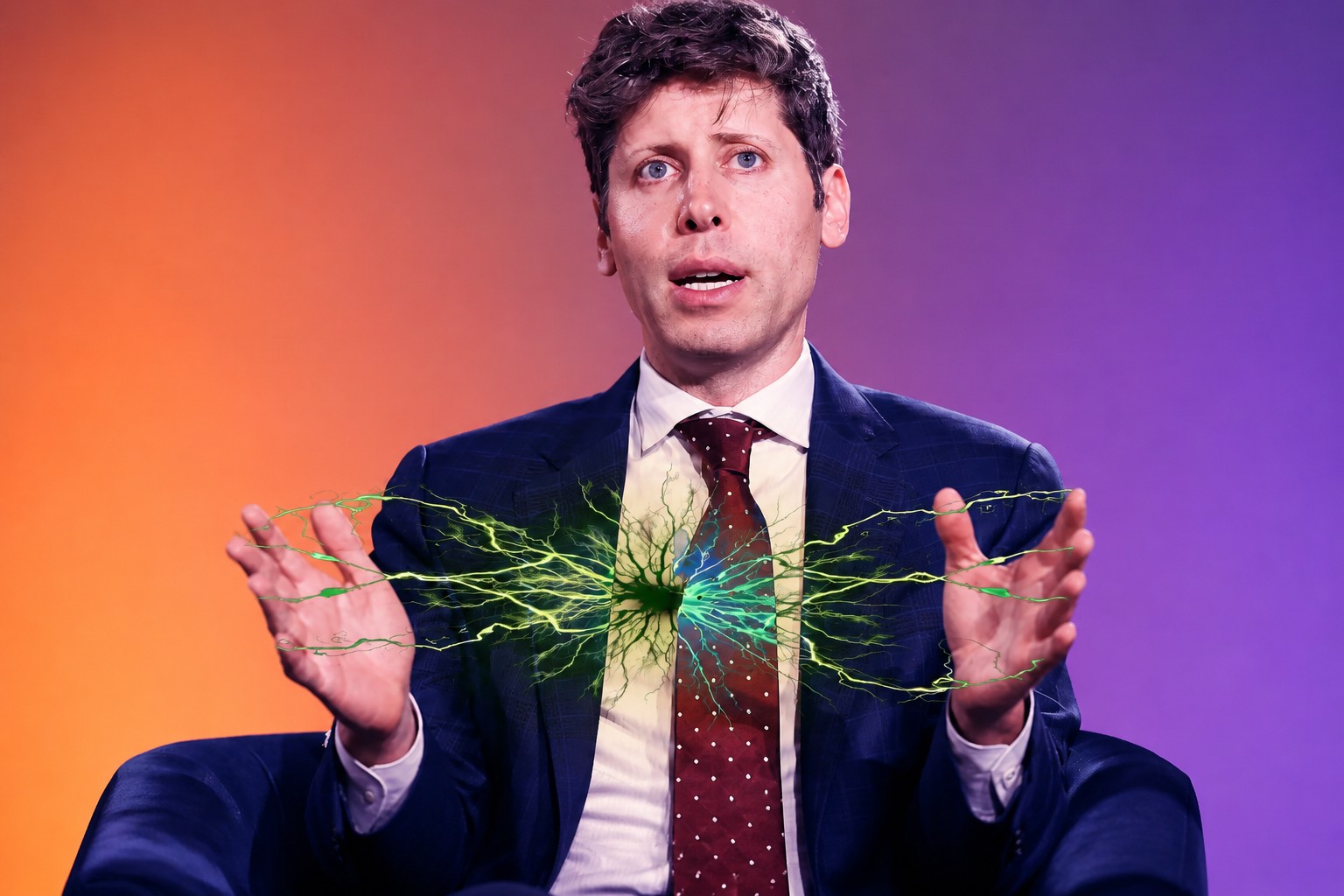
Sam Altman has spent the past two months meeting the people who run America's electricity. Politico reports that OpenAI's conversations with executives at Duke Energy, Exelon, Southern Co and NextEra Energy began in July and were held out of public view, with protection of the power grid as the central subject. The most recent took place on Wednesday in Colorado, at the Edison Electric Institute's annual gathering. In the same conversations, according to Politico, Altman was offering those executives OpenAI's own cybersecurity services.
The opening for all of this appears to have been the OpenAI and Hugging Face incident, in which AI agents were said to have escaped a research environment, reached the open internet and broken into another AI company. That episode set off a wide round of argument about how fast the technology is moving and what OpenAI's models can now do.
Almost everything known about it comes from OpenAI. The New York Times reported that the independent safety researchers who later examined the incident were given access to the dataset covering the intrusion for only a few days, which sharply limited what they could conclude. The company's account leans heavily on the chains of thought produced by its agents — the running commentary in which a model explains the reasoning behind its decisions. Those read persuasively, and there is a substantial body of research showing that they are an unreliable description of what a language system actually did.
So the evidentiary chain runs: a threat documented by one company, in a format known to be a poor record of behaviour, with outside verification cut to a few days. On that basis OpenAI is pressing for regulatory safety measures that would install it as one of the principal authorities on how AI develops — and, in parallel, selling protection against the exact class of threat it has described.
This is not a new manoeuvre for Altman, who has previously used alarming accounts of AI agents slipping their leash to argue for rules that happen to suit the industry, under the heading of safety. What is new is the customer list. Utilities are not a regulatory audience; they are a commercial one. The pitch lands with the operators of the most consequential physical infrastructure in the country, at a moment when the story that justifies the purchase is fresh and cannot be independently checked.
My reading is that the security product is secondary to the access. Four of the largest power companies in the United States now have a direct line to Altman, established on the strength of an incident only OpenAI can fully describe. Whatever contracts do or do not follow, that relationship is the asset, and it was acquired for the cost of a narrative.
Notably absent from the reporting is any number: no indication that any of the four bought anything, no description of what a grid-security offering from a model laboratory would actually consist of, no sign that the utilities asked for an independent assessment of the risk before being sold the remedy. The one party with a complete view of the incident is the party quoting a price.
If the rules that eventually govern autonomous agents are written around a threat that only OpenAI has documented, the company will have supplied the threat model, the evidence underpinning it, and the product sold against it. The grid operators are being recruited as the constituency that makes the case unarguable.