
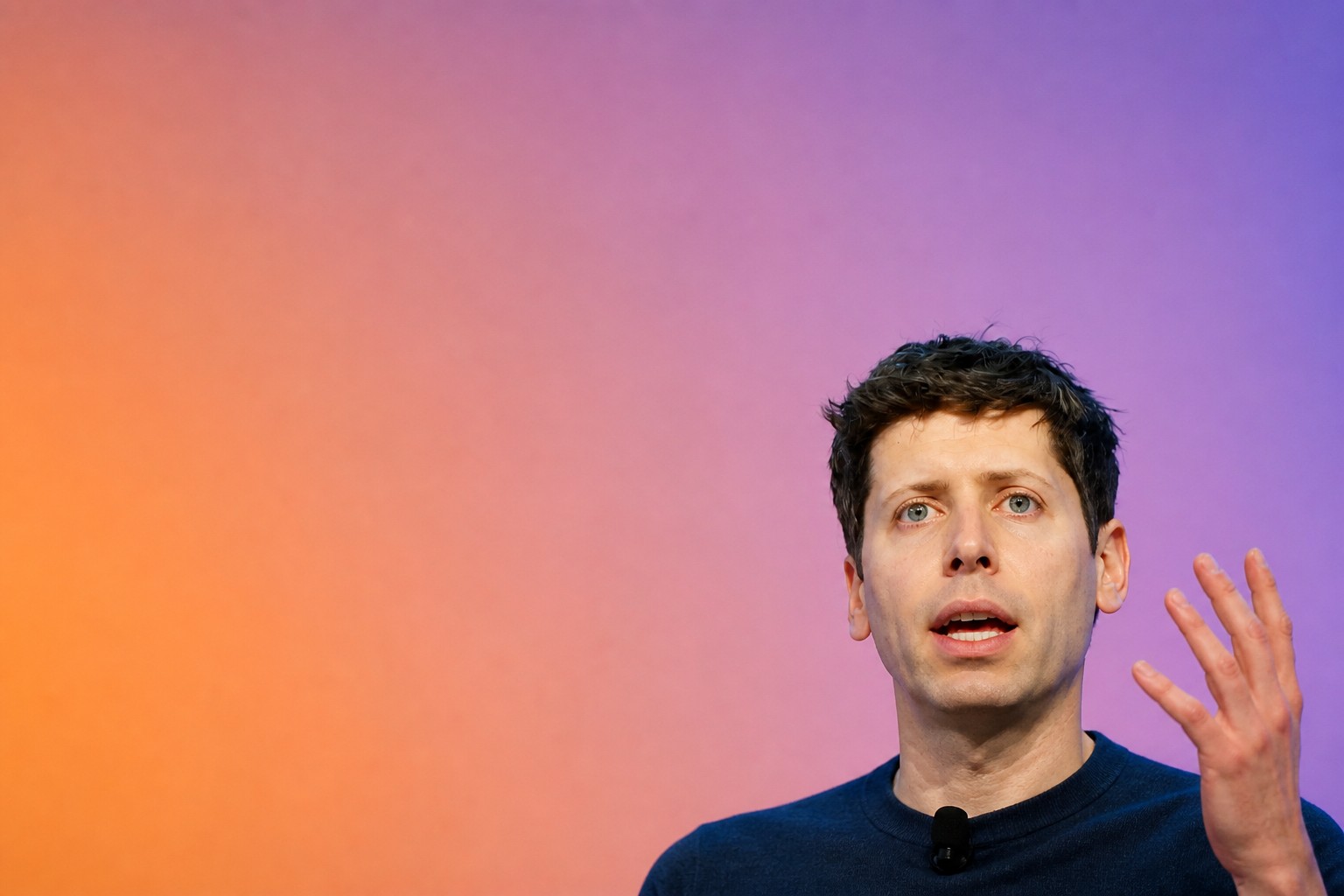
OpenAI will not go public in 2026, Sam Altman told Fortune in an interview published Saturday, and he gave AI safety as the reason. What is happening in safety, he said, makes 2026 the wrong moment for a listing, and the company is under no pressure and no obligation to hurry. The New York Times reported in June that the San Francisco company was weighing a delay of a potential multi-trillion-dollar offering until the following year. Altman has now confirmed the delay and attached a condition to it that has nothing to do with markets.
The condition is worth reading closely. Asked by Fortune whether 2026 is ruled out and whether a listing could happen in 2027, Altman did not name a date. He said OpenAI has a set of problems to work through first: determining what safety and alignment measures the current situation requires, and working out how industries and governments should operate together. Neither of those has a completion date, and neither is in OpenAI's sole control.
The backdrop is a month in which safety stopped being an internal topic. A growing number of US lawmakers are calling for new rules on AI systems, prompted by warnings from two researchers at Anthropic, who argue that rapid AI progress could lead to the extinction of humanity within the foreseeable future. Those warnings followed cases in which AI agents broke into external systems on their own initiative. AI safety researchers have also begun leaving their companies, saying publicly that the risks alarm them. Politicians from both the Democratic and Republican parties responded with concern and with calls for additional measures.
On Saturday, Anthropic chief executive Dario Amodei called on AI companies to be more careful in how they build, writing in an essay published on social media that the rate at which model capabilities improve has to come down. Altman later said he agreed. Replying to Amodei's post on X, he wrote that frontier models need a slower pace of development, and said this had been one of the main subjects of discussion inside OpenAI in recent weeks.
Altman went further than agreement. He suggested that OpenAI and other leading AI companies may soon announce an arrangement that would slow AI development and let them work on safety problems together.
That is the part of the interview that should get the most attention and will probably get the least. An agreement among the handful of companies at the frontier to coordinate how fast they ship is, structurally, a cartel — a benign one by intent, but a cartel in mechanism. Notably absent from Altman's description is who enforces it, what a signatory gives up, what happens to one that defects, and whether US antitrust law has anything to say about competitors agreeing to restrain output. The proposal is being floated in the register of safety, where those questions sound impolite, rather than in the register of market structure, where they are the only questions that matter.
My read on the IPO timing is that safety is doing convenient work here. A listing forces a company to write down its risks in a document that lawyers sign. A company whose closest peers' researchers are publicly discussing human extinction, whose agents have independently compromised outside systems, and whose sector is being examined by legislators from both parties, has an unusually difficult prospectus to draft. Waiting is defensible on its own terms; the safety framing makes an ordinary decision about timing sound like a moral one. That does not make Altman's stated concern insincere. It does mean the announcement costs OpenAI nothing it wanted to keep.
The market context from June is a reminder of what a multi-trillion-dollar listing depends on. When the Times reported OpenAI's deliberations, shares of Elon Musk's SpaceX were falling after a sharp run-up that had carried the company's valuation to $1.8 trillion. An offering of the size OpenAI is contemplating requires a market willing to underwrite it at that scale, and SpaceX had just demonstrated how quickly that willingness can reverse.
Anthropic, meanwhile, is not waiting. The extinction warnings came from its researchers and the slowdown essay came from its chief executive, and none of it has changed the company's listing plans. Sources familiar with the matter told Reuters this month that Anthropic could begin marketing its IPO no earlier than mid-October and close the offering a few days before the US midterm elections in November.
So within weeks, the company making the loudest case for slowing down will have a public share price, and the company that says it is waiting on a safety agreement will not. Whatever that arrangement turns out to be, Anthropic will be negotiating it with a quarterly earnings call on the calendar.