
The case Amazon is making
Garman pushed back on four criticisms of data centers: that they use too much water, raise electricity prices, pollute the air and offer little to nearby communities.
Those are Amazon’s arguments, not a complete accounting of the costs. Nvidia recently said it is nearly eliminating water consumption inside data centers, but claims like Nvidia’s and Amazon’s appear not to include water used to generate electricity or manufacture chips. Researchers have called for data-center water and energy use to be studied separately; there are no federal or regional requirements for how technology companies must report those figures.
The price argument also has a competing data point. A recently published independent watchdog report named data centers as the main reason for a 76% year-over-year increase in prices in the largest US power grid.
What the announcement leaves open
The emissions example is stark: an Amazon data center planned for Texas is permitted to emit up to 33 million tons of carbon dioxide a year, more than any other power plant in the US. Garman’s response is that permitted maximums do not reflect normal operations. The claim that generators run about 10 hours a year may matter, but it does not settle what the facility emits across its full energy supply.
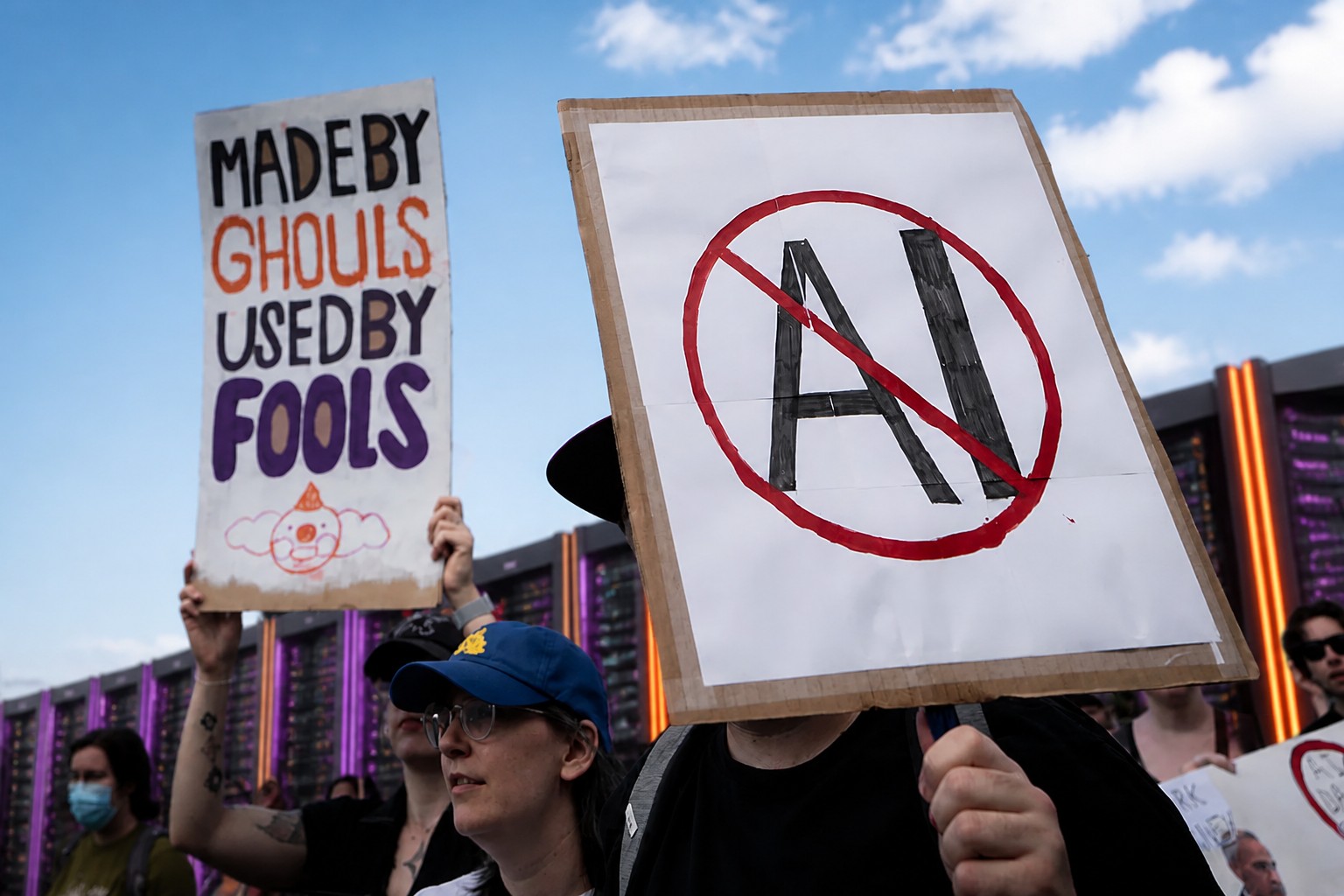
The broader dispute is about trust as much as measurement. Erin Brockovich has said people most often complain about not getting information: projects are announced after permits are secured, developers do not return calls, and local officials sign nondisclosure agreements before neighbors know construction is planned. Garman says more than 100 moratoriums are under consideration across the US, and argues that restrictions could cost the country its chance in the race, with consequences felt for generations.
I think ending NDAs addresses one concrete source of distrust, but it does not answer the harder questions about who bears the costs and how those costs are measured. Anthropic CEO Dario Amodei recently called resistance to AI “fundamentally a crisis of trust”; writer Jasmine Sun has noted that opponents of data centers often answer technology companies’ arguments with: “I don’t believe them.” Amazon can stop asking officials to keep projects quiet. Whether that changes what communities believe will depend on what they can verify.
Daily AI news
Every day we pick what actually matters in AI and explain it plainly — no hype, no filler. Subscribe if you want to follow where the industry is going.
Only what matters — every day
Follow on X