
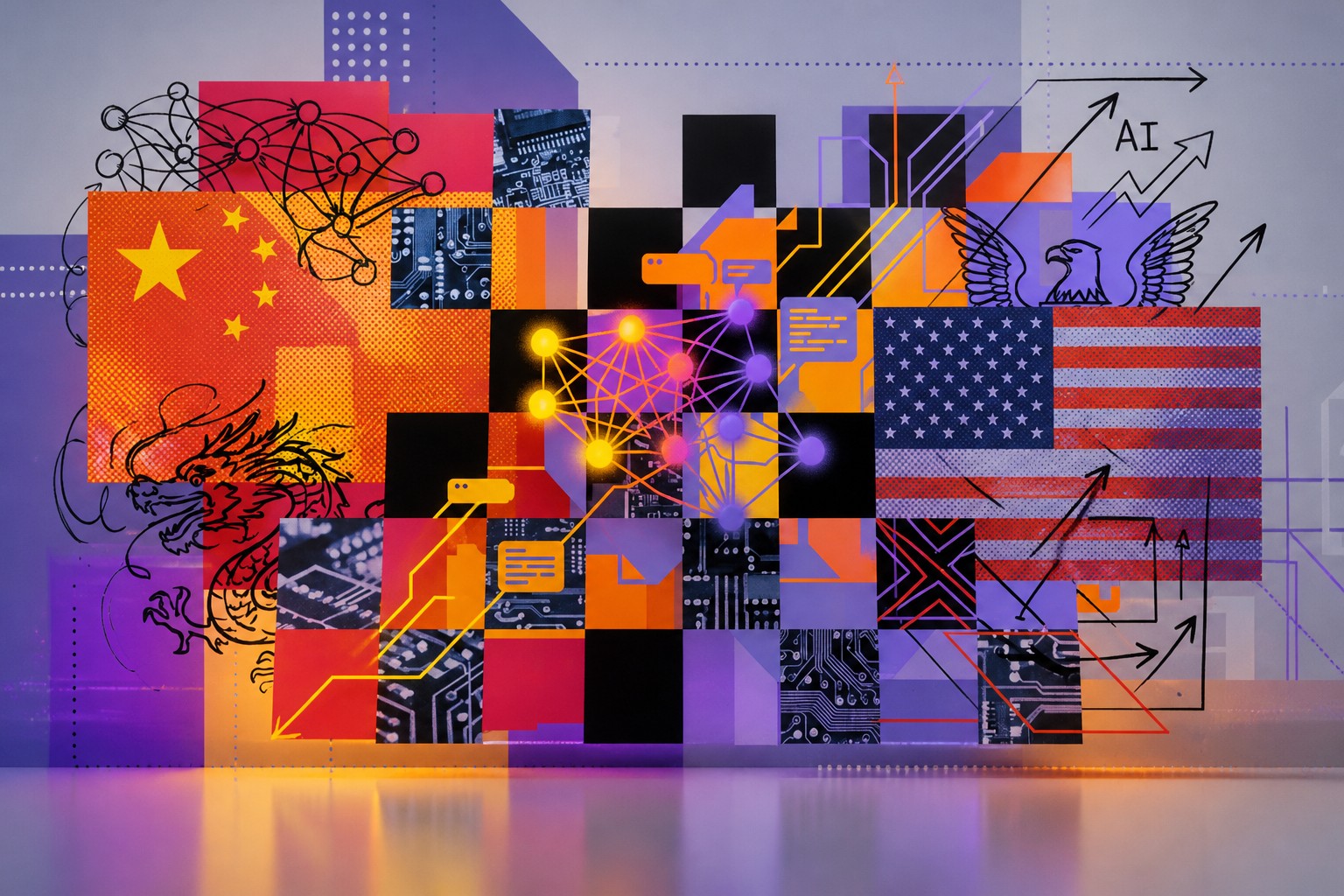
American companies are selling Chinese AI labs about $500 million worth of training data, including reinforcement-learning environments. A ChinaTalk investigation identified at least nine such suppliers. Chinese buyers are acquiring the same environments previously built for OpenAI and Anthropic, helping them cut computing costs and development time. The investigation’s authors call for export controls to cover environments that could pose cybersecurity and biological risks.
Chinese AI labs are buying $500 million in training environments from the US
Why buy ready-made environments
Reinforcement-learning environments are simulated worlds where models practice specific tasks, such as coding, financial analysis or office work. The American suppliers named include Mercor, Surge AI, AfterQuery and Turing.
Chinese labs deliberately choose products that have already been sold to Anthropic or OpenAI. This lets them rely on proven data without spending resources building their own environments or on unsuccessful training runs. The savings are especially important because Chinese chips face a severe memory shortage.
Distillation is also part of the process: Chinese labs use powerful American models, such as GPT and Claude, as “teachers,” turning their answers into training examples. Combined with purchased environments, this helps them close the gap while using fewer of their own computing resources.
How the deals work
ChinaTalk reports that at least nine American companies sell data to Chinese customers. According to the investigation, a substantial share of AfterQuery’s annual recurring revenue comes from clients in China. ChinaTalk cites Forbes reports estimating the company’s revenue at about $100 million, but says it could not independently verify the sales.
Surge AI states openly on its website that its products are created by the same experts who work on projects for leading labs. Some deals go through overseas entities: ByteDance maintains procurement offices in Singapore and San Jose.
ChinaTalk writes that the companies’ connections came to light through anonymous sources and contractors’ weak operational security. American suppliers pass much of the work of building environments and preparing data to low-paid workers in developing countries, especially India. Contractors sometimes name clients on LinkedIn or in résumés, even though they are supposed to use code names only. Export controls have little effect on these deals because reinforcement-learning environments are largely unregulated.
Cybersecurity and biological risks
Coding environments help improve software development, but they can also strengthen the ability to carry out cyberattacks. Biology environments may expand gene-synthesis capabilities and potentially assist with tasks related to biological weapons. The ChinaTalk authors argue that the US Bureau of Industry and Security should extend existing export restrictions to cover such dual-use environments.
The authors do not consider the situation catastrophic: for structural reasons, Chinese labs using US-developed work are still at least several months behind their American peers. Leading American companies are increasingly developing sensitive environments for biology, chemistry, cybersecurity, chip design and investment banking in-house.
Dataist’s take: The investigation shows that control over training data does not always mean control over the models themselves; ready-made environments can also accelerate competitors’ progress. But the scale of the risk depends on the field, and the authors point to a limiting factor: in several areas, American companies already build sensitive environments within their own organizations.
Daily AI news
Every day we pick what actually matters in AI and explain it plainly — no hype, no filler. Subscribe if you want to follow where the industry is going.
Only what matters — every day
Follow on X