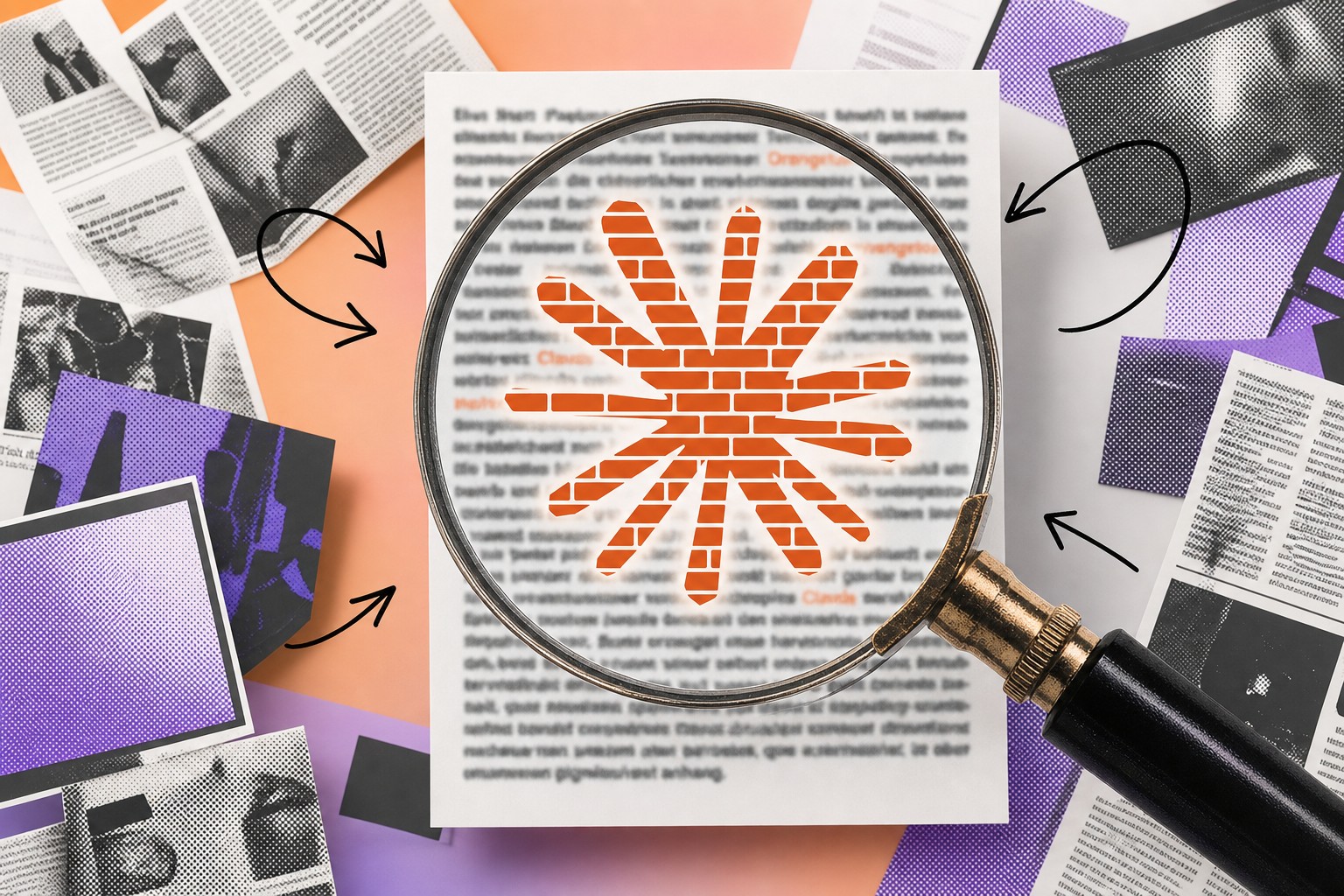
Anthropic has opened a way for outsiders to check whether a piece of text came out of Claude. Regulators, news organizations and fact-checkers are among those getting access. The check reads a watermark Anthropic builds into Claude's output using Google's SynthID Text method, which shifts the randomness in the model's word choices just enough to leave a statistically detectable pattern. Anthropic says the pattern holds through some editing, which would make it steadier than detectors such as Pangram that judge a text by how it reads.
Anthropic's position is that the watermark carries no user data and changes neither the quality nor the content of what Claude writes. Critics do not accept the second half of that. A model weighing synonyms with one eye on a watermark key is not choosing purely on meaning, and whatever that costs lands on the text.
Artificial Lawyer came at the transparency question from the other side. A detectable trace matters where a contract forbids the use of AI, and it matters in a negotiation over fees, where a client able to identify which paragraphs a model produced has an argument about what the hour was worth. The publication's own conclusion was that in most situations the watermarks will probably do no harm.
The cryptography is the least interesting part of this. What Anthropic has actually built is an access program: a list of institutions permitted to ask the question, with Anthropic answering it. The company that produced the text is also the authority on whether it produced the text, and the people who get to ask are the ones it admits. That may well be the only workable arrangement, since publishing the detector publishes the map for evading it. It is still a governance decision rather than a technical one, and it should be named as such.
None of it is quantified. "Survives some edits" carries the entire claim with no threshold attached — not for paraphrase, not for translation, not for a pass through a second model. A mark that holds through a light copy-edit and a mark that holds through a deliberate laundering are different instruments with different uses, and nothing here says which one this is. Detection also runs one way only. A hit says Claude wrote this. A miss says nothing at all — not that a human wrote it, only that this particular watermark is not present.
That is the wall the whole idea runs into. A watermark is worth as much as the share of machine-written text that carries one, and no single lab controls that share. What regulators and newsrooms are getting is a tool that can confirm one company's output and stays silent about everyone else's: better than guessing, and a long way short of knowing.