
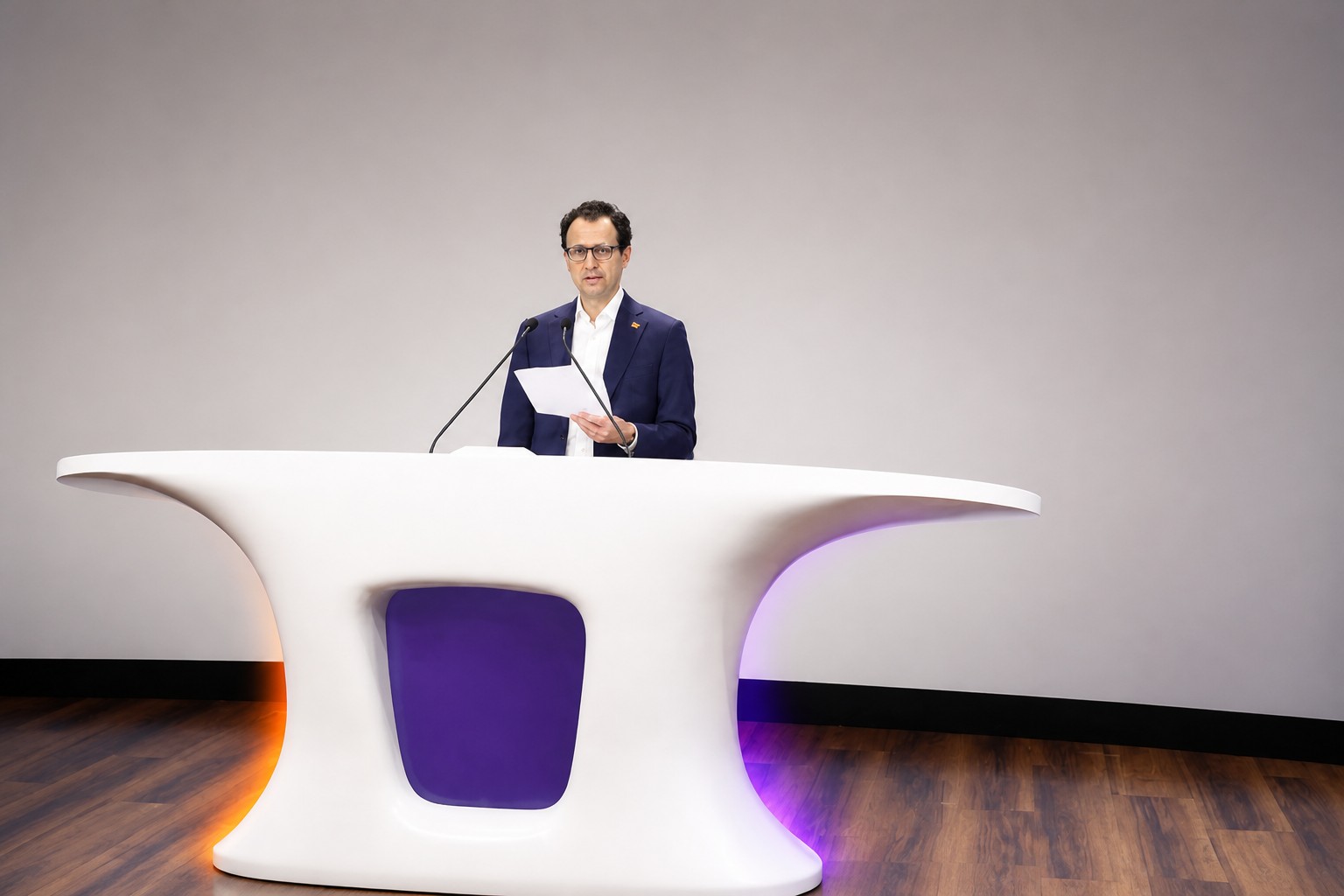
During Anthropic’s Wall Street debut on Thursday, the largest IPO in history, CEO Dario Amodei spoke before trading opened on Nasdaq and confirmed that the company would develop AI while keeping humans in control of its systems. He said Anthropic would not give in to business or political pressure and would take as long as necessary to ensure AI is trained and deployed safely.
Anthropic vows not to speed up AI development under pressure
Why build powerful AI
Amodei began his speech with the story of Anthropic’s founding. He and his co-founders wanted to build powerful technology for the benefit of humanity. Dario and his sister, Daniela Amodei, lost their father to an illness that became treatable just a few years later. Dario began his career in biology, hoping to bring new treatments closer.
In the lab, he saw how difficult the work of scientists studying diseases and developing drugs could be. Many tools that could make the work easier existed only as ideas at first: gene editing and synthesis, and using light to control brain cells. Amodei’s view is that these advances grew out of human thought and intelligence.
Human intelligence helped make plague, smallpox and polio a thing of the past for much of the world. But progress in treating other diseases is too slow for patients and their families: the path from an idea to a drug can take decades. For example, many years passed between the discovery of an unusual repeating pattern in DNA and the approval of the first treatment for a disease using CRISPR. Nature is full of patterns like these, but scientists still lack the time and tools to understand most of them.
Amodei believes AI can speed up research by working alongside people. Scientists in fields across biology and medicine already use Claude for research, from studying protein structures and developing drugs to cancer genetics and organizing clinical trials. Amodei said some of this work now takes only a fraction of the time it did just a couple of years ago. He suggested that sufficiently powerful AI, working with people, could compress a century of scientific and medical progress into a decade.
Anthropic’s CEO stressed that these are still early results. Experiments and clinical trials still take time, though he believes AI will help speed them up significantly. The company hopes that in the future fewer families will miss out on treatment because it arrived several years too late.
Medicine is only one example of how Claude is being used. Amodei said Anthropic’s customers — large companies, nonprofits and individuals — are already using the company’s capabilities to support economic growth, help people escape poverty, protect democracy and free societies, and improve everyday services such as the DMV.
How the company plans to contain the risks
Amodei has repeatedly warned about the dangers of developing AI too quickly. In September, he presented a plan to curb the pace of development. Its proposals included coordinating with other leading companies on safety standards and bringing in experts from independent organizations to check that commitments are being met. OpenAI CEO Sam Altman, Google DeepMind chief Demis Hassabis and xAI owner Elon Musk said they agreed with his position, though there were few specific commitments.
In his speech before trading opened, Amodei again listed AI’s risks: misuse by individuals or governments, economic shocks and loss of control over systems. Anthropic believes these outcomes can be avoided with safeguards in place.
The company plans to keep working on aligning AI behavior with human goals and testing systems, as well as developing new ways to study model behavior and maintain control over them. Amodei listed some approaches already in use: safeguards against biological and cyber risks, alignment training and testing, and studying models from the inside, as if taking an X-ray.
Amodei said the hardest work on safety is still ahead. Anthropic must direct the talent that enabled it to build its most capable AI systems toward additional checks to ensure they are safe and remain under human control.
Amodei said Anthropic would match the pace of AI training and deployment to its confidence in the systems’ safety, even if that took more time. He also stressed that the company would not change this approach under pressure from businesses or politicians. Going public strengthened its financial position and, Amodei said, should make it more determined to do the right thing. If Anthropic can meet safety requirements while building a successful business, other companies in the industry may follow its example. Amodei called this kind of competition a “race to the top”: if it succeeds, everyone wins, because companies develop AI safely and the goal is to improve the entire industry, whether or not Anthropic comes first.
Daniela Amodei, Anthropic co-founder and Dario’s sister, expressed a similar view in an interview with CNBC on Thursday. She acknowledged that the risks are real but called AI’s potential enormous. She said the company had taken on the task of reducing those risks from the beginning, had already done a great deal of work and continued to give safety special attention.
Dataist's take: Anthropic’s promise ties the pace of AI development to the company’s confidence in the systems’ safety and controllability. At the same time, the company acknowledges that the hardest problems in this area are still ahead.
Daily AI news
Every day we pick what actually matters in AI and explain it plainly — no hype, no filler. Subscribe if you want to follow where the industry is going.
Only what matters — every day
Follow on X