

Anthropic IPO could fuel demand for London’s high-end homes
Where the new demand is coming from
Technology workers in London do not always look like the usual buyers in the luxury housing market. Many wear hoodies and white sneakers rather than the waistcoats favored by financiers and lawyers. Property buying agent Jo Eccles said she once worked with a young tech entrepreneur with a large budget whom agents mistook for someone looking to rent a one-bedroom flat.
The expected IPO of Anthropic, the company behind the Claude chatbot, could bolster confidence in a growing group of tech millionaires and support London’s weakening high-end housing market. Eccles said budgets among these buyers range from £2 million to £40 million. They include executives at major AI labs and founders who have sold their startups.
The technology wealth boom has already affected Silicon Valley, especially San Francisco, where young entrepreneurs and engineers quickly became millionaires, adding to demand for already-scarce housing. Now similar money is flowing into the UK.

San Francisco, where tech wealth has driven up demand for already scarce housing. Photograph: Josh Edelson/AFP/Getty Images
Source: theguardian.com
Anthropic, founded in San Francisco in 2021, employs around 5,000 people worldwide, with more than 200 in the UK. The company has announced plans to expand in London and open an office for up to 800 employees.
According to Anthropic’s UK filings, the company spent £24.1 million on staff in 2024, when it had an average headcount of 43. That works out to £560,000 per employee. Job listings published this year offered research engineers base salaries of up to £630,000, excluding stock options.
High pay is also common at other companies in the sector. Last year, the average payment to OpenAI employees in London was £2.3 million — about 58 times the median earnings of a full-time worker in the UK. That is comparable to the pay of partners at leading law firms Linklaters and Clifford Chance, and higher than that of some City of London financiers.
The value of UK investors’ stakes in AI companies is also rising. Alex Gerko, billionaire founder of trading firm XTX, invested in Anthropic at an early stage through his company’s venture capital arms. After Anthropic’s IPO this week, his paper gains are expected to reach hundreds of millions of pounds.
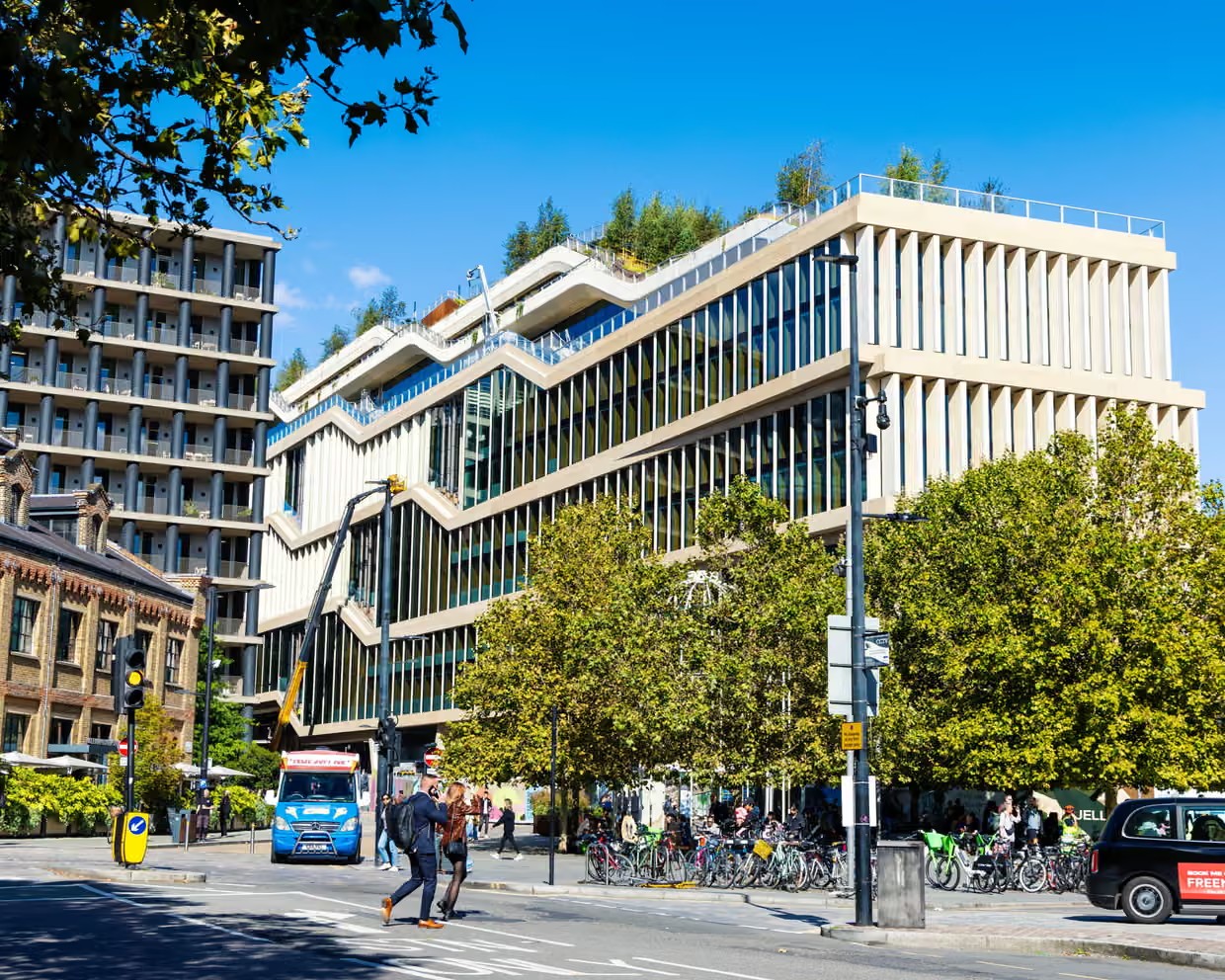
Google’s headquarters in King’s Cross in London. Anthropic, OpenAI and Meta are all a stone’s throw away. Photograph: Nathaniel Noir/Alamy
Source: theguardian.com
London’s AI hub and high-end homes
Technology companies have already reshaped London’s commercial property market. First, a wave of startups earned Shoreditch the nickname “Silicon Roundabout”; then tech firms began opening offices in other parts of the city. Now US AI companies are expanding rapidly in the UK and clustering in the Knowledge Quarter near King’s Cross, where Anthropic, OpenAI and Meta are close to one another.
Demis Hassabis, one of the prominent figures in AI development, came to the area earlier. He co-founded DeepMind in 2010; Google bought the company for £400 million four years later. Isomorphic Labs, Hassabis’s drug-discovery startup using AI, is also based there and is now owned by Alphabet, Google’s parent company.
The new demand is also visible at the top end of London’s housing market. In February, The Times reported that Igor Babushkin, billionaire and co-founder of Elon Musk’s AI company xAI, had bought a penthouse overlooking Hyde Park for £57 million. It is one of the city’s biggest deals this year.
Providence House, a mansion formerly owned by Nick Candy, treasurer of the Reform UK party, and located on the grounds of the Royal Hospital Chelsea, was reportedly sold for £270 million to Suneil Setia, founder of investment firm Quadrature Capital. The firm’s chief executive, Aidan Devine, has linked its success in part to the proximity of the city’s AI labs. He told the Financial Times that London is probably experiencing a golden age of quantitative finance.
According to luxury estate agency Beauchamp Estates, wealth linked to technology, and AI in particular, has become a notable force in central London’s most expensive property market. The agency’s portfolio includes, for example, a £42 million apartment below a penthouse overlooking Hyde Park.
Jeremy Gee, managing director of Beauchamp Estates, said the agency has seen a marked increase over the past year in inquiries from buyers in technology and AI. Some are foreigners, mostly from the US, but the number of clients living in London is also growing. Gee said many had made large fortunes quickly; these buyers are younger, move fast, and care above all about location and the quality of the home. They are willing to pay more for a truly exceptional property. Gee cited London’s culture, history, world-class schools and growing local AI community as advantages.
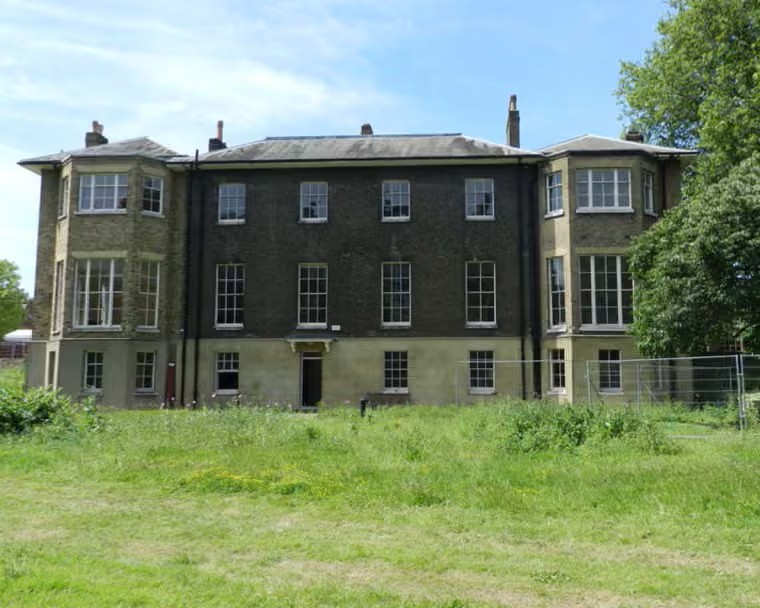
Providence House, formerly known as Gordon House, photographed in 2015. It was reportedly sold this year to Suneil Setiya of Quadrature Capital. Photograph: logorman/Mola/RBKC
Source: theguardian.com
Traditional financial institutions are also adapting to new clients from the technology sector. Shauna Baijal, managing director for private wealth at Coutts, said young entrepreneurs who come into large fortunes quickly often need help. Many feel overwhelmed, she said, so the bank discusses the emotional side of sudden wealth and advises them not to rush into decisions.
A Coutts study published last month found that eight out of ten properties in London’s most expensive districts, including Mayfair, Belgravia and Knightsbridge, are now selling below their asking prices.

Tech and AI multimillionaires are very clear on what they want, says a super-prime estate agent: ‘Location and quality matter most.’ Photograph: Fenton Whelan
Source: theguardian.com
Paper fortunes and bubble risk
Hopes that AI companies will support London’s housing market come with a caveat: much of the new wealth has not yet turned into cash. Baijal said many founders are rich on paper but have little cash available. Until they sell their business or become eligible for shares, the value of their wealth remains largely theoretical.
At the same time, the UK economy is becoming increasingly dependent on growth in the technology sector. Official figures last week showed that the country’s economy grew by 0.7% in the third quarter, its fastest pace in two and a half years. Nearly all of that growth came from services, led by IT. A separate Bloomberg analysis found that AI accounted for about a quarter of the UK’s economic growth this year.
That dependence raises the potential cost of a sharp downturn in the sector. Investors have been warning for months about high valuations for AI companies; protests against data center construction and concerns about AI safety are also intensifying.
Last week, market participants were reminded again of how vulnerable AI investments can be. A scandal involving an extramarital affair and an alleged Chinese spy drove down Nvidia shares. Nvidia is one of the most valuable AI businesses in the US and a maker of chips.
Market indicators are also sending warning signs. This year, the CAPE ratio, a popular investor measure comparing stock prices with earnings adjusted for cyclical fluctuations, climbed to its highest level since 2000. That points to an unusually high valuation of the US stock market relative to company earnings. The measure reached that level before Anthropic’s high-profile IPO.
The boom is also visible in city life. In San Francisco, the average rent for a one-bedroom apartment has reached $4,400 a month, more than 25% above last year and almost three times the US average. Landlords are trying to capitalize on rising demand, especially in neighborhoods near the offices of major AI companies, including OpenAI and Anthropic.
In London, King’s Cross is shifting from a freight rail district once known for criminal activity into an international technology and AI hub. It remains unclear how durable the new fortunes will prove to be, or whether they are tied to a temporary upswing amid a historic technology bubble.
Dataist’s take: AI is already affecting London’s labor market, offices and high-end housing, but rapid growth in incomes and prices does not by itself guarantee lasting demand. A key constraint is that much of this wealth still depends on share prices and companies’ future IPOs. Meanwhile, the UK economy is relying more heavily on a sector whose valuations investors consider inflated.
Daily AI news
Every day we pick what actually matters in AI and explain it plainly — no hype, no filler. Subscribe if you want to follow where the industry is going.
Only what matters — every day
Follow on X