
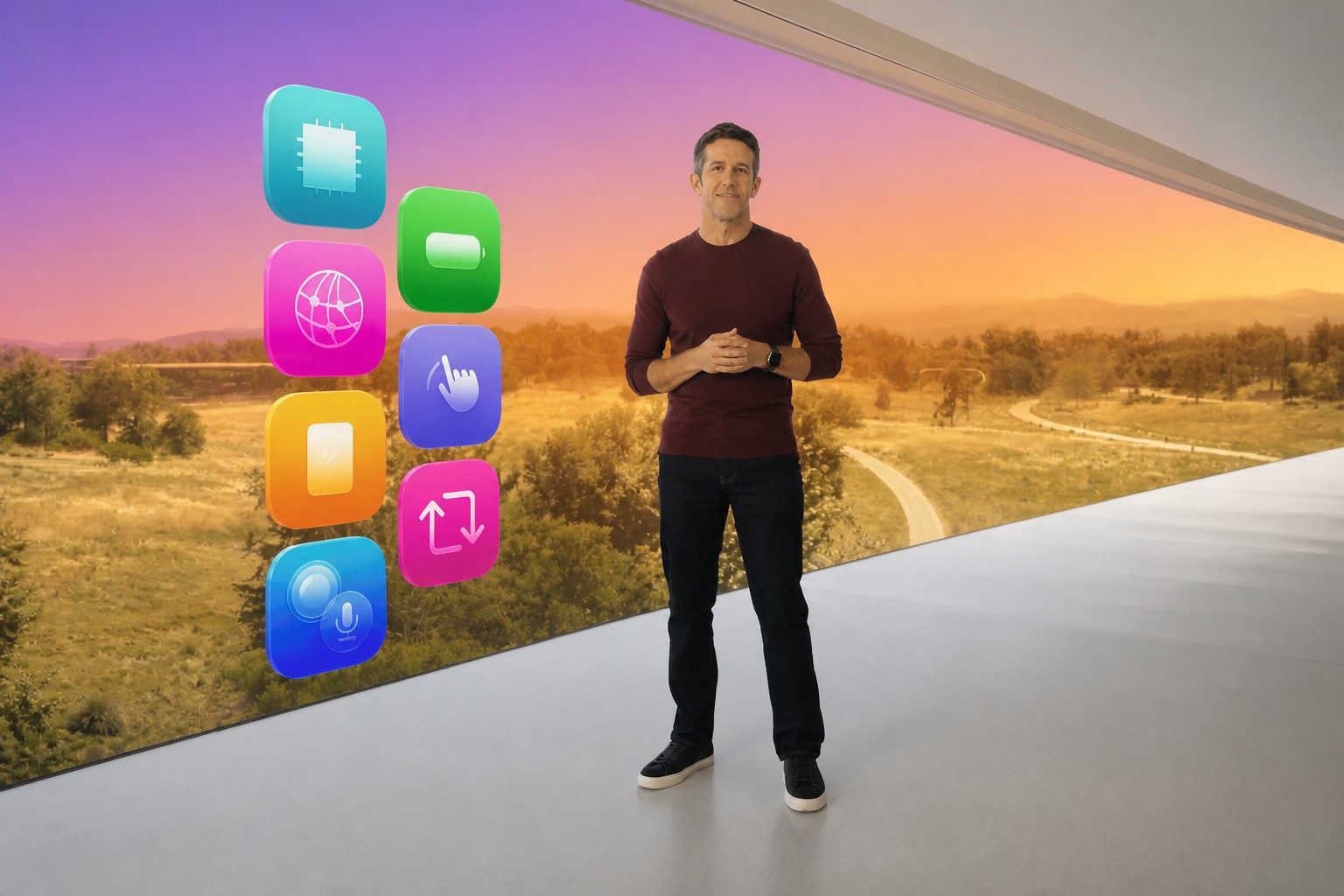
At an event in Cupertino, Apple CEO John Ternus set out a specification for the ideal AI device and called it an "intelligent personal hub." It has to understand the user's personal context, stay near them at all times, carry a processor strong enough to run models on the device itself, reach cloud models over the internet, have a large screen plus cameras and microphones good enough to see and hear what is happening around it, and go a long time between charges. Then he named the product that meets every line of it: the iPhone.
Two softer criteria came with the list. The device should be usable without a long period of learning, and it should work with other devices, apps and services closely enough that the whole thing feels like one experience rather than several.
What Apple presented as a definition is a description of hardware. Every item on Ternus's list is a component Apple already manufactures and already ships. Nothing on it describes a model, a capability, or a thing the device can do that it could not do a year ago. This is an argument about the chassis, made at a moment when the rest of the industry is arguing about the engine.
The sharper material came when Ternus turned to privacy. Other companies, he said, treat a user's personal information as data to be collected and stored. Trust is limited, he argued, once the user no longer controls their own data, which is why Apple Intelligence runs directly on the device whenever it can. This is among the most direct statements Apple has made about how it intends to separate its AI platform from everyone else's.
That is the part of the pitch doing real work. The privacy argument is not a feature claim; it is a constraint claim. Apple is saying that the correct way to build this is the expensive way, on silicon the user already owns, and that anyone doing it differently has made a trade the user was not told about. It is a good argument. It is also the argument a company makes when it wants the conversation to be about method rather than results.
Notably absent from the spec is any account of the ceiling. Two of Ternus's criteria sit awkwardly together: the device must be powerful enough to run models locally, and it must also be able to reach models in the cloud. The second requirement exists because the first one runs out. The load-bearing word in the whole presentation is "whenever" — Apple Intelligence runs on device whenever possible — and nothing in the announcement says where that line falls, who draws it, or what the user sees when the work crosses it.
A definition of the ideal AI device that resolves to the product the speaker's company already sells is either a sign that the phone was the right form factor all along, or a sign of how much is riding on that being true. Ternus's specification describes hardware. The competition is over what runs on it.