Apple has rebuilt Siri around an index of the phone it lives on, and for the first time given the assistant an app of its own. After installation, Siri AI spends a while indexing messages, email, calendars and other data on the iPhone; the processing happens on the device, so nothing is sent to Apple. What comes out the other side is an assistant that answers questions about your own correspondence and appointments, reads what is on screen without a screenshot, writes and edits text without calling out to ChatGPT, and — on the newest hardware only — lets you adjust the tone, speed and expressiveness of its voice.
The personal-context piece is the part that no competitor can copy cheaply. Once the index is built, you can ask which day your performance review falls on, or where you agreed to meet your mother, and the answer is assembled from data already sitting in the apps. Photos works the same way: ask for pictures of the pet, shots from the last vacation, or every image of a tree you have ever saved, and ordinary words are enough.
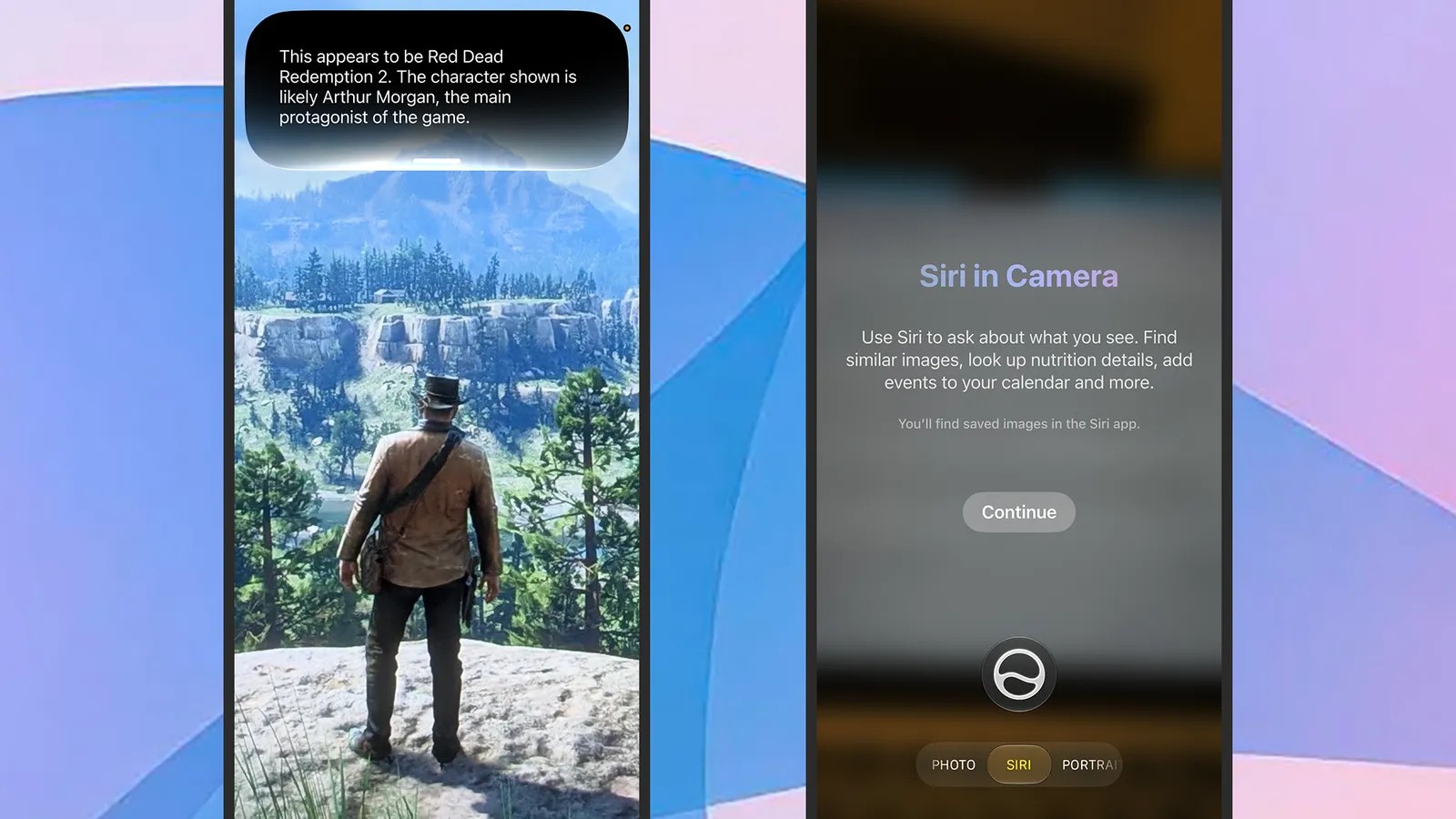
Screen awareness is the second change, and it removes a step that never should have existed. Previously, getting Siri to reason about what you were looking at meant taking a screenshot and handing it over. Now you say "Hey Siri" in Safari and ask for a summary of the page, or ask what landmark appears in a photo inside an online article. The same assistant will explain what a settings toggle does, or find more information about a game you are about to download from the App Store.
The Camera app gets the same treatment. A switch next to the shutter button puts the camera in Siri mode, and from there you can ask about anything in frame — the nutritional content of a dish on a menu, for instance.
Source: wired.com
Writing is where the architectural change shows most clearly. The old Siri could produce text, but it did so by reaching for the built-in ChatGPT plugin. Siri AI does the work itself: drafting messages and emails, making them more or less formal, expanding or shortening passages, turning scattered notes into finished paragraphs. You start it by saying "Hey Siri" or tapping the Write with Siri link, then describe what you want written or which changes to make. The user keeps the final call — every edit is reviewable, the text is hand-editable, and you can move between versions.
Inside apps, Siri AI gets both more data and more verbs. Voice or text can create calendar events and switch playlists. Some of that existed before, but the assistant now reaches deeper into apps and accepts a much wider range of plain-language phrasings — close to handing your phone to a person and telling them what to do. It also proposes actions on its own: if someone sends you a date and time, Siri may offer to create the event. Apple says deeper integrations with third-party apps are coming over time.
Source: wired.com
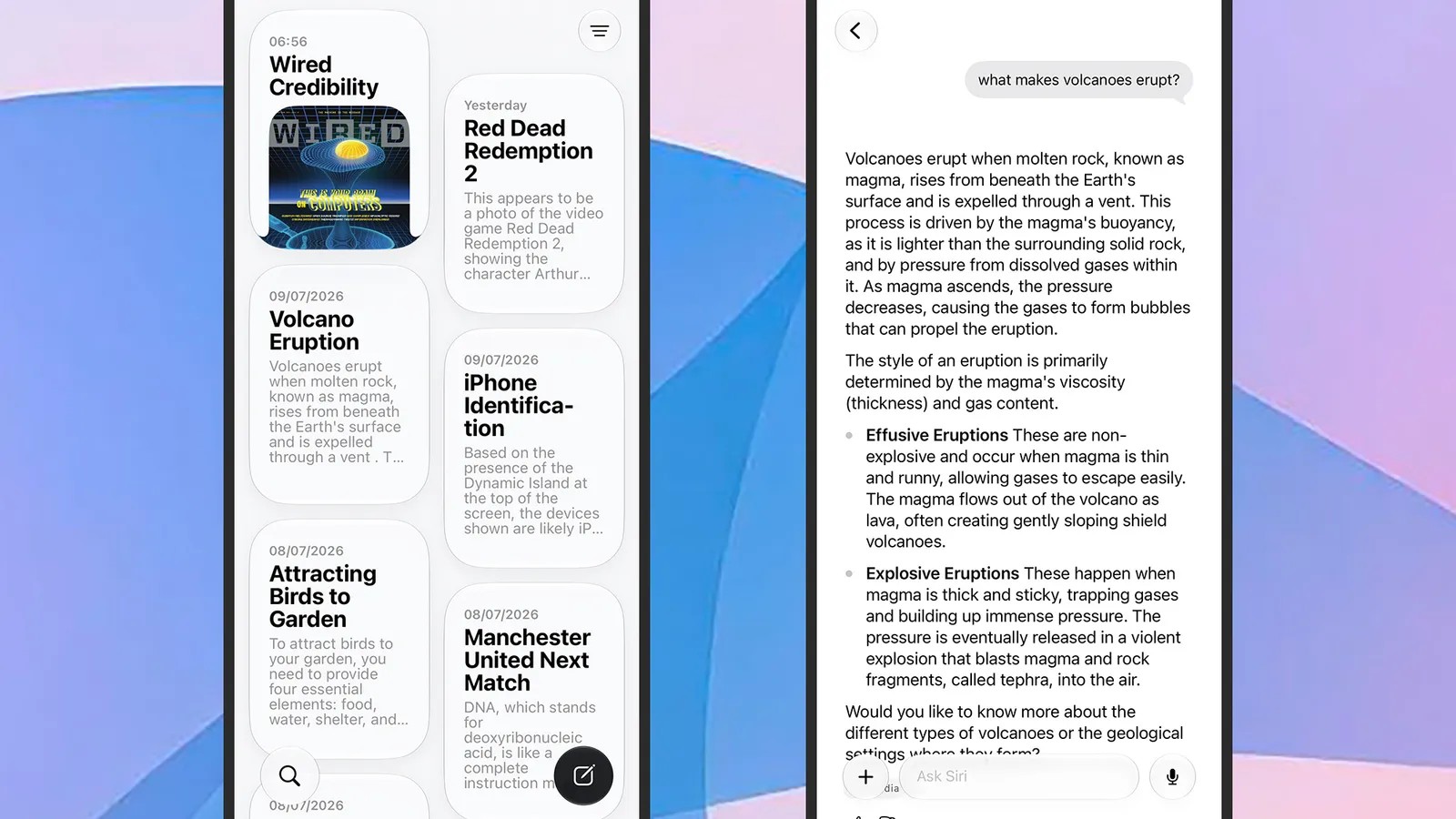
The standalone app is the most telling item on the list. Apple's assistant has never had a place of its own; you can now open it from the home screen, browse the history of your conversations with Siri AI, and sync queries across Apple devices. Claude, Gemini and ChatGPT have had exactly this since the beginning — a container for the conversation, not just a microphone. The app also carries what Apple calls broad world knowledge: one-off questions about the history of Rome or how to fix a leaking faucet are meant to get longer, more informative answers there.
Voice personalisation sits behind a hardware wall. Adjusting tone, speed and what Apple calls expressiveness demands more compute, so among iPhones it runs on 2026 models, the iPhone 17 Pro, the iPhone 17 Pro Max and the iPhone Air. The controls live in the Siri section of Settings, alongside the default voice and how long conversations are kept in history.
Read the list as a whole and the shape of Apple's bet is clear: it is not competing on raw model capability, where it would lose, but on the one corpus nobody else can index — the contents of your phone, processed locally. That is a genuinely defensible position, and it is the only part of this announcement a rival cannot answer with a better checkpoint next quarter. The standalone app, by contrast, reads as catching up. Building the assistant into the operating system was supposed to be the advantage; shipping a separate app is an admission that people want to talk to an assistant in a place, not summon it from nowhere.
The awkward item is the voice tier. Tone and expressiveness are the least functional features on the list and the only ones gated to the newest hardware — which tells you the gate is about compute cost on old silicon, and also that it sells phones. Notably absent from the description: a ship date, a version number, and any word on whether the ChatGPT plugin survives now that Siri AI writes on its own.
Everything here depends on the index being right. An assistant that answers from your calendar and messages is only as good as its reading of them, and Apple has offered no accuracy figure, no failure mode, and no account of what happens when the answer about when your performance review falls is confidently wrong.