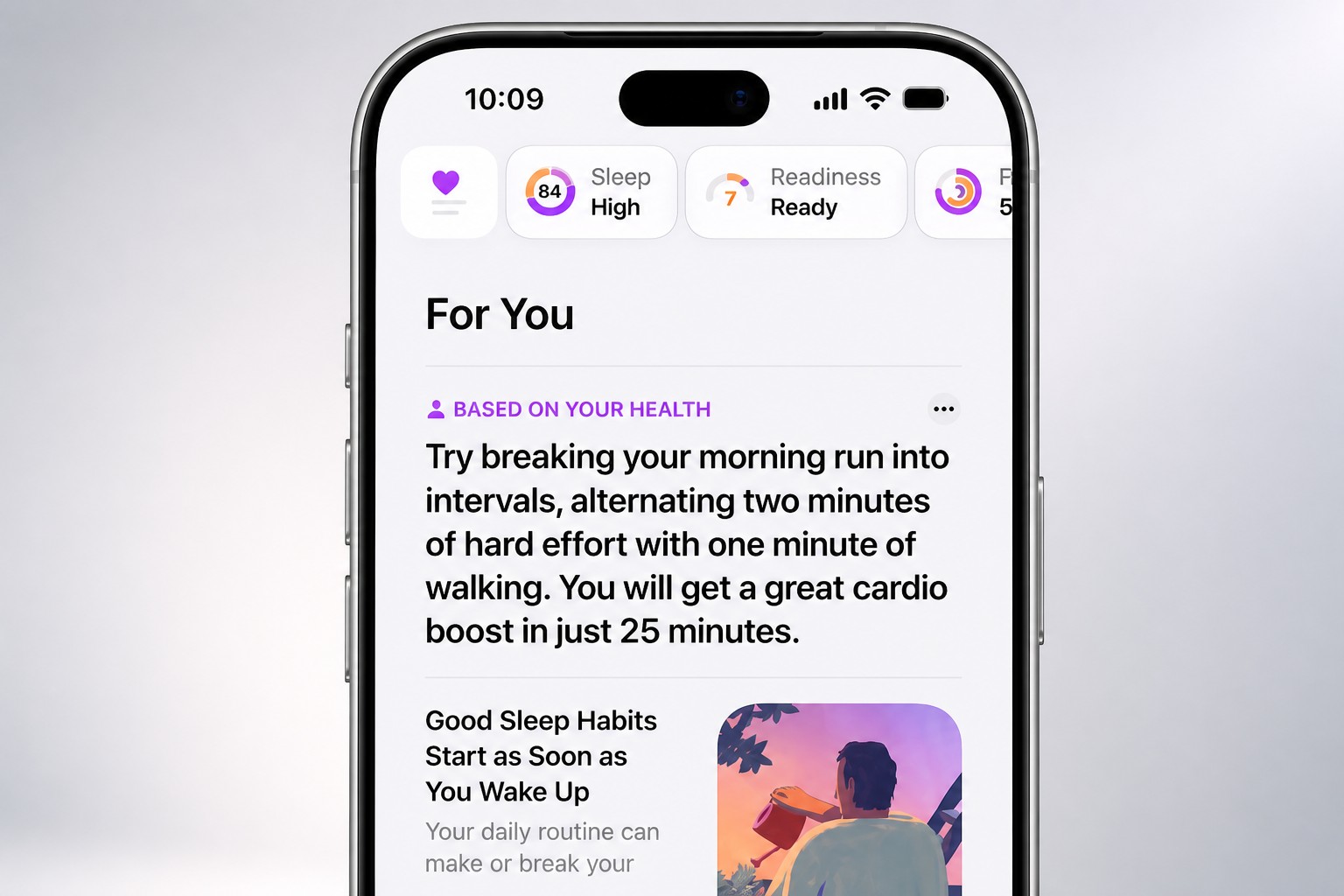
Apple has rebuilt Health around judgement rather than display. The redesigned app adds an Insights tab carrying the most timely information, personal recommendations and assessments of the user's condition, plus two new composite numbers: a readiness score and a "health age" that sets a body's measurements against its owner's actual age. Apple also announced a partnership with Quest, under which users will be offered a panel of 50 biomarkers for $119 — fast access, in Apple's description, to data that can otherwise only be obtained in a lab.
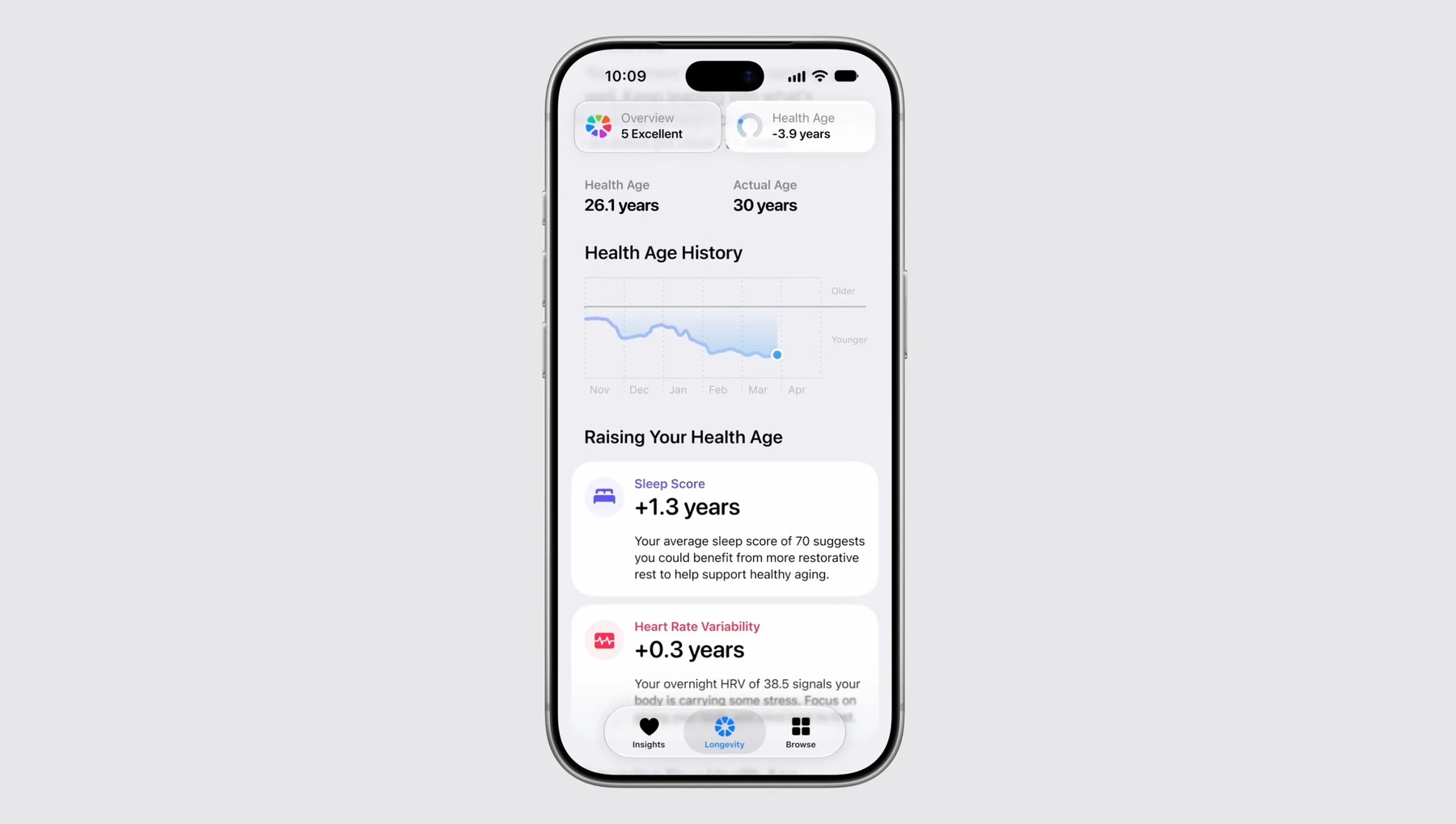
The health age calculation draws on maximum oxygen uptake, sleep data and other parameters, including biomarkers from a blood test. A new longevity tab rates condition from Apple Watch and iPhone data — sleep, physical activity, heart health and other factors — and lab results can be folded into what it recommends.
Source: techcrunch.com
Apple Intelligence does the analysis behind the readiness score and the Insights tab, and extends Health's reach into other medical data. The example Apple offered is small and concrete: the app might suggest adding more interval segments to a morning run to improve cardiovascular condition. Apple says the app will also go deeper on fitness and heart health.
The third piece is a detailed assessment of how well the user actually moves, aimed at people who are aging or recovering from injury. During the assessment a trainer can demonstrate specific movements for the user to perform. Apple compares the format to a session with a trainer standing next to you.
The three features share a shape. A readiness score, a health age, a movement rating — none of these are readings. They are grades. Health has been an app that shows you what your devices measured; what Apple described this week is an app that tells you what the measurements mean, in a single number, without the chart underneath it.
The Quest deal is the part worth watching. Everything else in the announcement runs on sensors Apple already ships and data it already holds. A 50-biomarker panel does not: it is Apple reaching for something no watch can see, and it puts a $119 purchase inside a health app used by hundreds of millions of people. That is a different business from selling watches, and it arrives attached to a score that a blood panel makes more precise — which is to say, the product creates the reason to buy the input.
Notably absent from the announcement: how any of these numbers are computed, what they were validated against, and what happens when one of them is wrong. A health age is a claim about a person's body delivered as a single figure, and Apple said nothing about the margin around it. Nor did it say anything about where uploaded lab results sit afterwards — the announcement covers what goes into Health, not what happens to it once it is there.
A chart of your resting heart rate is information, and an unhelpful chart costs nothing. A number that says your body is older than you are is a verdict, and people act on verdicts: they book tests, change their training, worry. Apple has taken on the obligation to be right about that number, and it has placed a $119 blood panel directly downstream of the moment a user decides the number is bad news.