
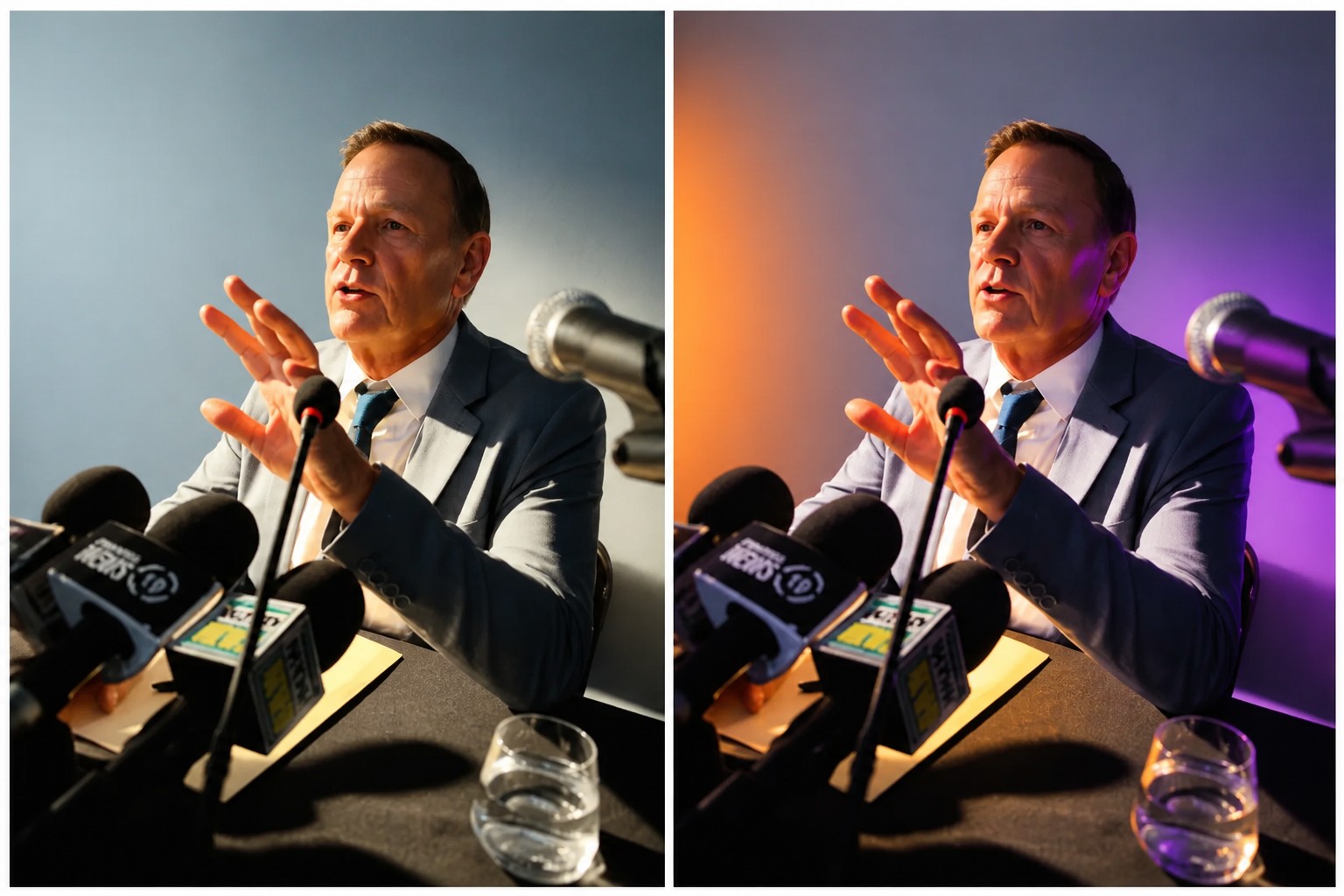
At its Surprise and Shine event on Wednesday, Apple launched Apple Reference Image, a way to establish that a photograph taken on an iPhone 18 Pro is genuine. When the shot is taken, the main camera sensor simultaneously records signed sensor data; Private Cloud Compute then converts that into an immutable image that opens in the Photos app. The reference version can be set against any other copy of the same frame to show whether it was altered. Apple compares the file to a digital negative — the fixed starting point a photograph is checked against — and says the feature matters first of all to photographers and photojournalists.
Reference images will live only in the Photos app to begin with. Apple is giving developers an API so they can build support into their own applications.
Separately, the company said it will support SynthID, a standard for determining whether an image was created or modified with AI.
The two announcements point in opposite directions, and the first one is the more interesting bet. Detection asks a system to look at a finished image and guess at its origins, which gets harder every time generative models improve. Provenance asks nothing of the image: the claim is made at the sensor, at the moment of capture, and everything afterwards is a comparison. Apple has chosen the side of that argument that does not lose ground as the models get better.
What the reference image actually proves is narrower than the framing suggests. It establishes that a file corresponds to what a particular sensor recorded. It says nothing about whether the scene in front of the lens was true. A staged photograph, a screen photographed off another screen, a caption that misstates where and when the shutter fell — all of these produce a perfectly valid reference image. For a photo desk, that is still useful, because most manipulation happens after capture. It is not the same as authenticity, and Apple's own analogy concedes it: a negative proved a frame had not been retouched, never that the photographer told the truth.
The part notably absent from the announcement is where this leaves everyone who does not own the right phone. Reference Image covers the main sensor of the iPhone 18 Pro. A wire desk receives work from photographers shooting on bodies from every manufacturer, on older iPhones, on everything. A verification scheme that resolves one camera on one tier of one vendor's newest handset is a thin slice of what actually arrives at a newsroom, and Apple did not say whether the format is meant to be checkable by anyone outside its ecosystem — the negative is minted by Private Cloud Compute, not held by the photographer.
There is also the question of what SynthID support means once both features are shipping. Apple built its own mechanism for proving a photo is real and adopted someone else's for flagging that a picture is synthetic. Those two labels do not meet in the middle. Between them sits the enormous class of images that carry no reference file because they were not shot on an iPhone 18 Pro, and no watermark because whatever generated them does not sign its output.
That gap is the problem the announcement creates as much as the one it solves. Once verified photographs exist as a category, unverified ones start to read as a category too — and the overwhelming majority of real photographs taken this year will be in it.