
A tightly controlled fit
Last month, Apple hardware chief Johny Srouji described the manufacturing process at an event. As TechCrunch reported, algorithms select the housing part that best fits each hinge. A confocal laser then scans each surface, and a 3D printer applies up to 25 thin layers of a special photopolymer to smooth out remaining irregularities.
The process is precise. But precision in manufacturing does not by itself show that the hinge design protects the screen once the phone is folded and unfolded.
What “AI” means here
Apple has used machine learning in products for years. One example is the iPad feature that recognizes a resting hand, allowing someone to draw with a stylus without the device treating their palm as input.
That is a different category from chatbots such as Claude or ChatGPT. Srouji grouped machine-learning algorithms—if that is what the hinge system uses—with the broader idea of AI that now includes large language models and autonomous agents. Apple has not specified what kind of algorithms are involved in the hinge process.
I think the distinction matters because the announcement’s AI label sounds more expansive than the manufacturing details support. Matching parts and correcting surface irregularities may be useful engineering, but the account offers no evidence that generative AI or an autonomous system designed the hinge.
The failure is the harder test
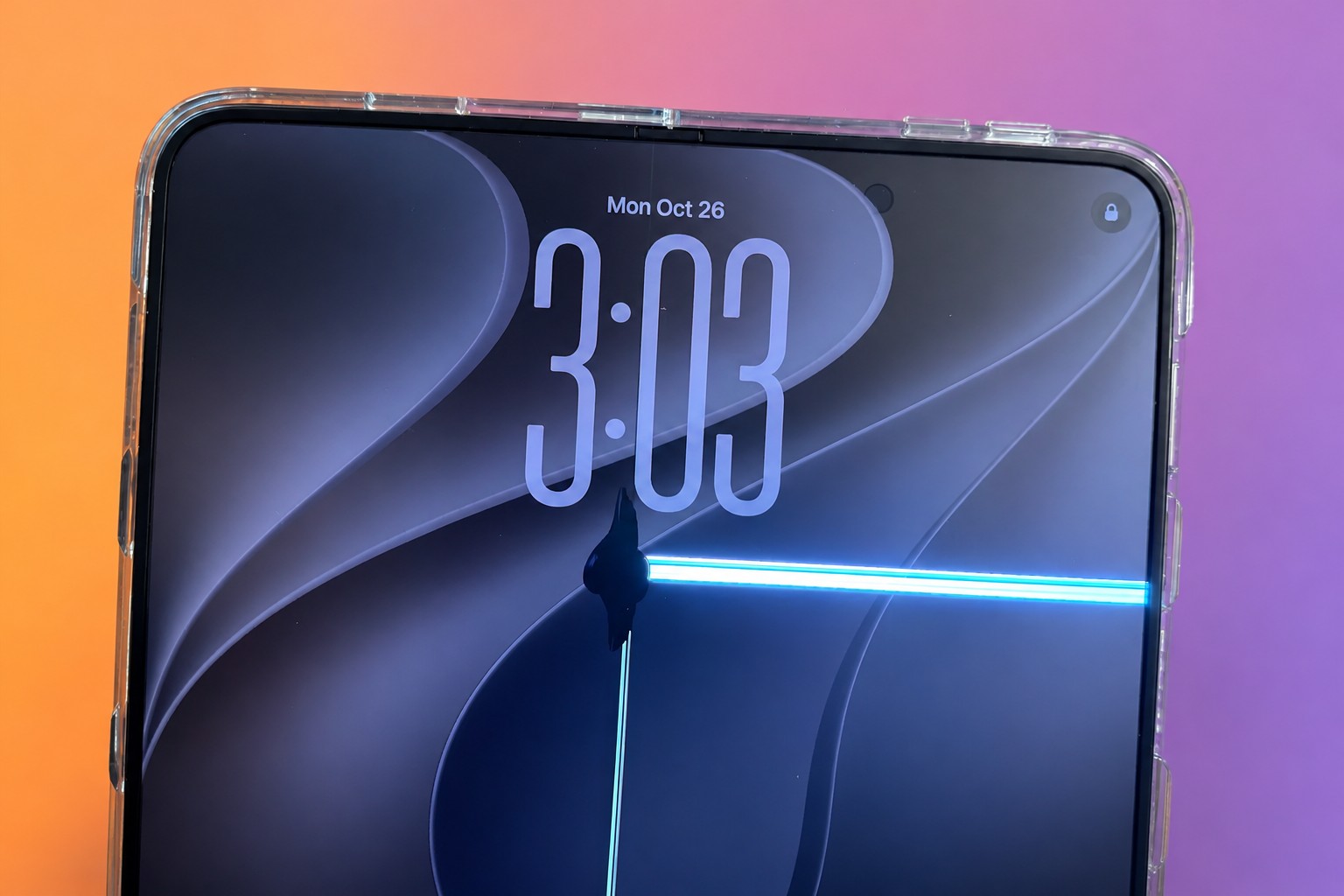
Some owners say the large inner screen, on a device priced from $2,000, cracked along the hinge within hours of unboxing. Early teardown analysis points to a possible hinge-design flaw.
Shahram Mokhtari, iFixit’s lead teardown specialist, told The Verge that part of the “extremely delicate” flexible inner display presses against the hinge. The central support bar is meant to move aside and leave room for folding without creasing the screen, but apparently does not move far enough, putting pressure on it.
Apple acknowledged a “problem” on Monday and said it was replacing damaged devices.
My question is not whether AI touched the manufacturing process, but whether Apple’s hinge design leaves enough clearance to protect the display. The company’s account explains how it fine-tunes a fit; the cracked screens suggest the more consequential question is whether the parts move safely together.
Daily AI news
Every day we pick what actually matters in AI and explain it plainly — no hype, no filler. Subscribe if you want to follow where the industry is going.
Only what matters — every day
Follow on X