
The test is autonomy, not conversation
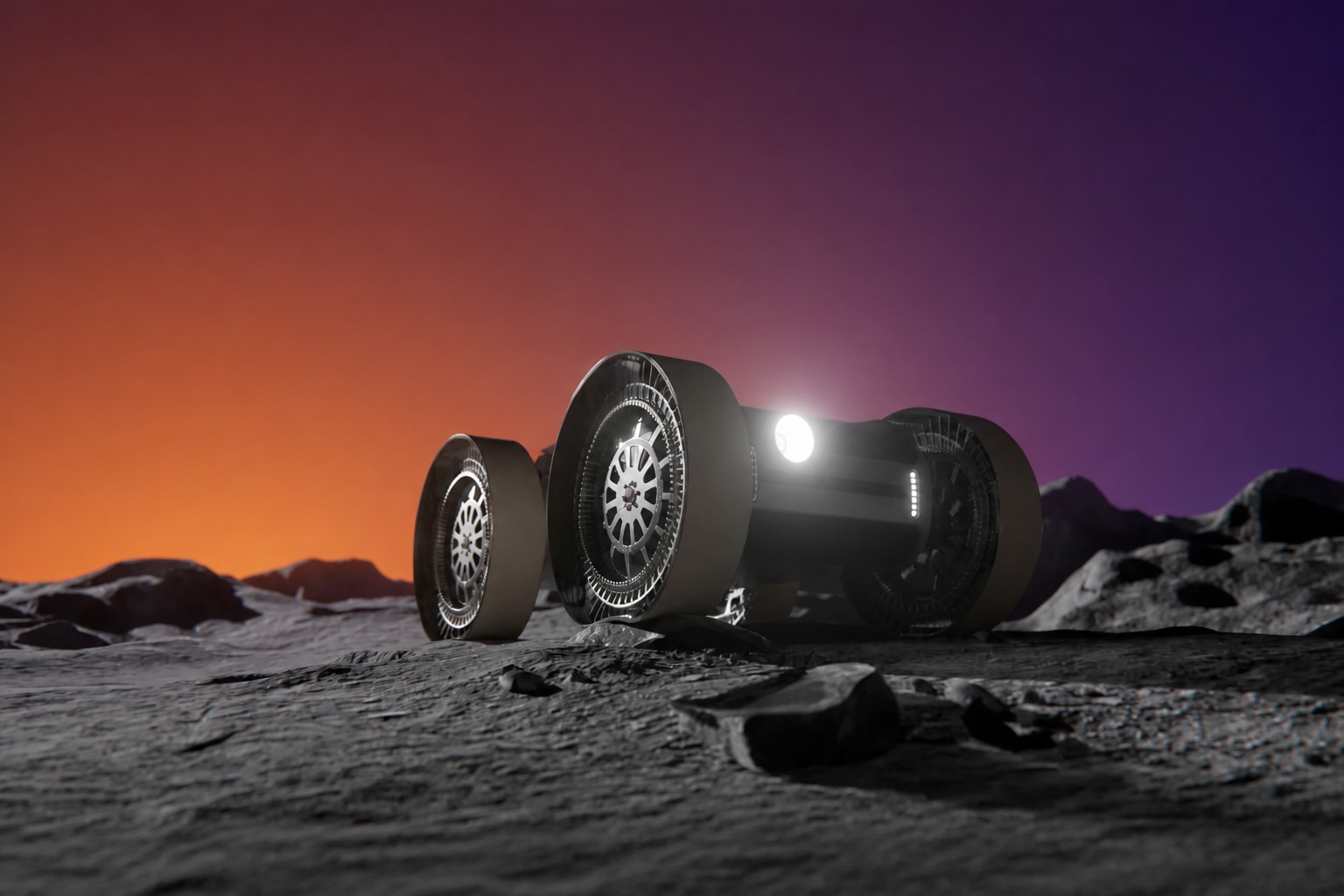
FLIP stands for FLEX Lunar Innovation Platform. It is the first rover in a series Astrolab has on order from NASA; future vehicles are intended to carry Artemis astronauts across the lunar surface. FLIP weighs 480 kilograms, has deformable wheels designed for rough terrain, and is built to withstand at least 150 hours of lunar night. Its 20 scientific instruments include a lidar for 3D mapping and a sensor that measures the concentration of helium-3 isotopes in lunar soil.
The language models, developed specifically for the project, will run experiments during the mission. They are meant to demonstrate reliable operation in the lunar environment while working with data from the rover’s cameras and lidar. The practical case is straightforward: a rover that can interpret its surroundings and sift its own data may need less direction from Earth and less bandwidth to report back.
HPE chief technologist and project lead Mark Fernandez said at a press conference that communication delays to Mars can reach 20 minutes. The delay is shorter on the Moon, but operators still receive stale data. He said the Soviet Union lost two rovers because communication delays contributed to operator errors.
China’s Chang’e-6 rover, which landed on the far side of the Moon in 2024, used basic AI algorithms and neural networks for autonomous navigation. NASA’s Curiosity and Perseverance rovers have also travelled semi-autonomously for years, following pre-planned routes. But the radiation-protected computers on those vehicles are weak by current standards, with computing power comparable to laptops from the late 1990s.
HPE’s Spaceborne-4 computer for FLIP pairs a powerful 64-bit CPU with a GPU capable of handling many tasks in parallel. HPE previously sent three Spaceborne computers to the International Space Station to test the technology in low Earth orbit, a more controlled environment. Spaceborne-2 and Spaceborne-3 launched in 2021 and 2024. In 2025, as part of the Space Llama initiative, they ran Meta’s Llama 3.2 on the station to help astronauts simplify research and make decisions faster.
The Moon changes the reliability equation
HPE has used software that monitors system health and detects faults caused by charged particles, rather than spending years developing specialised space hardware. During radiation spikes, it can reduce the computer’s power and speed to lower the risk of damage and help the system remain reliable over time.
Fernandez said the team spends substantial time and computing resources checking that everything works because there is no backup equipment, repair crew or spare parts in space. Each computer ran successfully on the ISS for more than two years, exceeding the team’s initial expectations. But ISS performance is only a partial precedent: National Laboratory director of operations Francisco Cordova said that while the station is an extreme environment, its conditions are relatively controlled compared with the Moon.
On the ISS, temperatures stay around 20 °C. FLIP is expected to land near the lunar south pole, where temperatures range from 80 °C in sunlit areas to −200 °C in shadow. The rover will search for water ice, and radiation on the lunar surface is almost three times more intense than inside the protected station, which also benefits from Earth’s magnetic field.
Spaceborne-4 is relatively simple. It uses the same architecture with software protection, while the rover’s radiators carry away excess heat. HPE chief technology officer Scott Viste said the company expects the computer to operate throughout the planned ten-day lunar mission.
I think the announcement’s strongest claim is also its least settled one: that running a language model onboard will make a rover meaningfully more autonomous. The tests are designed to show that the models can work reliably and help with navigation and data analysis, but the announcement does not say how their performance will be measured or what happens when their interpretation is wrong. Roser Almenar, an AI and space-law researcher at the University of Valencia in Spain, sees potential for future missions to Mars and beyond, where communication delays will make rapid help from Earth harder to get. She also cautioned that language models remain early-stage technology and can produce inaccurate or misleading information. On a rover operating far from repair crews and spare parts, reliability has to mean more than staying powered on.
Daily AI news
Every day we pick what actually matters in AI and explain it plainly — no hype, no filler. Subscribe if you want to follow where the industry is going.
Only what matters — every day
Follow on X