
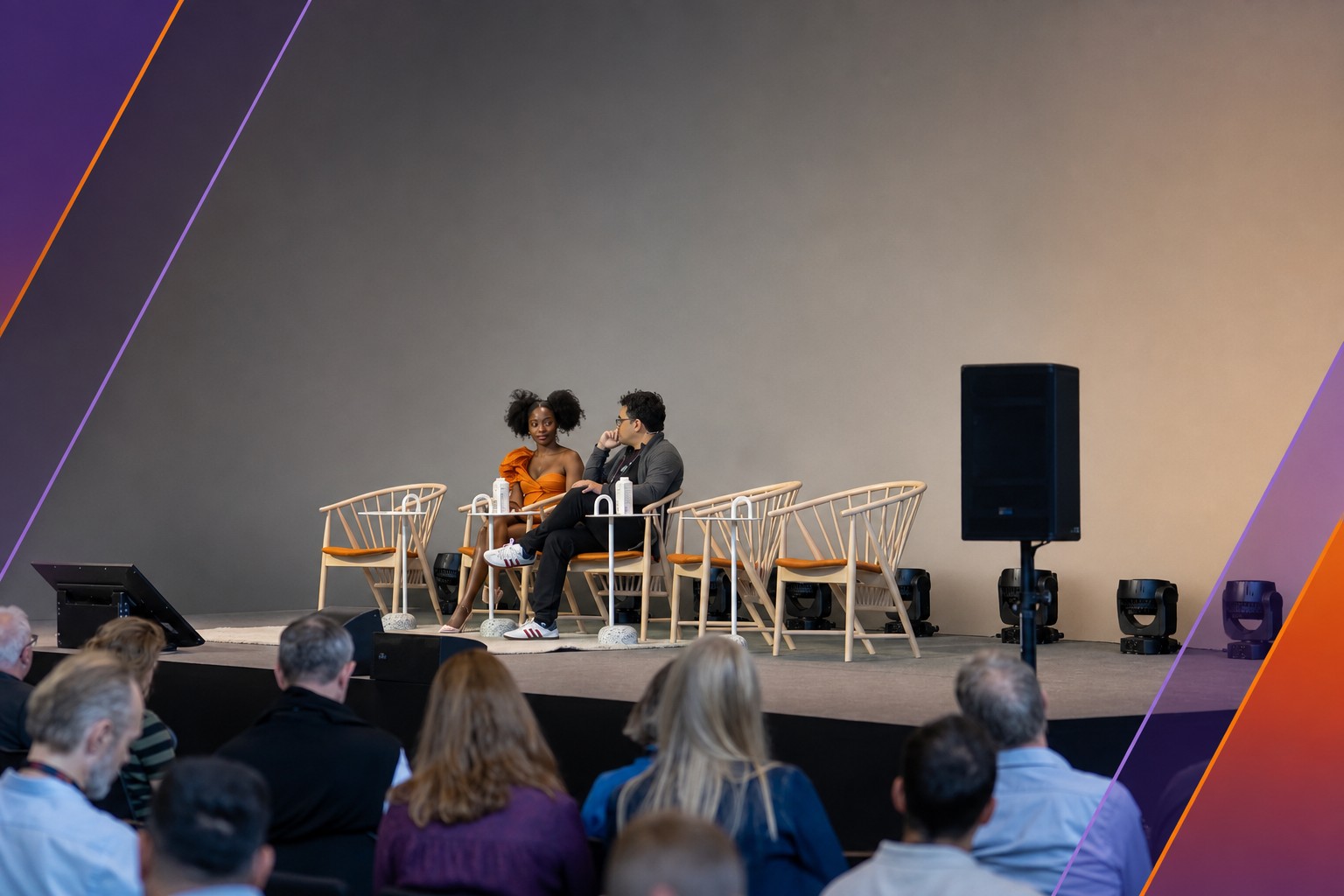
The question that kept surfacing at TechBBQ, the Northern European technology conference that ended in Copenhagen on August 27, was not what AI can do. It was who owns it. The Mythos and Fable incident had left European companies weighing what it means to own the models and infrastructure this wave of AI runs on, rather than renting both from the United States and China. One startup executive said the models becoming unavailable seriously disrupted his team's work. Another was unbothered: Europe's dependence on two other geopolitical centres could cause real trouble one day, he said, but for now it broadly works.
That split ran through the programme. This year's theme was "Coming Out of Agency", and Ellen de Brever, a private investor and head of partnerships at Novo Nordisk Foundation Cellerator, said the framing turned out to be well timed: the conversation had moved from what AI is capable of to what people are prepared to hand it. The era of AI agents, she said, is about people deciding which capabilities and which powers they are willing to give up.
Meredith Whittaker, president of Signal, made the sharpest version of the argument in a session on whether privacy and AI can coexist. She argued against putting AI assistants and AI agents inside operating systems, the pattern ChatGPT follows in iMessage. The current AI era, she said, is building a data-collection system, and AI labs use promotion to make people forget the downstream consequences of accumulating that much information.
Demand for privacy, Whittaker added, remains enormous, and with sovereignty on everyone's lips she expects Europe to supply customers for it.
Emad Mostaque, co-founder of Stability AI and Intelligent Internet, took the argument further in a session on what AI agents do to the economy and to personal sovereignty. He defined sovereignty as the ability to resist the application of power, described influence concentrating in the hands of a few AI labs, and predicted that every country will eventually be run by AI. In that system, he said, whoever controls the AI controls the state.
Mia Negru, director of public engagement and supporter acquisition at the nonprofit Life With Artificials, drew the conclusion out loud afterwards: if AI agents absorb intellectual work while robots take on more of the physical tasks, the result is not another technology cycle. Property, labour, democracy, participation in the economy and the question of who gets to take part in society would all have to be thought through again.
Around that, the programme ran on subjects with less metaphysics in them: the future of women's health, cooperation between Nordic and African innovation and investment ecosystems, and how to pull more growth capital into Europe. AI showed up in most of it, but by de Brever's account the discussions were less about intelligent machines than about human choices and who stays at the wheel.
The sovereignty talk was loud and the answer was thin, and the guest list said so. Lovable, Nvidia, OpenAI, AWS Startups and HSBC jointly threw the rooftop barbecue. Ada Ventures, out of London, took over the cocktail bar Bird. The speakers' dinner ran on an island in central Copenhagen with fire performers, and the party afterwards kept the bar open a drink at a time until closing. Three of the five names on that rooftop are the stack under discussion, chips and model and cloud, and they were buying the drinks at the conference where Europe debated renting them. That is not hypocrisy. It is the dependency, itemised and catered.
Notably absent from all of it is a number. Nobody named a European model, a European lab, or a figure for what owning the stack would cost, and nobody said which of the things Europe currently gets cheaply it would have to give up in order to pay for it. Agency is a comfortable frame precisely because it makes the question about what Europeans are willing to entrust rather than what they are willing to fund. The calm executive who said things broadly work is not being complacent. He is describing the operating position of the room.
De Brever's own takeaway from the week was that amid the machine talk the simple things are what stick: face-to-face contact, relationships, the exchange of ideas, the reminder that technology cannot fully replace human connection. It is a fair thing to feel at the end of a good conference, and a strange note on which to end this particular one, given that Mostaque had just told the same audience that whoever controls the AI controls the state. The conversation at TechBBQ was prompted by models going unavailable, and it was held once they were working again. The next interruption will show whether Europe treated this as a theme or as a plan.