
Why the app is under scrutiny
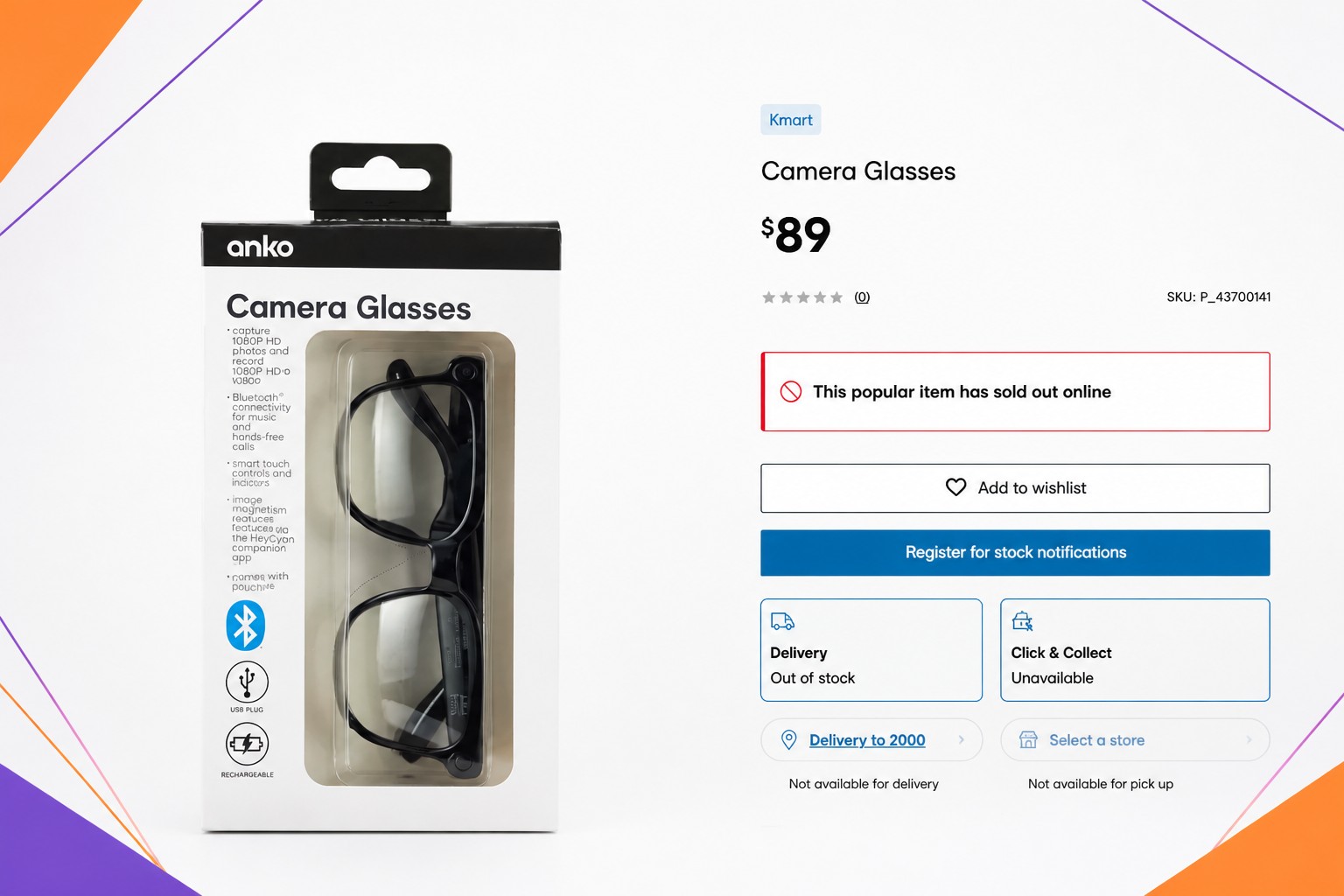
The investigation follows a surge of attention around Kmart’s low-cost Anko glasses, a cheaper version of Meta’s devices that can take photos and record high-definition video. After Guardian Australia reported in August that they had sold out, concerns about covert recording prompted calls to restrict or ban their use.
A GetUp petition calling for limits on the devices, dubbed “pervert glasses,” gathered more than 55,000 signatures. Councils around Australia considered bans in public places such as swimming pools, while the federal government discussed restrictions in government facilities.
The Attorney-General then asked Privacy Commissioner Carly Kind to assess the risks. Kind sought information from Kmart, device seller BDI Technology and Shenzhen Qingcheng, as well as Meta about its Ray-Ban glasses and Google, which plans to release its own smart glasses. In a blog post on Wednesday, she said only Shenzhen Qingcheng would be investigated: it had not responded, and her own review raised questions about its technology and privacy policy.
The law follows the data
Kind said Australia’s current privacy law is difficult to apply to individuals using smart glasses. It covers companies and federal government agencies, not private individuals. Retailers and manufacturers may also fall outside its requirements if they do not collect personal information through the devices. The company providing the glasses’ software is more likely to be the one collecting and storing data for the purposes of the law.
Proposed government reforms would replace a test based on whether data collection is “reasonably necessary” for an organisation’s functions and activities with one based on “fairness and reasonableness.” Organisations would have to consider, among other things, whether a person had a genuine choice about collection and whether a child’s interests were protected.
Kind said the changes would strengthen rules for wearable surveillance devices, including smart glasses, and could reassure the public by raising the bar for what data they collect. She expects the issue to grow as connected devices expand, from personal assistants to badges with always-on recording.
What the investigation cannot answer
The gap between the public concern and the law’s reach is already visible. In August, University of Sydney researchers examined 350 public Instagram videos filmed on smart glasses in different countries between 2023 and 2026. They described a shift toward inconspicuous first-person recording that bystanders could struggle to detect. In some videos, about 60% of interactions could be classified as possible harassment, with people appearing nervous or trying to end the interaction.
Several venues have been banned by councils from using smart glasses: Canterbury-Bankstown and Sydney City in Sydney, Brisbane in Queensland, and the City of Yarra in Melbourne.
I think the investigation puts the software provider, rather than the shop selling the glasses, at the centre of the privacy question. But the commissioner’s own account points to a harder limit: even stronger rules for organisations may not reach the person wearing a camera in public. That leaves a gap between regulating how data is handled and preventing unwanted recording in the first place.
Daily AI news
Every day we pick what actually matters in AI and explain it plainly — no hype, no filler. Subscribe if you want to follow where the industry is going.
Only what matters — every day
Follow on X