
Chairs of Australia's federal parliamentary committees say AI-generated submissions are already reaching the point where they shape decisions. An analysis by Guardian Australia found that inquiries are being filled with documents in which language models invented studies and attributed nonexistent work to real academics and authors. In some cases, committee reports cited submissions where most of the sources appeared to be fabrications. Committees are obliged to consider everything they receive, and under Senate guidance the accuracy of a submission is the sender's responsibility.
Liberal senator Paul Scarr said the Guardian Australia reporting made the risk obvious. The danger, as he described it, is that decision-makers in parliament, in business or elsewhere act on false information — and that the risk rises when the material carries the authority of a credible person or institution. Politicians, he said, now have to check footnotes, sources and claims in submissions with particular care.
Scarr has seen the pre-AI version of this. He previously sat on a committee that received a document containing false allegations of wrongdoing against KPMG. Guardian Australia reported at the time that the consultancy complained to the committee, and an academic took responsibility for the material.
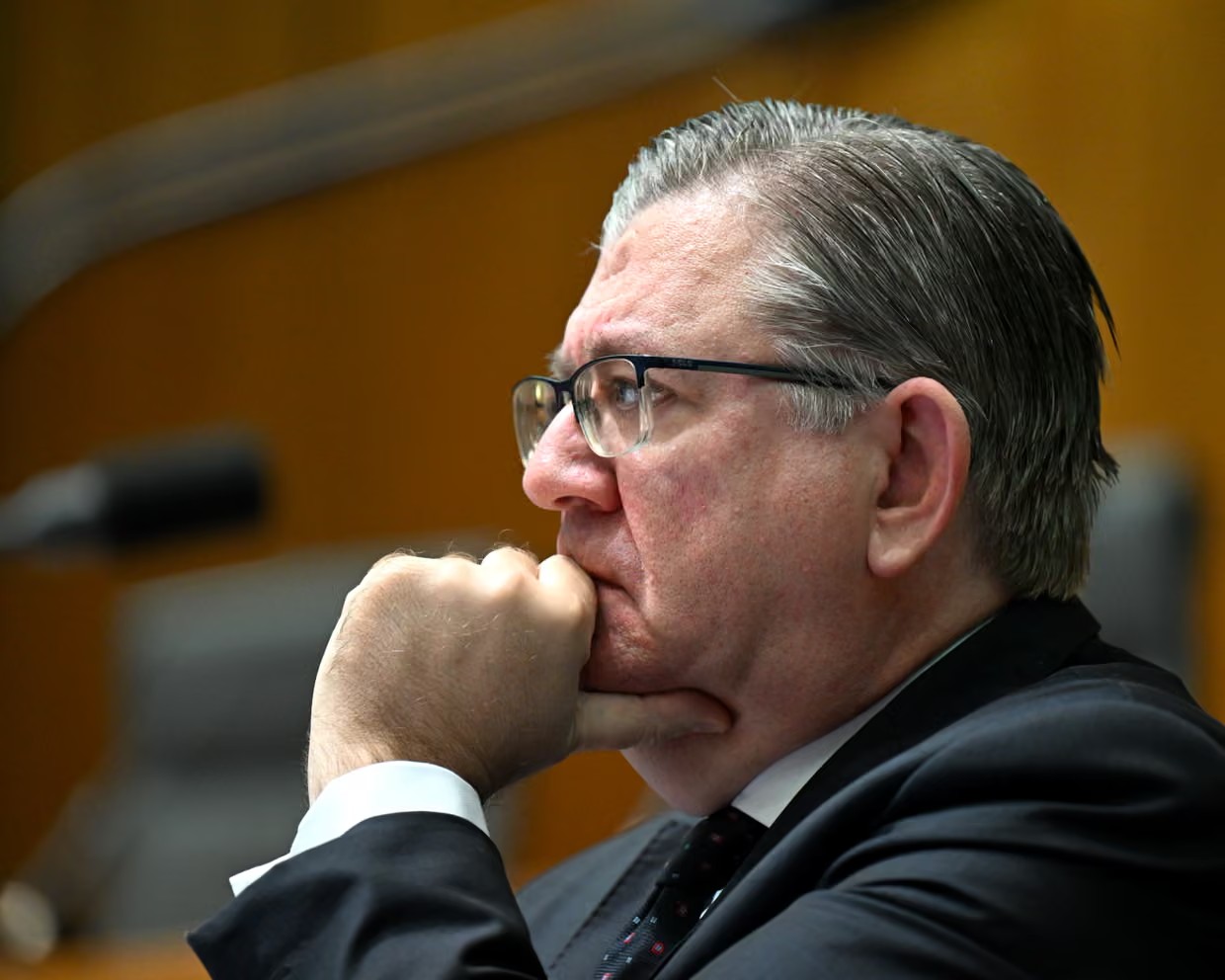
Liberal senator Paul Scarr says "the danger is there" when it comes to errors in submissions
Source: theguardian.com
Scarr also noted the structural constraint: committees must consider every submission that arrives. If faulty material appears in only a small share of them, the overall effect may be limited, but the exposure does not go away.
Louise Miller-Frost, the Labor MP who chairs the social policy and legal affairs committee that received the submission with fabricated references, said committees now understand the problem better, and argued that AI-assisted documents should not be discarded on sight. In that case, she said, the conclusions of the submission were no different from other evidence put to the committee. Her working rule is narrow and practical: when a document makes an unusual or unusually important claim, follow it to the cited source, and the citation either exists or it does not.
She added that committees and their secretariats are considerably more alert to this now — but that some inquiries receive enormous volumes of material, which makes checking every reference difficult.
That constraint is doing more work than anyone in this story acknowledges. The obligation to consider everything was written for a world in which drafting a submission cost a person hours of effort. That cost is now close to zero on the supply side, while the cost of verification on the receiving side has not moved at all. Hallucination is the visible symptom; the asymmetry is the mechanism.
Miller-Frost's counterpoint is the strongest argument in the story for not treating this as a pure contamination problem. Plenty of submissions come from agencies, academics and government departments with real resources behind them. In social services, they also come from ordinary residents who may have neither the time, the capacity nor the drafting skills to set out their case — and for whom AI is the thing that makes participation possible at all.
Senate President Sue Lines said members involved in inquiries always test the information put before them, but that responsibility for the content rests with those who lodge it. She expects committee procedures to change as AI spreads: easier tools mean more submissions, which broadens participation and simultaneously makes processing harder and more expensive. Committees are explicit that a participant who realises their earlier material was misleading is required to correct it. The Senate's own guidance on preparing submissions says AI use can affect the quality of the information, and puts accuracy on the sender.
The one mechanism in this story that actually produced a consequence involved money. Deloitte returned part of the fee on a $440,000 report to the federal government after AI tools were found to have added fabricated references, including a citation to a court case that did not exist. A paid contract has a refund clause. A free submission to a parliamentary inquiry has nothing equivalent, which is precisely why the "sender is responsible" rule reads less like a safeguard than a statement about where the liability stops.
The question nobody in this story addresses is what happens to the output. Committee reports have already cited submissions whose sources appear to have been invented. The correction duty described here runs one way — a submitter who notices an error must fix it — and no one says whether reports built partly on invented citations get revisited, flagged or left standing in the record. Policy advice does not become less load-bearing because its footnotes were generated. It becomes harder to audit, and it stays in the file.