
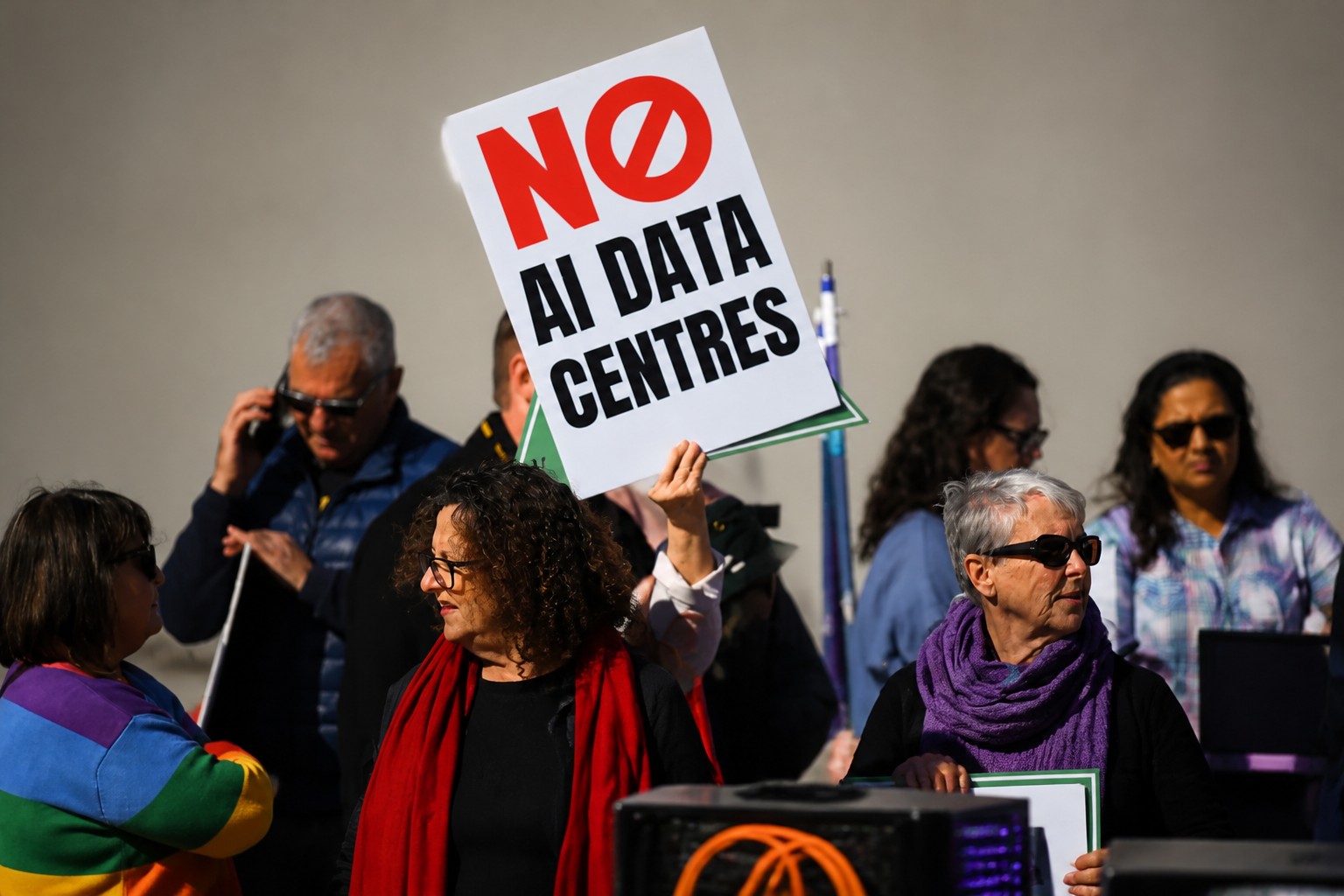
The harms are already at work
Australians are asking practical questions: what happens to their jobs, and to their children’s? What is the government doing to make AI systems in Australian workplaces safe?
A new report, Draw the Line, describes how AI is accelerating harmful digital surveillance of workers. Employees may not know how closely they are being monitored: tracking can run through work devices and phones, as well as software such as Microsoft Teams.
The parliamentary committee has considered threats involving AI-enabled biological weapons and engineered pandemics. The report’s authors contrast those frightening but hypothetical scenarios with workplace surveillance that is already happening:
The effects can be severe. One young woman reported sexual harassment by a manager who demanded that she keep her camera on. Warehouse workers subjected to constant machine-led micromanagement have been driven to thoughts of suicide.
Existing labour laws do not protect workers from unreasonable surveillance, while employers lack clarity about which monitoring practices are legal.
A fix the government can make
The report’s authors call for amendments to Australia’s Fair Work Act that would require employers to conduct any worker surveillance “fairly and reasonably.” They frame this as an extension of the government’s existing commitment to handle personal information covered by the Privacy Act fairly and reasonably.
Australia is among the leading countries for per-capita use of Anthropic’s Claude and other generative AI applications. That adoption is one reason the debate cannot be reduced to whether AI has benefits: it does. The unresolved issue is how to address its costs, and the report argues that neither government nor AI companies have yet offered a convincing answer to public concerns.
I think the political choice here is less complicated than the committee’s discussion of existential risks might suggest. Workplace surveillance is not a distant possibility that Australia can only debate; it is a present practice with a proposed legislative remedy. If parties want public confidence to keep pace with investment, they will have to show that they can govern the technology people already encounter at work.
Daily AI news
Every day we pick what actually matters in AI and explain it plainly — no hype, no filler. Subscribe if you want to follow where the industry is going.
Only what matters — every day
Follow on X