
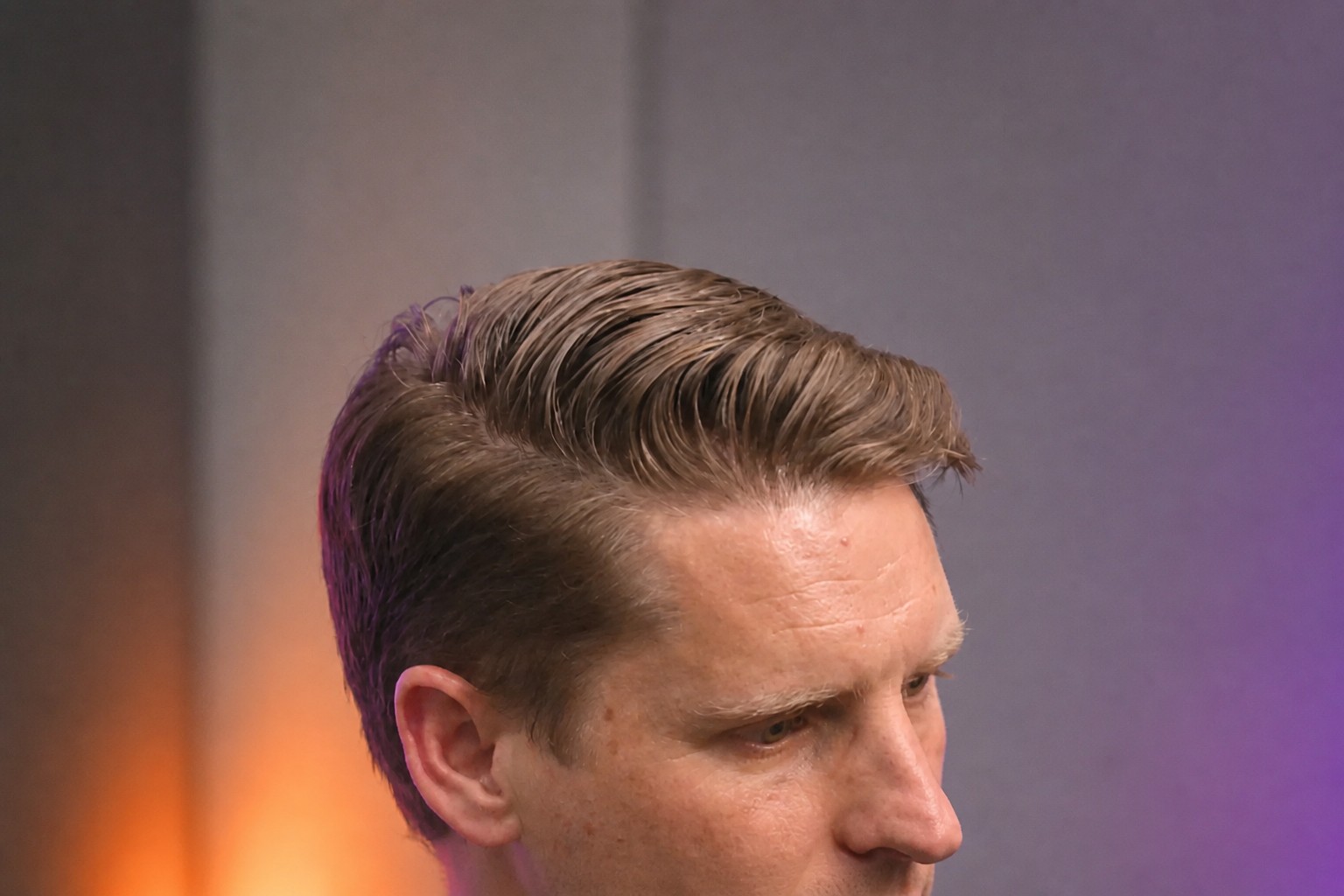
A man with an incurable illness wrote to his MP to say he planned to end his life through voluntary assisted dying. Microsoft Copilot offered the MP three ways to reply: congratulate him, say you are glad to hear it, or call the news wonderful. Andrew Hastie told that story at a parliamentary hearing on Friday, as an argument for building AI under Australian control. The hearing he told it at was examining the opposite proposition — the Anthony Albanese government's plan to bring OpenAI and Anthropic into the country — and Australia's own security agencies spent the day arguing that keeping the companies out would be the catastrophic option.
The hearing was a detailed examination of those plans, convened after calls to slow the companies' arrival or bar them from the country altogether. Defence sector representatives told the committee that refusing them could have catastrophic consequences.
Abigail Bradshaw, Director-General of the Australian Signals Directorate, said her staff need frontier AI systems daily to counter "highly competent malicious actors in cyberspace". If a digital adversary gets access to newer and more capable models than Australian specialists have, she said, it will find vulnerabilities in systems and networks and exploit them before the defenders can.
She then described the position she is defending from. Australia's leading cyber intelligence agency, Bradshaw said, is "completely dependent" on compute hosted in the United States. Cut off from it during a conflict, its capabilities would shrink "sharply".
Chris Crozier, the chief AI officer at the Defence department, said the government is already trying to keep technology resources inside the country, and has signed a contract with Google to build interconnected data centres across different regions of Australia that will not be connected to the US. Nobody, Crozier said, should be able to wake up one day in a bad mood and decide to switch those systems off.
Defence does not want to use AI toolsets located offshore. Compute, applications, data and decision-making should all sit in Australia. Attracting the large technology companies would make that easier — and not only in the narrow sense of the military being able to defend and service its own data centres.
The AI office in the Prime Minister's department made the regulatory version of the same argument: putting the companies under Australian law would make it easier for local law enforcement to deal with threats on their platforms.
Bradshaw's case went further, and it is the part worth reading closely. Hard conditions of entry, she argued, could measurably improve Australia's chances of using the best AI tools and defending itself with them. She listed what the country could get: more assured access; earlier access; more detailed technical access; and closer integration with the engineers working on frontier models. The way to get it, she said, is strict requirements on any leading developer that wants to train models in Australia — among them government oversight and early access to frontier systems.
The government is already drafting the rules. It is consulting on standards that would oblige AI companies to report problems and breaches, and it may reserve a share of compute capacity for local research. Large data centres would be required to:
engage with local communities;
be built away from schools and homes;
in most states, fund the development of new renewable energy.
Copyright is the piece that is not agreed, and the piece the developers care about: they are refusing to train models in Australia without reform of the law. A proposal to automatically grant the companies access to everything Australians create online produced a wave of anger from creative workers, who say developers could pay for local licences to use Australian content instead.
Jenna Priestley, an assistant secretary at the Attorney-General's Department, confirmed on Friday that loosening copyright would also affect AI access to foreign-origin content circulating in Australia. The companies want to train on what may be billions of items of information, she said, and consider it practically impossible to strike a deal with every rights holder. Australian copyright protects not only Australian material but content from around the world, which makes the set of counterparties very large.
Hastie's anecdote was the most memorable moment of the hearing and the weakest argument in it. What he described is a product failure — a suggested-reply feature with no comprehension of what it was replying to — and Australian ownership of the model would not have fixed it. A sovereign Copilot trained in a Canberra data centre would have offered the same three buttons. What the story actually shows is that Australian legislators are already running constituent correspondence through American software, which is a case for the access and oversight Bradshaw is asking for, not for locking the vendors out.
The sovereignty fix has the same shape. Defence's answer to depending on US compute is a contract with Google. Crozier's line about someone waking up in a bad mood describes a risk that an agreement with an American hyperscaler relocates rather than removes; what changes is where the machines sit, not whose company owns the relationship. And Bradshaw's shopping list of earlier and deeper access rests on a premise she undercut in the same session: it only works if the companies want to train in Australia badly enough to accept government oversight, and she closed by warning they will look elsewhere if Canberra is slow.
Notably absent from the pitch is any accounting of what Australia is actually spending. Priestley's testimony makes it explicit: the copyright concession would not be limited to Australian work. Australia would be legislating away protections over content owned by people who are not Australian voters, do not appear before this committee, and have no say in the bargain. That is the country's largest single offer to OpenAI and Anthropic, and it is being made on behalf of rights holders who are not in the room.
The timetables do not line up either. Labor ministers spent the week meeting OpenAI's vice-president and Anthropic's special representative Jeff Bleich, who warned this week that Australia may have only a few months left to put effective regulation in place. The Attorney-General's Department told Friday's hearing that the content and timing of copyright reform are still undetermined. The Prime Minister's office said Albanese wants to introduce draft legislation on broader AI standards by the end of 2026. Greens senator David Shoebridge, who opposes the copyright reform and wants AI development paused, said on Friday that Labor had denied him a seat on the committee running the hearings — the one voice arguing for delay, kept off the body deciding how fast to move.
Bradshaw's warning is that delay costs Australia influence over the model developers and the special access she wants from them, and that decisions about where models are trained have to be made urgently. Stated plainly, that is an admission about who holds the bargaining power. The country writing the conditions has to finish writing them before the counterparty loses interest, and the counterparty has told it how long that is: a few months on Bleich's clock, against a government timetable that runs to the end of next year.