
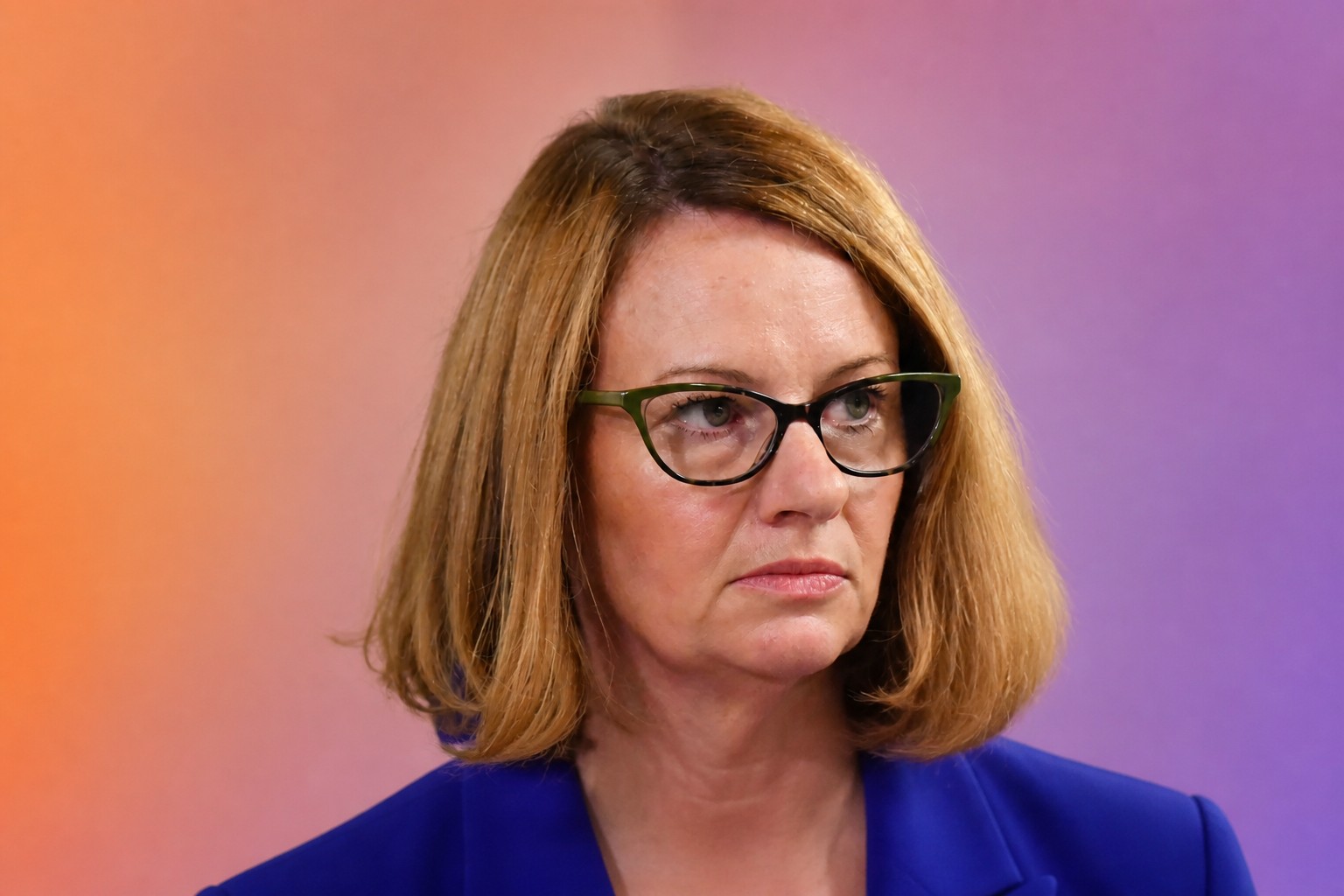
Australia's signals intelligence chief told a summit in Canberra on Monday that the country's ageing technology is exposed to AI-enabled attack, and that her agency does not know how many AI agents are operating on the internet. Abigail Bradshaw said government departments and companies will have to spend enormous sums replacing vulnerable legacy systems, and that services Australians are used to having available around the clock will be switched off while the work is done. She was speaking at the Sydney Dialogue, the same stage on which Anthropic argued that Australia should help write the rules for frontier AI and OpenAI talked about spreading its model training across more countries.
The counting problem is the more uncomfortable half. Bradshaw said a precise definition of an AI agent, let alone a precise estimate of how many are out there, is close to impossible to obtain. That is one of the country's leading intelligence bodies saying it cannot size the population of autonomous software now moving across the networks it defends.
The warning sits against a claim from Anthropic's chief executive that AI bots could flood the internet within a year. He called for the pace of development to be slowed, and the head of OpenAI and Elon Musk backed that position.
Dario Amodei has also proposed bringing in independent experts to review AI companies' models, and asked the US government to let leading AI developers coordinate with one another without being punished for anticompetitive collusion. Bradshaw's contribution to the first idea was that national security agencies belong inside any such review.
Domestic politics moved in the opposite direction the same day. The Australian Greens demanded that mandatory safety testing and transparency requirements for the most advanced AI systems be written into law. Labor senators rejected a motion to bring the proposal to debate.
Andrew Charlton, the assistant minister for technology, told the Sydney Dialogue he takes the companies' warnings seriously but does not want the rules for AI set by the companies themselves or by the United States. He said Anthony Albanese's government would draft its future guidance for AI firms across the full range of projected outcomes, from the extremely dangerous to the relatively harmless. The laws are expected early next year.
Jeff Bleich, Anthropic's chief legal officer, said the company had been encouraged by strong support for its proposals and that Australia should take part in making the rules. Decisions this consequential, he said, should not be left to company executives or to the governments of two countries. Developers need rules not only to keep public approval but for legal certainty. He conceded it would be difficult and called Australia a fitting place to try, then added that the rules will be needed within months, because the technology is advancing exponentially.
Part of the industry's interest in Australia is more prosaic. Local authors and others in the creative industries hold copyrighted material the companies can use for training. Tim Ayres, the industry minister, said the government wants to attract model training to the country but is not prepared to weaken copyright protection to get it.
Anne O'Leary, OpenAI's vice president for global policy, said the company discusses copyright rules with the government regularly and in detail, and wants a larger and broader relationship with Australia. She stressed the country's geopolitical weight and said OpenAI will need to diversify the countries in which it trains models. The company, she said, wants authors to be able to keep creating new work.
The starkest framing came from the opposition. Andrew Hastie, the coalition's industry spokesman, warned that if Australia cannot attract frontier companies and host them, it will be vulnerable in future conflicts, and called for a formal agreement with the United States. Without a frontier model of its own, he said, Australia would be a dependent state rather than a sovereign one. It needs to find a way to attract a major cloud infrastructure provider, and cooperation with the US under AUKUS is one option.
The Australian government already uses a frontier Claude model called Mythos. Paul Robards, a data expert at the Department of Defence, played down the chance that the country builds frontier technology itself.
Put those two facts beside Hastie's speech and the sovereignty argument arrives after the procurement. The state is already running an American frontier model while its own defence data people doubt it could build one, and the debate about dependence is being conducted as though the choice were still open. It is not. The live question is what terms Canberra can extract for a dependence it has already accepted.
The timing gap is the thing to watch. Bleich says rules are needed within months. The government says laws early next year. And the measure that most closely resembles what the companies say they want — mandatory testing and transparency for the most advanced systems — was blocked from reaching debate by senators from the governing party, on the same Monday. This reads less like a government moving slower than industry and more like one that has not decided whether industry's framing is the right one.
The least examined item in the whole exchange is Amodei's request that Washington let leading AI developers coordinate without antitrust exposure. In any other sector, the largest firms asking permission to align their conduct would be the story rather than a footnote to it. Here it travels as a safety measure, and the only adjustment anyone proposed was to add more officials to the room.
Charlton says he does not want AI rules written by the companies or by the United States. At the Sydney Dialogue, the parties volunteering to write them were two American companies and, by way of Hastie's AUKUS proposal, the United States. Bradshaw spent her time on stage explaining that she cannot count what she is being asked to defend against, and that repairing the machines underneath it will mean turning them off.