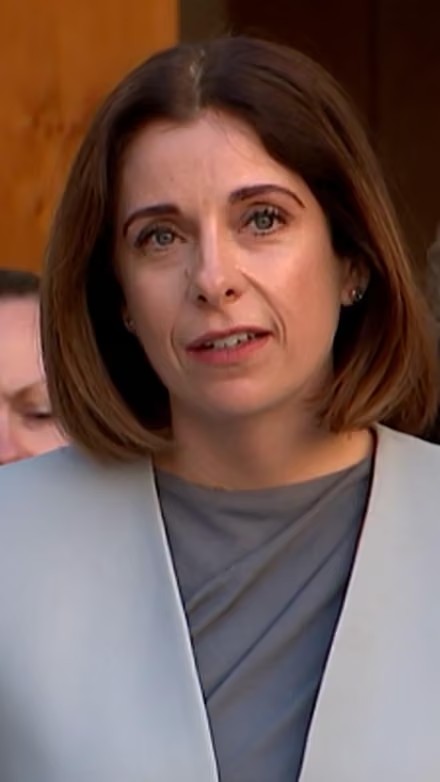
Australia's Labor government published a bill on Tuesday that would require social platforms to ask users what belongs in their main feed: the algorithm, or posts from friends and the accounts they follow. The same bill places a duty of care on digital services, orders infinite scroll and engagement counters switched off for users under 16, and carries fines above $100 million. Communications Minister Anika Wells is carrying it. It does not set a default.
Source: theguardian.com
In practice the choice would arrive as a notification or a pop-up inside the app. Wells described the options as the algorithm on one side and posts from friends and followed creators on the other. Anyone who picks the algorithmic feed keeps the product exactly as it works today, and Wells says users can change their minds whenever they like, as often as they like.
Instagram, YouTube and X already ship tabs that show only posts from accounts a user follows. How those existing features would interact with the new law is unclear. The government has also previously conceded that tech companies could build a non-algorithmic feed that satisfies the rules on paper while being less usable and less functional than the one beside it. Both of those facts point the same way, and the bill does not address either.
The removal provisions are broader than the feed-choice headline suggests. The duty of care obliges services to maintain a "safe online environment", which means shielding children from "harmful" content and adults from "seriously harmful" content. For children that covers pornography, violence and bullying, material promoting eating disorders, material hostile to women or to gender equality, and crime or dangerous stunts. For adults the list runs to terrorism, sexual violence, extreme violence, self-harm and suicide, animal cruelty, crime, illegal drug use, child sexual exploitation and abuse, bullying, and explicit threats of physical violence.
Wells called the listed harms "just illegal content". That description holds for most of the adult list and does not hold for the children's one. Material hostile to gender equality is not a criminal category in Australia or anywhere else, and putting it in the same sentence as child sexual abuse material is the kind of framing that makes a definitional fight later inevitable.
A second set of provisions targets design rather than content. Infinite scroll, the display of views, likes and other engagement metrics, ephemeral posts such as Snapchat and Instagram stories, and personalised feeds are all classed as features that negatively affect behaviour, and platforms would have to disable them for users under 16. Services would also have to assess the risks of their products annually and remediate what they find.
The enforcement powers are where the opposition has concentrated. The eSafety Commissioner could order removal of certain material, including apps and sites that generate nude images of people, and links to online bullying; Wells says the agency would decide for itself what counts as bullying. The minister would gain the power to declare other categories of content or behaviour harmful, after which platforms must act against them. The Coalition argues that this lets the government suppress opinions it dislikes. Wells answered that misinformation and political commentary are not targets, and suggested the Senate would be able to overturn a minister's harm declaration. Suggested is the operative word: a disallowance mechanism described in an interview is not the same as one written into the bill, and nothing in the published text was pointed to. She also said that under these rules she could have banned Grok's image generation tool after it was used to create nude images of people with their consent.
Industry has said almost nothing. Meta, which owns Facebook and Instagram, and TikTok both declined to comment on Tuesday; Google did not respond. The industry body Digi said it backs the principle of a duty of care while warning that the definitions of harmful content and of negative user experience will decide everything, acknowledged public concern about personalised content systems, and noted that those systems make services more relevant and useful. Digi says it supports giving people meaningful choice and control while reducing safety risk — which is, almost word for word, what the government says the bill does. When the trade association and the minister describe the same outcome in the same terms, the disagreement has moved to the drafting.
The default is the whole bill. A choice presented to people who already have the algorithmic feed, with no default specified, is a prompt that most users will dismiss and keep what they have — and the government has already admitted platforms may build the alternative feed to be worse. Strip that out and what remains is a law mandating a following-only tab that three of the largest platforms already offer and almost nobody uses. The Prime Minister said on Tuesday that the reform shifts power away from big global tech companies and toward ordinary Australians, and that it will certainly have opponents. On the feed provision as drafted, it shifts very little.
The Greens have identified the same weak point and are pushing on it. They want infinite scroll banned outright, adults protected from all harmful content rather than only the seriously harmful kind, and higher penalties. Sarah Hanson-Young, the party's communications spokesperson, argues fines should be pegged to a share of global revenue so a breach actually hits the business, and says the Greens will seek "the toughest possible provisions" to stop doomscrolling; she notes that well-funded tech companies will look for any loophole or workaround, so the law needs to be tighter. The Greens also want a strong-consent model: friends and follows as the default feed, with the algorithm available only to those who go and ask for it.
The government prefers to set no default and let people choose. The arithmetic may not let it. If the Coalition declines to support the bill, Labor has to negotiate with the minor party — and the minor party's price is the default the government has spent the week refusing to set.