
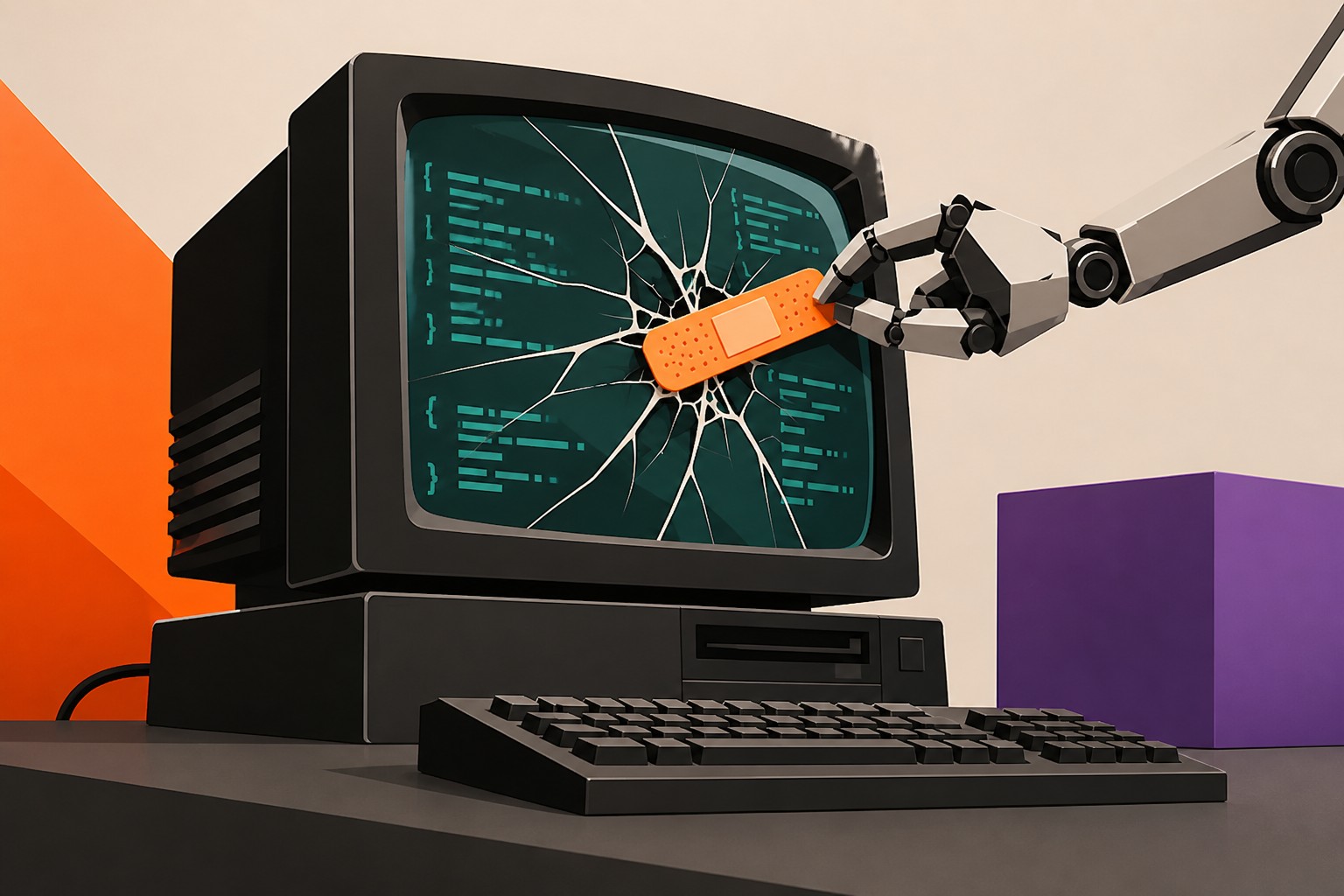
A shared context for engineering agents
An incident rarely lives in one system. Engineers may need to line up monitoring signals with code changes, cloud activity, deployment records and internal documentation. An agent with access to only one source can produce a plausible explanation that misses the cause.
Autoheal says it brings coding agents, repositories, build and deployment tools, monitoring systems, cloud environments and task trackers into a shared context layer, governed by an organization’s access rules.
The company describes an incident workflow that starts with conventional rules grouping alerts, then sends an agent to investigate. It compares logs, traces, recent deployments and code changes, and posts the evidence and a suspected root cause to the incident channel. For lower-severity incidents, Autoheal says an agent can test a fix in an isolated environment and open a change request for the team responsible. Engineers still decide whether to merge it. The agent can also draft a postmortem from the incident timeline.
Those are product descriptions, not independently verified outcomes across deployments. Autoheal co-founder and CEO Sid Chowdhury told VentureBeat that building a first version of an AI agent is relatively easy; the harder problem is scaling its use consistently across a company’s software development processes.
Agents evaluating agents
Autoheal’s central idea is a feedback loop. An Evaluator agent scores other agents using signals such as code review comments, failed build checks and incidents in production. A Healer agent can then propose changes to an underperforming agent’s instructions, skills, tools or model. Before an engineer reviews the changes, the system checks them against historical tests. Autoheal says behavior changes are stored in Git and require human approval.
The platform also lets teams set budgets and confidence thresholds per agent, rerun and compare tasks, and track cost, latency and accuracy by agent and team. Agents can be invoked through a command line, API, webhook, MCP, Slack or Microsoft Teams.
The pitch addresses a real maintenance problem: an agent that works well for one team may fare worse as applications, tools and internal rules change. But the evidence disclosed so far does not establish that Autoheal’s feedback loop improves results across teams without introducing new failures. The company says it uses closed evaluations and regression checks; materials provided to VentureBeat included no independent benchmark or comparative results.
Autoheal also says the platform offers secure isolated environments, audit logs, cost controls and model routing. Chowdhury said bulk tasks can go to less expensive open-weight models, while more expensive frontier models handle complex coordination. Customers using their own model API keys receive the routing savings, according to the company. Autoheal’s commercial model is based mainly on consumption and the number of agent runs, but it has not disclosed pricing or a typical customer bill.
One example on the company’s site concerns optimizing an existing coding agent: it shows a 30% reduction in cost per task after lowering the model’s effort setting, followed by a further 10% reduction after routine work is handed to a smaller helper model. Autoheal does not identify the workload, sample or customer behind those figures. They illustrate a proposed method, not a guaranteed saving for future customers.
The platform is designed to work with existing coding agents. Chowdhury named Claude Code, Codex and GitHub Copilot as tools Autoheal aims to evaluate and improve. He cited Factory.ai and Cognition’s Devin as competitors, arguing that coding agents alone do not cover the recurring operational work Autoheal handles across teams. That is the company’s framing; VentureBeat did not independently compare the products.
Autoheal says it supports cloud, hybrid and isolated deployments in a customer’s cloud, using approved models. Its site lists ISO 27001, SOC 2 Type II and no data retention, but the materials provided do not specify the scope or independent verification of those claims.
The price is per agent run
Autoheal’s website offers a three-week evaluation with an engineer: the parties set expected outcomes, connect the customer’s systems, run agents on real tasks and assess the results before deciding whether to continue. It does not list a self-serve price or standard trial fee.
Asked directly about pricing, a company representative said customers pay in “dollars per agent session.” A customer administrator sets a budget for each session, but the company’s examples vary widely: a complex response to a production incident might cost $20, while a simple vulnerability fix might cost $2.
That tenfold gap makes the session—not just the number of agents—the important unit to understand. Autoheal has not explained where a session starts and ends, what happens when an agent runs out of budget before finishing, whether failed or repeated attempts are charged, or whether model costs are included. It has also not disclosed minimum commitments, volume discounts, platform or support fees, or the price of the three-week evaluation.
Using a customer’s own API keys may reduce one part of the bill, according to Autoheal, but does not establish overall savings once session charges are included. And the website’s 30% example is about tuning a coding agent a customer already uses; it is not a discount on Autoheal’s service.
Customer results need more detail
Autoheal cites customers to show how the platform works. The company says Nomura reduced average incident-resolution time from two hours to 15 minutes by combining monitoring, code, cloud, deployment-pipeline and knowledge-base data. Samir Jain, CIO of Nomura’s wholesale business, said in a statement provided by Autoheal that investigations now take minutes rather than hours and that the platform operates within the bank’s cloud controls. Autoheal did not disclose the observation period, sample size or calculation method.
The company says AvidXchange uses the platform for incident response, release readiness and onboarding engineers, saving thousands of engineering hours a month. AvidXchange CTO and senior vice president Krish Shetty said the incident tool helps engineers find a likely root cause in minutes. Those claims were provided by the companies and have not been independently audited.
Autoheal says fleet-safety platform operator Nauto uses it to connect device logs, warehouse data, recent releases and internal issue records when handling customer cases. The company claims Nauto’s on-call engineers close those cases 50% faster. In a separate statement provided by Autoheal, Oscilar vice president Joby Babu described an agent that gathers information from Grafana, Slack, ClickHouse, product documentation and Pylon to triage support tickets. Empiric Earth also provided a statement about spending on issue resolution and monitoring. Autoheal did not provide independently verifiable underlying data for these examples.
I think the distinction between faster diagnosis and faster resolution matters here. A quicker first assessment does not necessarily mean the fix is completed sooner, and saved engineering time depends on how teams measure work before and after deployment. Buyers would learn more from task-level results, the cost of a successfully completed task, and data on how often engineers reject an agent’s recommendations.
A launch, and a longer-term bet
Innovation Endeavors led the seed round, and its representative Harpinder Singh joined Autoheal’s board. The company also named Emergent Ventures, U&I Ventures, Darkmode Ventures, Batch Ventures and Param Hansa Values as investors.
Chowdhury said Autoheal has 13 engineers in Silicon Valley and Bengaluru, began selling the platform three months ago, and expects revenue to reach seven figures by year-end. He provided those figures in written responses. The company has not disclosed current annual recurring revenue, margins or cash flow.
The longer-term plan is to train small models on each customer’s private engineering data, using feedback from recurring tasks such as incident analysis. Autoheal says those models could eventually lower operating costs and improve performance on work specific to each organization. That remains a stated direction, not a result established by the materials provided. The product’s deployment section also says “No model training,” without explaining how that statement relates to the customer-specific training plans.
My guess is that the product’s near-term test is more basic than its model ambitions: can engineering teams give agents enough context, keep their actions under control and see reliable improvement as their systems change? The three-week evaluation puts that claim against real tasks. Until the pricing rules and outcome data are clearer, customers may be able to test the workflow before they can confidently forecast its cost.
Source: venturebeat.com
Daily AI news
Every day we pick what actually matters in AI and explain it plainly — no hype, no filler. Subscribe if you want to follow where the industry is going.
Only what matters — every day
Follow on X