
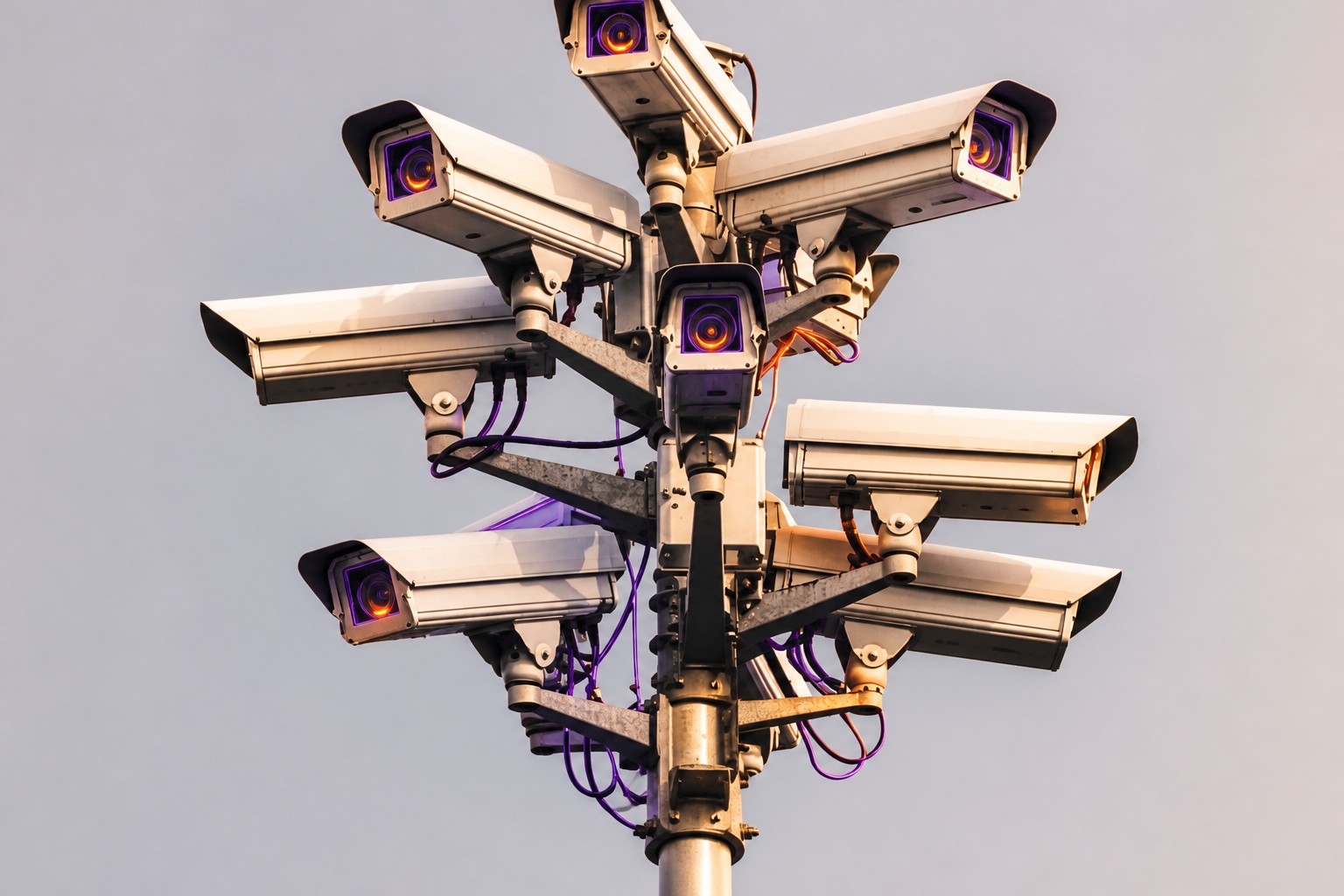
A dashboard for the whole city
Like FlockOS, Fusus gives police a shared dashboard for surveillance feeds. But Axon’s platform is not limited to cameras made by one company. According to NPR, departments can connect it to:
George Washington University law professor Andrew Guthrie Ferguson told NPR that police departments across the country are increasingly adopting these systems as the digital backbone of real-time crime centers.
Ferguson said he was surprised that public debate had focused on Flock. These centers can also use video analytics and drones, bringing together a visual view of a city and letting investigators review past events.
That reach has already had serious consequences. A center played a major role in the unlawful arrest of Cleveland resident Kyeon Tolbert. He was accused of murder based on an AI-generated report that combined social media data, surveillance footage and a rap album cover, then identified a possible match. A judge later overturned the search warrant considered central to the case, ruling that the AI report alone was not enough to establish probable cause.
Convenience is the point — and the risk
Police responses about Fusus have done little to reassure privacy advocates. They suggest that the system is designed first to make law enforcement work easier, with civil-liberties protections taking a back seat.
Greenville County Sheriff’s Office Lieutenant Quincy Whitner praised the platform to NPR: rather than search across different systems and locations, officers can get answers almost instantly through one interface.
Rachel Levinson-Waldman, director of the Liberty and National Security Program at New York University, told the broadcaster that this convenience is exactly what worries her. Investigations should begin with grounds tied to suspected crime, she said, but practical obstacles also naturally limit how often police investigate people. Remove those obstacles, and it becomes easier to open investigations, examine individuals and obtain large amounts of data.
I think the central question is not whether Fusus makes police work faster; its advocates say that it does. It is what threshold remains for starting a search when the information is already connected and readily available. A system that lowers the effort required to investigate can also lower the practical barrier to doing so.
Daily AI news
Every day we pick what actually matters in AI and explain it plainly — no hype, no filler. Subscribe if you want to follow where the industry is going.
Only what matters — every day
Follow on X