

The case for keeping options open
Bailey says some advanced AI models have behaved unpredictably in recent months, while powerful systems are becoming harder for the public to control. He describes them as operating inside a “self-reinforcing cycle.”
The threat to finance is not abstract. Bailey warned that new technologies have increased the scale and sophistication of cyberattacks, putting everyday card payments and bank transfers, as well as trading in stocks and bonds, at risk.
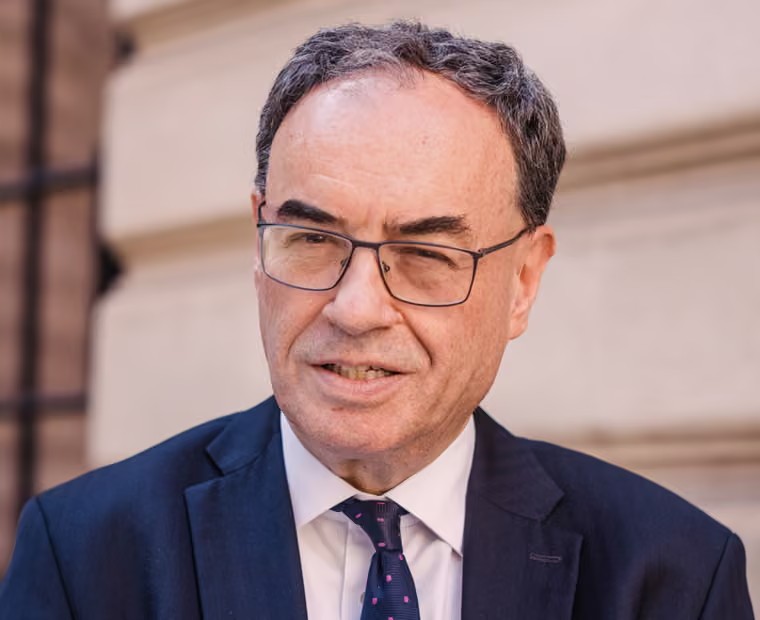
Andrew Bailey said the risks posed by the rapid advancement of frontier AI models were ‘real and increasingly significant’. Photograph: Sarah Lee/The Guardian
Source: theguardian.com
In a Bank of England Insight column, Bailey argued that society should retain the ability to intervene, set limits on how these systems operate and revise those limits as the technology develops. He called the answer an unequivocal yes, while saying authorities first need to work out what would trigger intervention.
His proposed starting point is close examination of new AI models: understand how they behave, then identify where authorities could act. That knowledge could later be built into standards applied across finance and potentially the wider economy.
Bailey is not calling for immediate tougher regulation. Starting there, he said, risks designing rules amid the current AI enthusiasm before anyone knows where failures are likely to occur.
Borrowing is part of the risk
The Financial Policy Committee has separately warned that rising AI-sector debt is adding to financial-stability risks. From January to September this year, major companies working in AI borrowed $450 billion (£339 billion). That exceeds the $333 billion in government bonds the UK plans to issue over all of 2026.
Investors—including hedge funds, asset managers and private-credit funds—are increasingly dependent on AI companies succeeding, even though those companies have yet to become profitable. In minutes from its September 25 meeting, the committee said the rapid growth in AI-related debt issuance was increasing capital markets’ exposure to the technology’s development. It called for interconnected risks to be monitored carefully and in a timely manner.
Bailey’s argument is that standards could help protect finance from malicious AI operating beyond established norms, obligations and accountability. Central banks, he said, are responsible for the stability of the system as a whole; authorities cannot stand aside and assume technological progress will resolve these issues.
The gap between a warning and a response
Bailey’s approach leaves the hard question open: what evidence would be enough to justify intervention? Testing models may reveal how they behave, but the column does not specify thresholds for action or who would set them.
That uncertainty matters as calls for stronger oversight grow among lawmakers, AI researchers and some companies in the sector. International cooperation has weakened after Donald Trump broadly rejected calls for additional AI regulation, warning that it could hinder competition with China and damage economic growth. Much of the technology is developed in the US.
I think Bailey is making a case for preserving regulatory options, not for using them now. But the debt figures sharpen the tension: if markets are becoming more exposed before AI companies are profitable, waiting for a clear failure may leave authorities with less room to act.
Daily AI news
Every day we pick what actually matters in AI and explain it plainly — no hype, no filler. Subscribe if you want to follow where the industry is going.
Only what matters — every day
Follow on X