
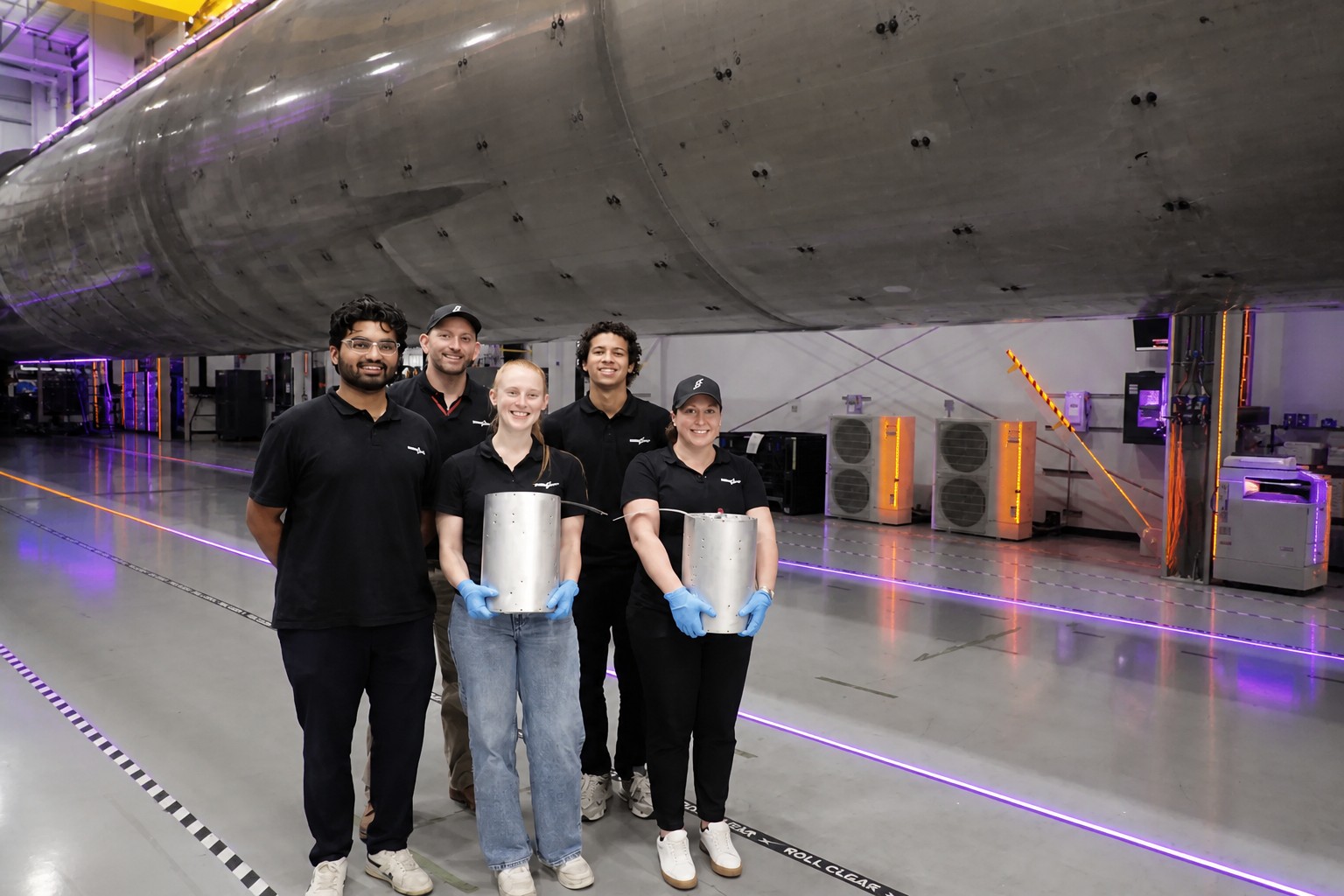
Besxar, a startup that wants to make the input materials for advanced semiconductors in the vacuum of space, flew its first two hardware units on a SpaceX Falcon 9 Starlink mission in July. The company says the wafers came back cleaner, with fewer particles on them, than matching samples that never left the ground. Besxar has raised almost $14 million, including a $9 million seed round led by Dauntless Ventures and Overture VC, and plans another two years of test flights before it attempts anything that resembles a factory.
The pitch starts with what a chip plant on Earth actually is. Fabs are enormous infrastructure projects in large part because they have to manufacture their own physical conditions: sealed, pressurised cleanrooms, built because microscopic dust and other contaminants can ruin a chip mid-process. Ashley Pilipiszyn's argument is that a new generation of rockets can replace some of that infrastructure — that it is cheaper to move production to where the necessary conditions already exist than to recreate them on the ground.
The July flight carried two "fabships": small containers designed to transport semiconductor materials and test them in orbit. They had three jobs. Survive the launch. Protect the wafer samples from contamination. Expose them to the vacuum of space. Besxar says all three were achieved, and also that one of the two containers suffered a flight data system failure, which the company is still investigating. The name Besxar comes from beskar, the Star Wars metal used for Mandalorian armour.
The cleanliness result is the whole thesis compressed into a single measurement, and it currently rests on one flight that the company graded itself. Pilipiszyn frames the lower particle count as the thing that matters for scaling up, which is right — if the vacuum really does produce a better surface than a cleanroom does, everything else is engineering. Two containers on one flight is not yet that demonstration, and Besxar has not said it is.
On the money: the $9 million seed is the only itemised piece. The rest of the almost $14 million is counted in the total raised without a breakdown, which is a fairly ordinary way for a young hardware company to make a number look larger than the round.
The more revealing detail is how Besxar ended up on a Falcon 9 at all. Pilipiszyn first contacted SpaceX three years ago to discuss buying flights on Starship. What the company signed instead was an agreement to place its payload on the Falcon 9 booster, explicitly to retire technical risk in the meantime. That is a company whose long-term plan requires a vehicle that is still in development, building its near-term business on the one that flies today. It is the correct decision and also the central constraint on everything that follows.
The manufacturing roadmap is deliberately short. Heat the wafers. Deposit one material. Deposit two materials. Keep adding materials as the technology develops. Once Besxar is producing qualification samples, it wants to supply leading chipmakers with wafers for advanced chips — the kind that regulate power delivery in data centres, robots and electric vehicles.
Read that ladder again and notice where it begins. Step one is applying heat. A terrestrial fab performs hundreds of process steps, and the distance between "deposit two materials" and a qualification sample a leading chipmaker will accept is not a rung on the ladder, it is the entire business. Besxar is being honest about starting at the bottom, which is more than most space-manufacturing pitches manage, but the honesty should be read as a schedule: the customer relationships being described are several years and several unbuilt capabilities away.
The thing the plan is quiet about is downmass. Every company in this category runs into the same wall — returning any meaningful volume of product to Earth is hard. Pilipiszyn expects to work up to hundreds of wafers per factory, then thousands, and that requires cheap rockets. Cheap rockets, in turn, require SpaceX to bring Starship into service, or competitors including Rocket Lab and Stoke Space to field their own next-generation vehicles. No price per wafer appears anywhere, and neither does a date. Until those two numbers exist, the cost side of the argument — cheaper than a cleanroom — is an assertion about someone else's launch manifest.
Besxar is not alone in the idea. United Semiconductors and Space Forge are working on the same premise, that the space environment yields better semiconductor material than a terrestrial fab can. All of them are waiting on the same rockets.
Pilipiszyn's position is that the transport layer is already forming, which frees Besxar to concentrate on making product and getting it back down to sell. That framing quietly relocates the riskiest variable in the business outside the company. If Starship stays in development, Besxar's process ladder keeps climbing at the pace of whatever a Falcon 9 can carry as a secondary payload, and the hundreds-then-thousands of wafers stay a slide.