
Two years after artists and photographers boycotted the Brisbane Portrait Prize for admitting work made with AI, several of the boycotters have entered it instead. The prize opens to the public on Saturday, with winners announced Friday evening. Of the 49 works in the main competition, exactly one declares the use of generative AI. The boycott achieved what a boycott rarely does — it made the thing it opposed marginal — and then the people who called it decided that staying away was the worse strategy.
The one declared AI work is The Catch, by Jacky Ryan. A claw hangs over a woman in a red dress, metal fingers reaching to pluck her out of a heap of other women while she looks up dreamily, as if asking: "Me?" The woman in red is the Australian comedian Alice Fraser, photographed during a performance. Everyone else in the pile — composite superheroines and 1950s housewives — came out of the generative service Krea.
Ryan points out that the figure being chosen in her own work is the human one, and then asks whether that really counts as a win.
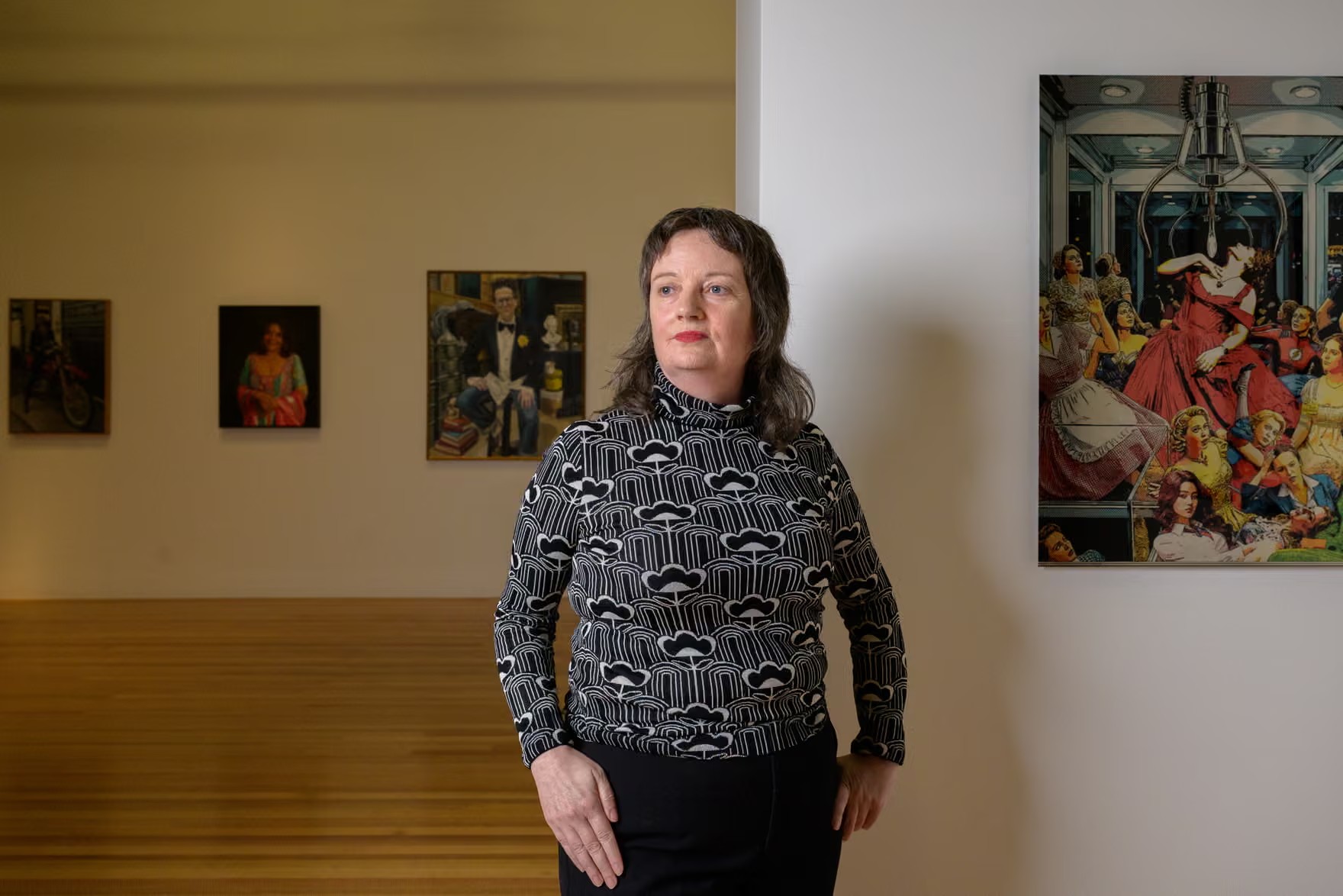
Brisbane Portrait Prize finalist Jacky Ryan stands in front of her work The Catch, made using generative AI
Source: theguardian.com
For Ryan the tool is a continuation rather than a break. She has spent more than 15 years working with pop culture, previously cutting and gluing photographs of real people by hand in a graphics editor to build a graphic-novel series. After photographing Fraser earlier this year, she tried to see whether AI could put her inside a claw machine. Krea's first attempt came back photorealistic and unsettling: doll-like figures standing motionless inside the glass. She kept prompting — feminist imagery, the figures stacked haphazardly, a different background, Ben Day dots. Images like this do not arrive on their own, Ryan says; the final work came out of successive rounds of correction.
The rule she was working under is new. In 2024 the BPP allowed works made with AI to compete, including for the Lord Mayor's main prize of $50,000. Art and photography competitions everywhere were improvising at the time, and some had already handed awards to AI images by mistake. Brisbane's decision was deliberate, and it went off badly. Several former winners boycotted publicly, among them the Walkley-winning photographer Russell Shakespeare, who compared the practice to allowing doping in sport.
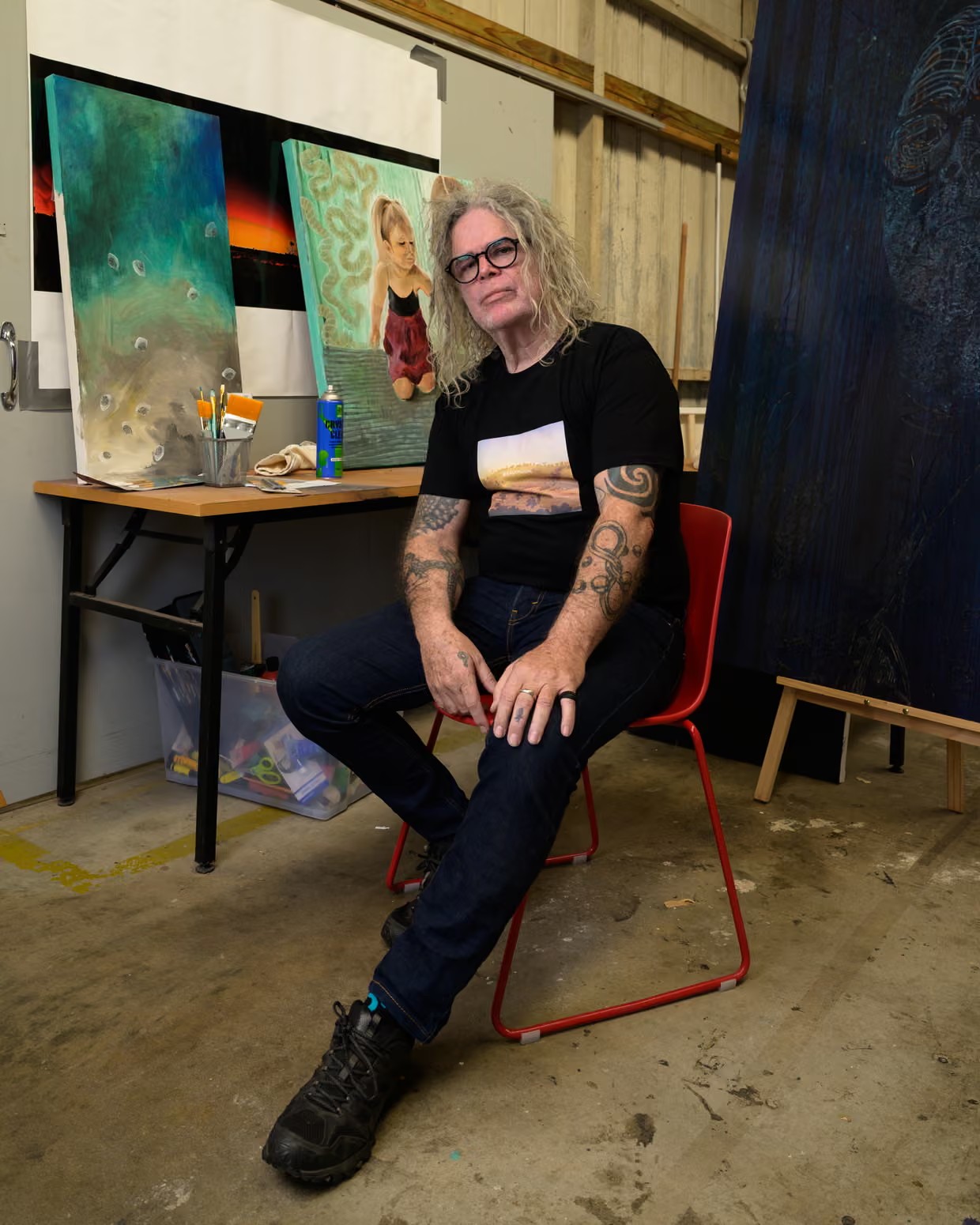
Birrunga, a Wiradjuri artist and founder of Birrunga Gallery in Queensland. The Brisbane Portrait Prize made headlines two years ago when artists and photographers, including Birrunga, boycotted the prize after it admitted works created with AI
Source: theguardian.com
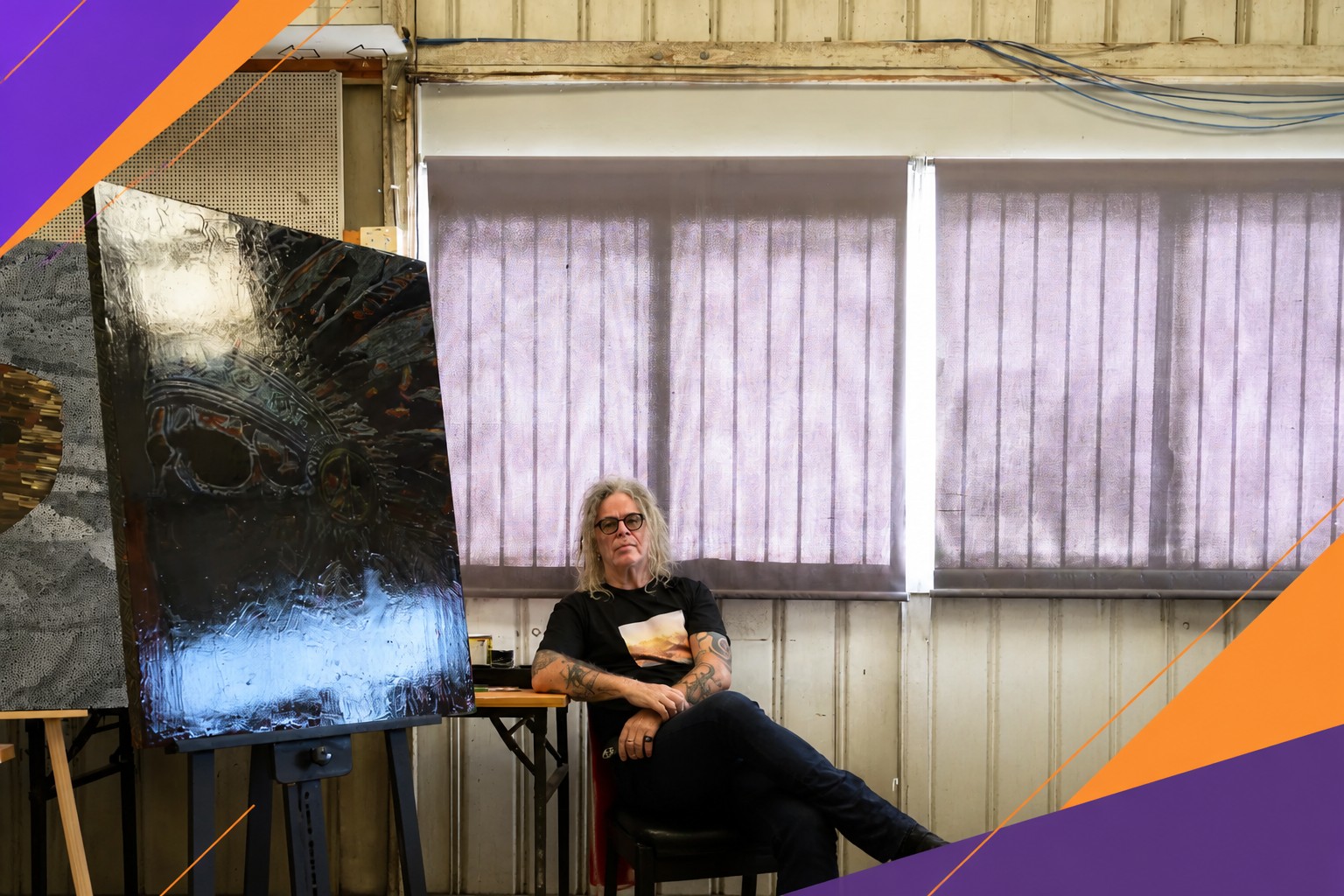
The sharpest critic was Birrunga, a Wiradjuri artist and a former winner of the BPP's packers' prize. He boycotted in 2024 and again last year, alongside the artists his gallery represents. His objection is not about quality. AI output is not art, he argues — decoration or illustration at best, with no cultural content and no connection to generations of practice. He calls it a quick fix and "fast food" that damages artists. He still believes that admitting AI work amounted to tacit permission to use Indigenous intellectual property. But, he says, he has already made his point.
So this year Birrunga and five Indigenous artists from his gallery entered. The aim was to put themselves back in the narrative and to set AI against AI: a series of self-portraits about not artificial intelligence but "ancestral integrity", which Birrunga does not believe software can ever supply. State your position and then disappear, he says, and you have removed yourself from the conversation.
The finalists now include Ancestral Integrity by the Gunggari and Kabi Kabi artist Kane Brunjes and Reflections by the Kamilaroi artist Elysia Love-Anderson.
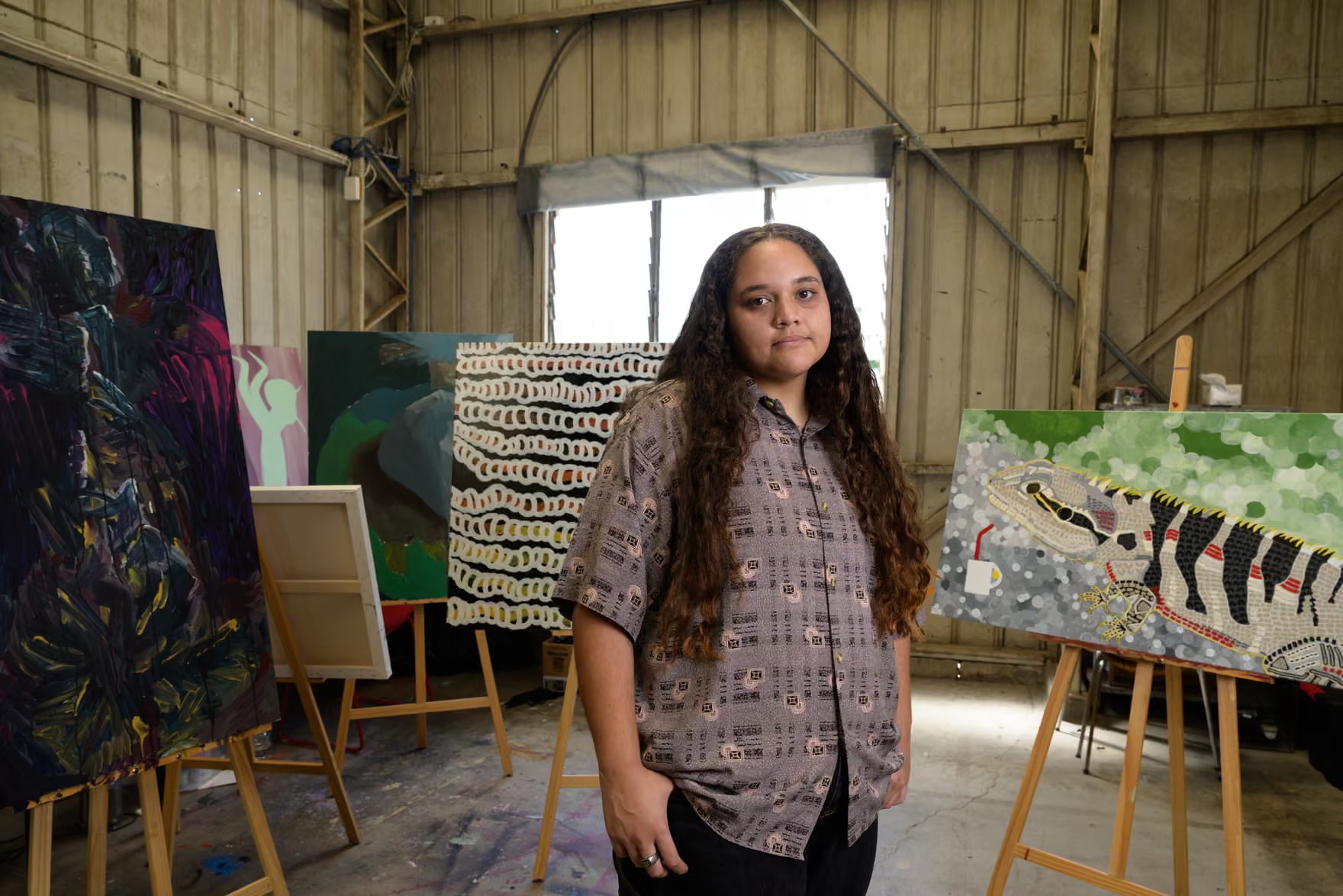
Love-Anderson's work is about the connection of everything to ancestors, which is why she treats AI as a serious problem: a program cannot give a work knowledge passed down through family and elders across generations. What it produces stays artificial to her.
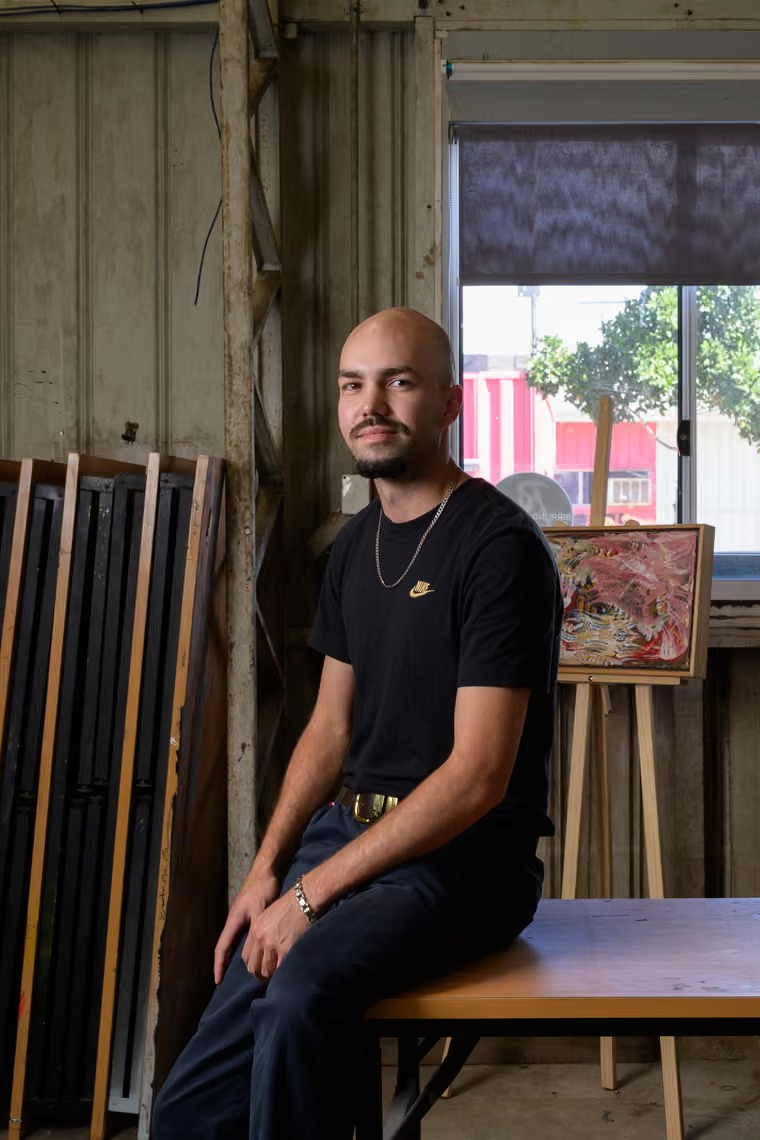
The photographer Glenn Hunt won the digital prize in 2020 and helped organise the 2024 boycott. He is back as a finalist too, with a portrait of Dean Clifford. Hunt says his view of AI has not changed; what this work let him do was make the opposite of a machine-generated image, and he does not think a more real subject than Clifford exists.
Clifford lives with epidermolysis bullosa, a rare skin condition severe enough that Meta AI once likened his appearance to a "zombie costume". When a selfie of his went viral, a large number of people online concluded it had been generated by AI.
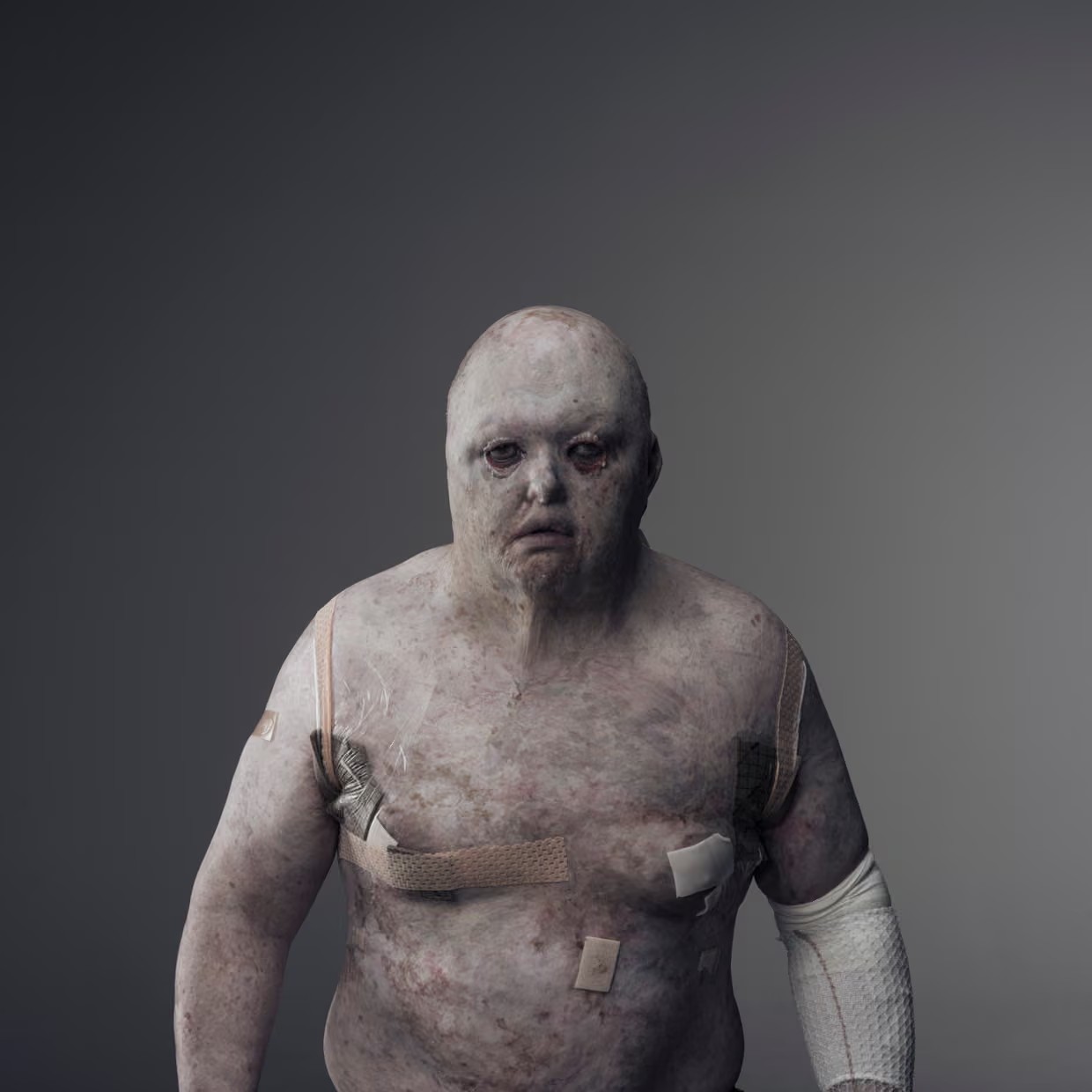
Glenn Hunt's portrait of Dean Clifford, who lives with the rare skin condition epidermolysis bullosa
Source: theguardian.com
Those two facts are the most instructive thing in the whole dispute, and they have nothing to do with prize rules. A machine described a real person as a costume; a crowd looked at a photograph of a real person and called it synthetic. The damage generative imagery does to a portrait prize is not mainly that fake work gets in. It is that real work stops being believed.
BPP director Anna Reynolds says the competition accepts generative AI work only where it does not infringe copyright — a rule introduced to put boundaries around the technology. She argues that a straight for-or-against argument no longer describes the situation, and that the question now is how to use AI as a creative tool while keeping human input and control over the process.
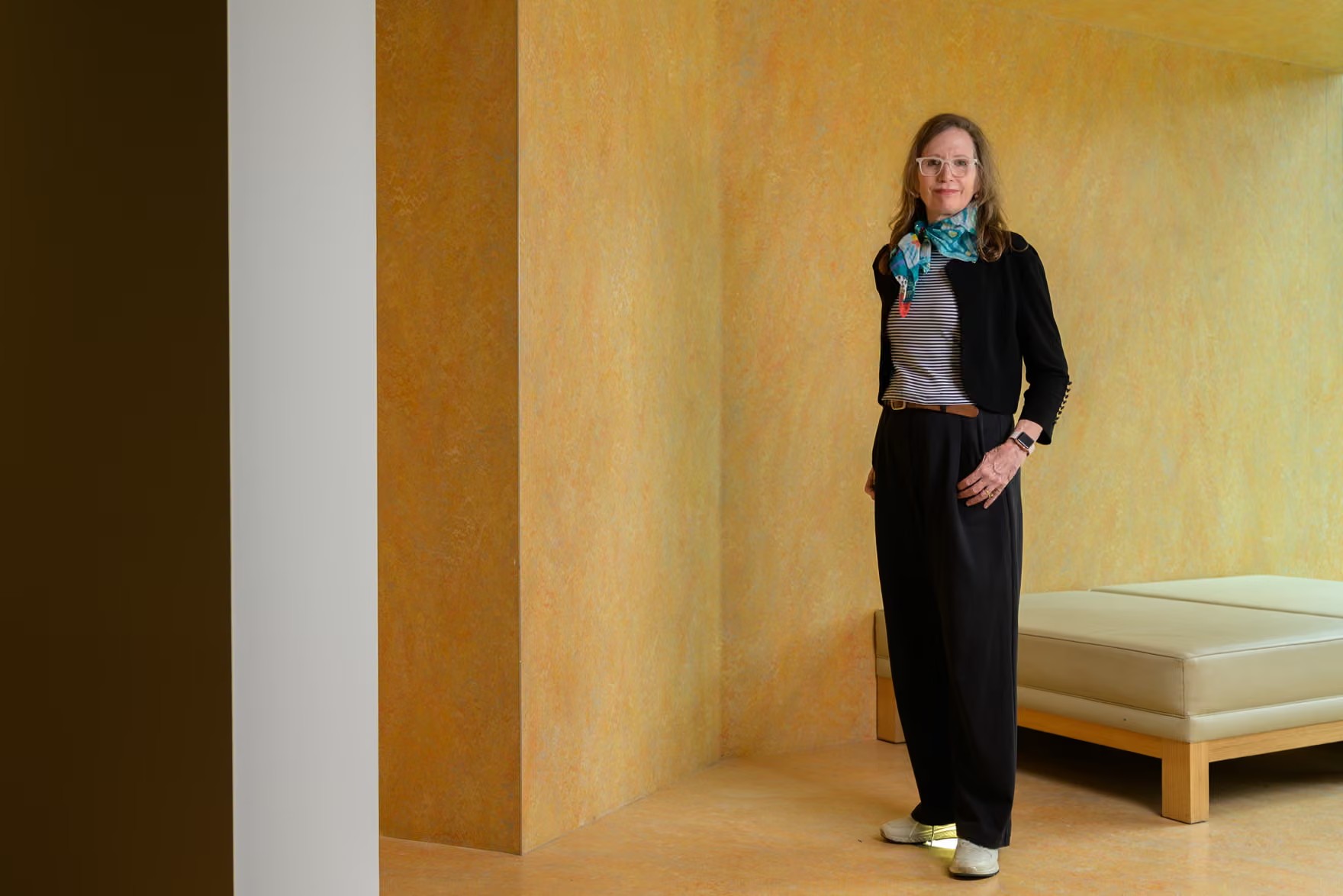
"I think the argument about yes or no is now over, in a sense" … Brisbane Portrait Prize director Anna Reynolds
Source: theguardian.com
The copyright rule reads like a condition nobody can check. Krea's training data is not something a Brisbane jury can audit, and the prize is relying on what entrants declare. That word carries the whole entry count: Ryan's is the only work with declared generative AI, which is not the same as the only work that used it. A self-reported standard works exactly as well as the honesty of the field, and the 2024 wave of competitions that accidentally crowned AI images is the evidence for how well that goes.
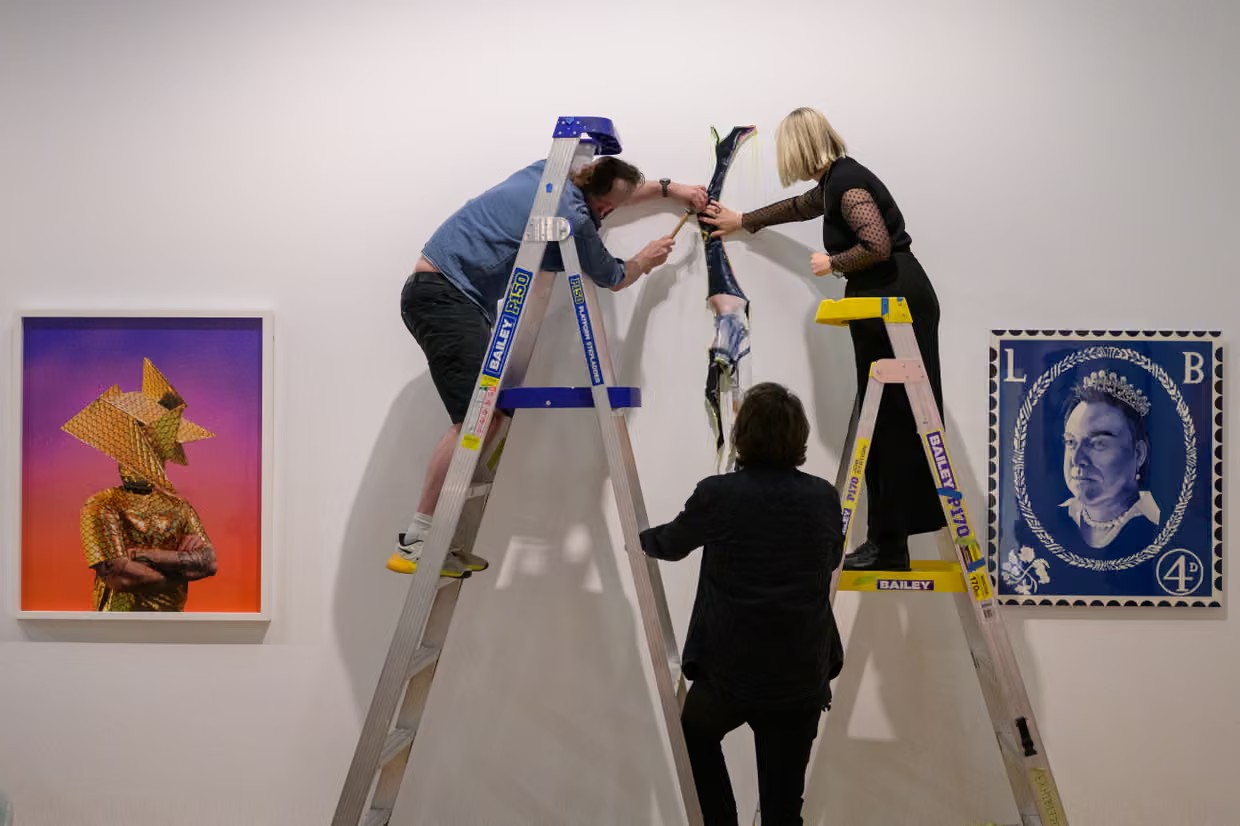
Reynolds may also be calling the yes-or-no argument over a little early. One entry in 49 is not a settled compromise; it is a field that has mostly declined the invitation, in a year when the artists who objected loudest came back to compete under the rule rather than against it. That is the harder position for a prize to sit in — the policy survived, and almost nobody used it.
Brunjes puts the other side of it plainly: Indigenous artists still have their integrity, and their works and their stories are not going anywhere. How fast AI is rearranging everything around them makes the 49-to-1 ratio a snapshot with a very short shelf life, and the next director to defend an AI rule will be doing it in front of a field that has already learned how to fight back inside the entry form.