

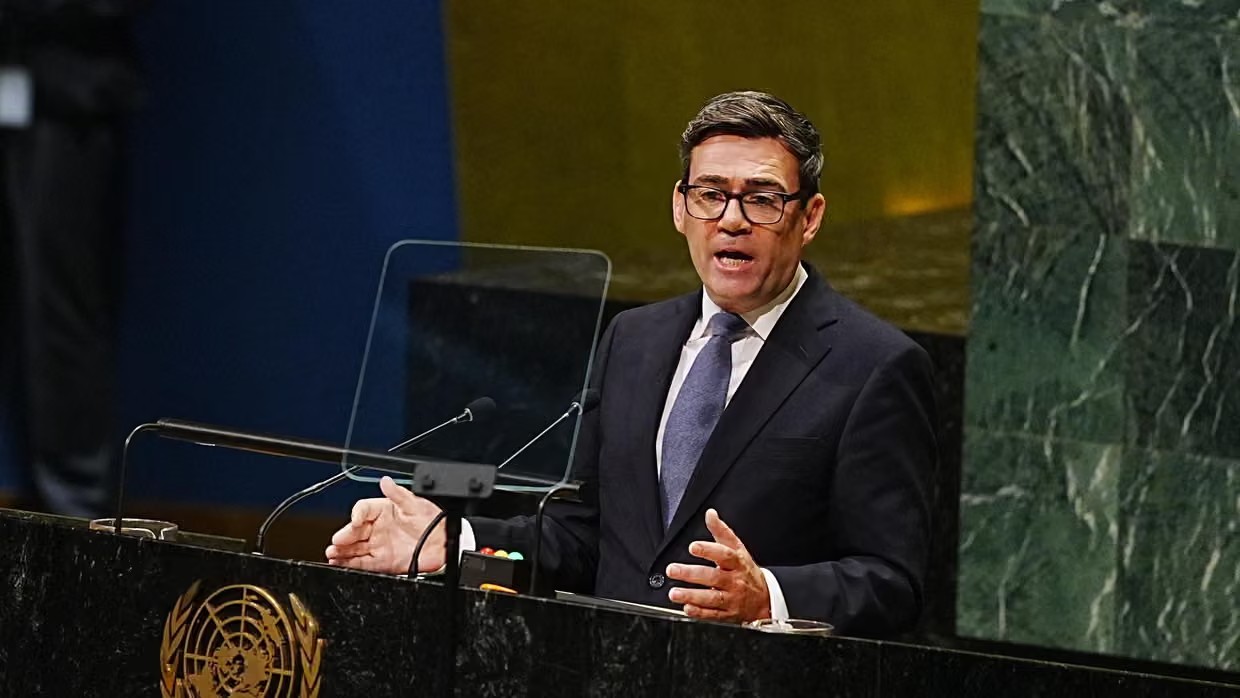
Andy Burnham calls out Russia as a hostile actor in misinformation war during UN address – video
Source: theguardian.com
What the centre will do
The centre is expected to:
It will provide Britain with tools to defend against information warfare and help local communities recognise and resist disinformation. The stated aim is to prevent distorted and untrue narratives about the country from spreading.
Prime Minister Burnham said Britain must enter the next decade “with its eyes wide open” to covert campaigns, many of which he said are organised by Russia. These campaigns, he argued, distort how people see their own country and communities.
Burnham also connected exposure to foreign influence with domestic problems. People struggling with the rising cost of living, and young people who are not in education, professional training or work, may be especially susceptible to influence online, he said. Inequality, in his view, weakens society further.
A security policy with a domestic diagnosis
Burnham made the case in New York on Tuesday evening, arguing that a covert campaign enters people’s homes, changes how they view their country and community, creates a picture of decline, fuels division and spreads despair.
He also pointed to cyberattacks on British companies and institutions. AI will increase the scale of the threat, Burnham said, while Britain has spent too long trying not to notice what was happening. Over the past decade, he argued, the country gave too much room to people spreading a negative and destructive account of life in Britain that had no connection to reality.
The government now says it will defend British values and the rule of law more actively, while helping citizens build resilience. In an information war, Burnham said, security begins in every home.
The speech followed Donald Trump’s press conference with Ukrainian President Volodymyr Zelensky at the UN. Trump said Kir Starmer’s rhetoric toward Moscow was too tough and that London should be more cautious.
Downing Street rejected that view. A spokesperson for the British prime minister said every British prime minister, including Burnham, had held the same position: threats from Russia, including hybrid attacks and statements, were “outrageous and unacceptable”. Britain and its allies, the spokesperson said, had to defend themselves, and Russian aggression would not make the country stop supporting Ukraine.
The Russian campaign Britain says it sees
Burnham said the Kremlin spends about £1.3 billion a year on information manipulation. Russian structures, he said, use every available means to spread lies and disinformation by exploiting people’s fears.
The methods he listed include:
He also said Russian structures had tried to inflame tensions and disorder after tragic events. He called the idea of exploiting such events “disgusting”, while adding that this was precisely how those structures operated.
The government’s answer is therefore broader than a monitoring unit. It plans to expand people’s opportunities, make life more affordable and build infrastructure that can stop what Burnham called the “poisonous flow” of disinformation. The prime minister said disinformation and deepfakes may have a stronger effect on people who feel their lives are not improving; financial pressure and a lack of work, education or professional training can increase vulnerability.
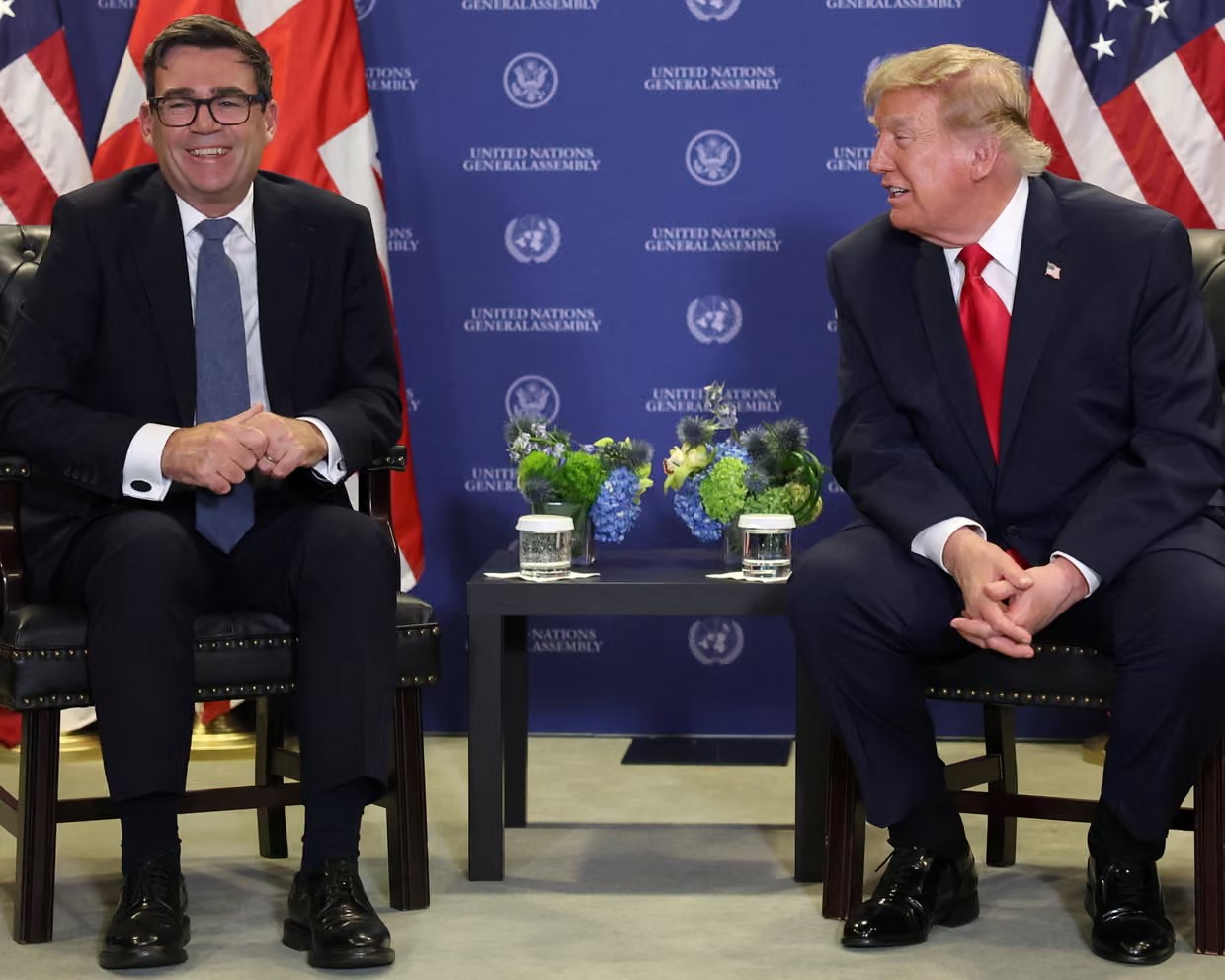
Downing Street pushed back on comments by Donald Trump, who met Andy Burnham on Tuesday, that previous UK government rhetoric had been ‘too tough’ towards Moscow. Photograph: Toby Melville/Pool Reuters/AP
Source: theguardian.com
The unanswered part
My read is that the centre is being presented as both a counter-intelligence mechanism and a repair programme for social trust. That makes the policy more ambitious than simply finding fake accounts, but also harder to measure. The announcement is clear about the threats Britain wants to confront and the communities it considers vulnerable. It is much less clear about how the new centre will distinguish hostile manipulation from legitimate political conflict, or what concrete powers and resources it will have.
Britain also intends to share its experience with other countries. It has already helped Moldova protect elections from Russian interference, and Burnham said more European countries will face the problem as new elections approach. Some will be dealing with it for the first time.
That external role fits the government’s argument that information security is a shared problem. But the more revealing tension is at home: Britain wants to export a model for resilience while acknowledging that the conditions that make people receptive to disinformation—economic pressure, inequality and distrust—cannot be solved by security agencies alone.
Daily AI news
Every day we pick what actually matters in AI and explain it plainly — no hype, no filler. Subscribe if you want to follow where the industry is going.
Only what matters — every day
Follow on X