
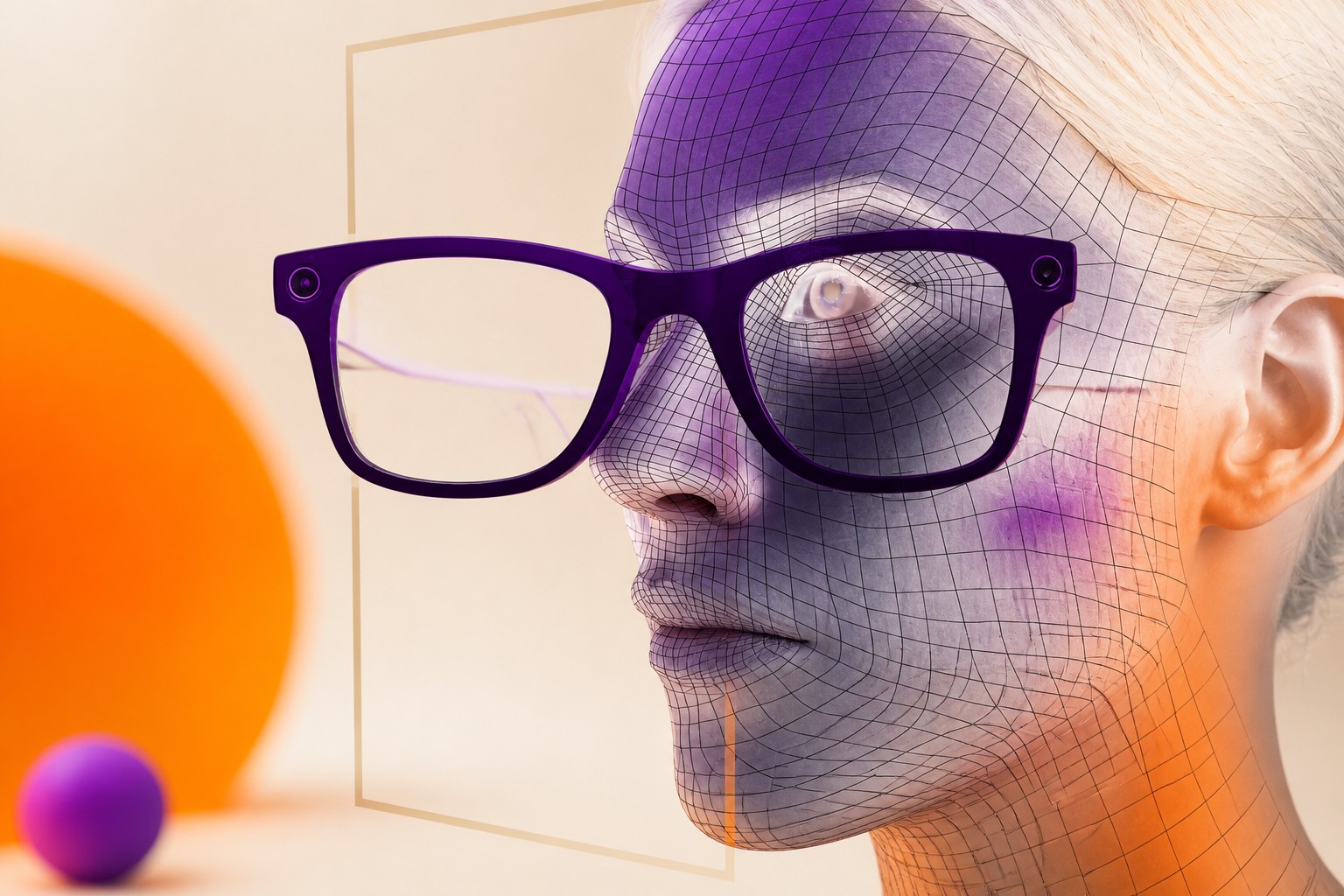
Families in Illinois and California are preparing a class action against Meta, accusing the company of unlawfully collecting photos from Facebook and Instagram to build a large facial recognition system, Wired reports. The claim aims at the company's most exposed product line: camera glasses that already carry an insulting nickname, perv glasses, earned from their reputation as a tool for filming strangers without consent. In June, Wired reported that Meta had quietly added facial recognition code to those glasses.
That code belongs to a feature called NameTag. After the June story, Meta said repeatedly that it did not intend to ship the technology. Its chief technology officer, Andrew Bosworth, then publicly described such plans in detail and called the feature great — days after saying the Wired investigation was absolutely dishonest. A company can hold both positions in public relations. It is harder to hold both in discovery, where the question is not whether the feature shipped but what was built and on what data.
The complaint alleges that Meta extracted biometric characteristics from publicly available social media profiles. Wired reported in June that such face prints turned up in the code of the companion app for Meta's smart glasses. According to a patent, the program was meant to match those characteristics against profile photos. The plaintiffs also point at Emu, Meta's image generator, which was trained on a large body of images and text uploaded by users, and argue the company used that AI system to gather biometric data.
Meta told Wired the suit is without merit and mischaracterizes its work. A spokesperson said the company is open about how it uses user information to build and improve AI-based products. On NameTag specifically, Meta said the feature was not shipped to users and that no final decision has been made about its future.
Read the second half of that sentence again. Not shipped is a statement about the past; no final decision is a statement about the future, and it is not a denial. Meta's public position is that it has built the capability, has not released it, and has not ruled out releasing it. That is an unusual thing to say while arguing that a suit about building the capability is baseless.
The timing matters too. The class action follows by days a Utah mother's account that Meta's AI reviewed Instagram and Facebook posts to surface intrusive information about her young daughters. Meta has also already conceded ground on an adjacent feature: users were allowed to generate images based on public Instagram accounts, and the company admitted that feature missed its mark.
What gives this case weight is not novelty but price history. Meta settled a class action over a different facial recognition system for $650 million in 2020. In 2024 it agreed to pay $1.4 billion to settle a facial recognition data claim in Texas. The number roughly doubled in four years, against a company that had four years to change how it handles biometric data and instead shipped glasses whose companion app contained face prints. Plaintiffs' lawyers can read that trend line as well as anyone; so can Meta's finance department, which is presumably the reason these matters end in settlements rather than verdicts.
The more interesting question is what the suit does to the defense Meta has been using all summer. Every statement the company has made has been about distribution — NameTag was not released, the glasses do not identify strangers on the street, no decision has been taken. The complaint is not about distribution. It is about collection: whether photos uploaded by users became biometric identifiers without consent. If that is the claim, the harm the plaintiffs describe was complete before any product existed, and it happened inside the training pipeline that produced Emu and the face-matching code in the app.
Which leaves Meta defending a system it says it never shipped, over data it says it was always open about using, for a feature it has not decided whether to launch. The glasses are the visible object here, but they are not what is on trial.