

How the model works on a virtual canvas
Most modern image-generation models, such as Midjourney, use diffusion: they gradually turn noise into a finished image. Claude Fable 5.2 works differently. It simulates the act of painting itself, including bristle texture, paint application and the need to cover up unsuccessful strokes.
Anthropic developer Jake Eaton demonstrated the model’s capabilities on X. He also works on research into language-model values, safety mechanisms and AI-agent behavior. When Eaton asked for a painting that would be as difficult as possible to distinguish from a photograph, Fable 5.2 depicted a shopping cart in a parking lot using about 700,000 simulated strokes.
According to Eaton, Claude uses no external image model, pre-made source images or tracing. Each work is a Python program of 1,000 to 2,000 lines that controls a painting simulator. The approach resembles editing images with an AI agent: the language model selects tools and evaluates the result.
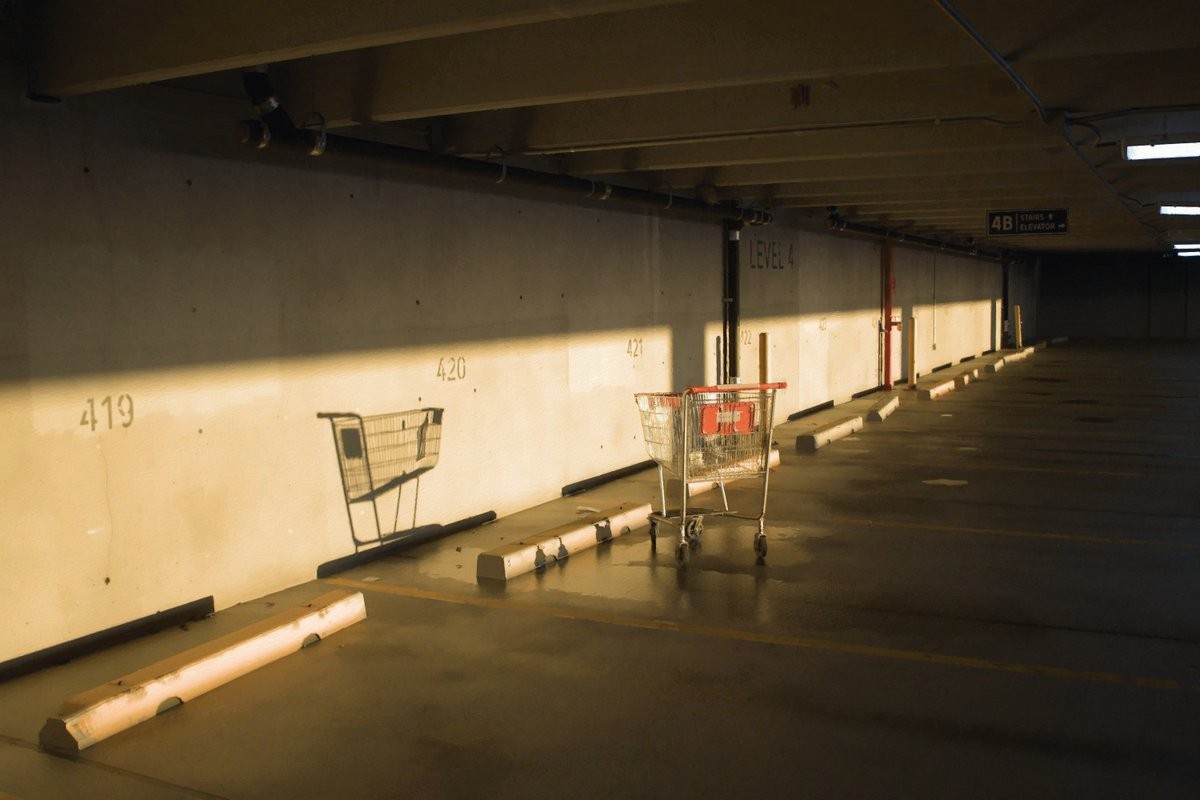
About 700,000 simulated brushstrokes went into this photorealistic parking garage scene by Claude Fable 5.2. | Image: Jake Eaton
Source: the-decoder.com
Early work by the related Opus 5.5 model was criticized for imitating existing art. In response, Eaton suggested that Fable 5.2 create its own imagined artists, complete with fictional biographies and distinctive styles. Each painting takes several thousand strokes, with Eaton guiding the model through comments.
Source: the-decoder.com
Every stroke has to be accounted for
Anthropic engineer Michael Hrachik published a chat log and video of an experiment in which he asked Fable 5.2 to paint a bird at dawn. The model could use only code that simulated the physical properties of bristles and wet paint, as well as the texture of the canvas. It specified each stroke as a separate line of coordinates, and could not undo one once it had been applied.
This differs from AI video generation. Flux 3, for example, creates sequences of images and maintains their consistency over time. In a 21-second clip, a counter shows the painting taking shape from exactly 111 strokes on a blank canvas.
For the first stroke, the model set the color to #30346a, the width to 90 pixels and used five slightly uneven points. It deliberately added a deviation of about seven pixels: a human hand does not draw a perfectly straight line either.
Between stages, the model inspected the canvas and corrected mistakes. When the bird’s back came out too thin and uneven, Fable 5.2 added a wider stroke over it. Bristle marks sticking out at the edges began to resemble ruffled feathers.
In another work, 280 strokes depict two people painting at dusk. A late lighting effect accidentally blurred the paint tubes and cup on the table, so Claude repainted them. The model also made both figures work with their outside hands, bringing their inside shoulders together as the prompt required.
Source: the-decoder.com
Skills move from canvas to robots
Fable 5.2’s ability to plan actions step by step and correct mistakes while accounting for physical constraints applies beyond virtual painting. Anthropic says the model is designed for complex technical tasks that involve long sequences of actions. The company has also developed Mythos 5.2 for vetted researchers working in security and biology.
Within Anthropic, Fable 5.2 solved two open problems in black-hole physics, designed three working electronic devices with circuit-board manufacturer Diode, and used more than 1,000 subagents over eight days to program its own laptop operating system.
AI researcher Aris Zhu tested the model on real robotic arms. He compared Fable 5.2 with OpenAI’s GPT-6 Astra: both models used physical manipulators to paint Van Gogh’s “The Starry Night.” On the RoboDojo Sim simulation benchmark, Fable 5.2 scored 64.9%, compared with 29.8% for GPT-6 Astra, according to Anthropic.
Tests with a real robot exposed limits in movement precision. Astra painted faster, and so far only OpenAI’s model has managed to stand a domino on its edge. It did so by slowly loosening its grip and using gravity as a fulcrum.
Dataist’s take: Results on the canvas and simulation benchmark show that step-by-step planning can be applied to physical tasks, but a simulation score does not guarantee the same advantage in real-world robot control. In the manipulator test, Fable 5.2 was slower than Astra, and some precision-gripping tasks remain achievable only by OpenAI’s model.
Daily AI news
Every day we pick what actually matters in AI and explain it plainly — no hype, no filler. Subscribe if you want to follow where the industry is going.
Only what matters — every day
Follow on X