
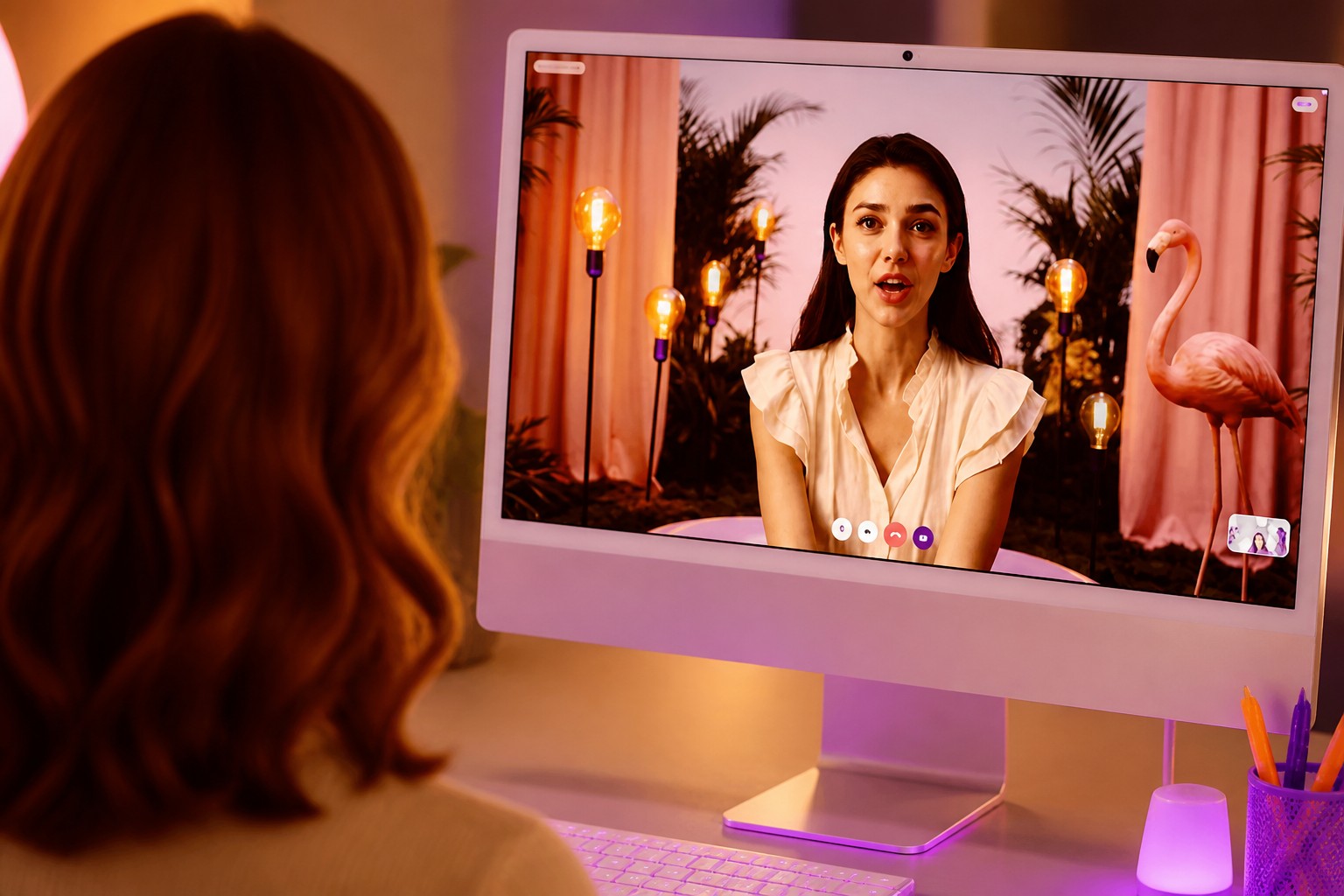
CNN has published two videos in which reporter Elizabeth Wagmeister addresses Tilly Norwood, the algorithm-generated "AI actress" that drew near-unanimous outrage when she appeared last year, as though speaking to a human interview subject. Wagmeister introduced her enthusiastically as the first AI actress, asked whether the Academy of Motion Picture Arts and Sciences should recognise AI actors, and received an answer: yes, the model said, but in separate categories rather than mixed in with human performers, as a way of acknowledging the changing face of film and television. The model also called AI acting a new art form deserving of its own attention. The segments set off a wave of anger and mockery online.
The most revealing moment is one CNN got and then walked past. In the second clip, Wagmeister asked Tilly to improvise a scene. The model refused, saying it could only stand completely still, experiencing digital pain. Wagmeister then acknowledged what that refusal demonstrated: Tilly cannot act. The program needs a set of prompts telling it what to do.
That is the entire story of the technology, delivered on camera by the technology itself, and it was treated as a colour beat rather than the finding. An improvisation request is a decent functional test — it asks for behaviour that is not in the prompt. The system failed it and produced a line about digital pain instead, which is exactly what a language model does when asked for something it cannot supply. Wagmeister's follow-up was accurate and arrived too late to change the framing of the piece.
The reaction ran in one direction. Users accused CNN of humanising the technology, deliberately or otherwise, by presenting a lifeless model as though a person were sitting across from the reporter. One Bluesky user joked that journalists had interviewed a set of jangling keys, and wondered what journalistic reputation was left afterwards. Another said you cannot interview a program, and that pretending otherwise is professional negligence.
Wagmeister herself conceded the point inside the segment, acknowledging it was not a real interview because Tilly does not exist. That concession does not undo the format; it confirms that the format was chosen anyway.
This is the second time a major American newsroom has done this. Months ago the New York Times was mocked for running a profile of the same synthetic performer. CNN watched that happen and made the same product.
Here is what I think is actually going on. Tilly Norwood has no audience. She has never carried a project anyone watched by choice. What she has is coverage, and the coverage is the asset. An AI actress does not exist as an actress until a news organisation treats her as one — the interview format itself confers the status that the underlying technology has not earned on screen. Each outlet that runs one is not reporting on a phenomenon; it is manufacturing the phenomenon it then reports. Tilly Norwood arrived at a moment when the entertainment industry was already dealing with a flood of cheap AI content, and she reignited the argument about technology putting creative professionals out of work — an argument that has already enraged some of the most powerful people in Hollywood. That is why the anger is disproportionate to anything she has actually done. She is a symbol, and symbols need press.
The AI industry has a habit of convincing itself that its outputs are interesting, and then mistaking its own conviction for demand. A lifeless model performing mechanical actions on screen does not become watchable because a cable network books it. But the pipeline is already built: Tilly Norwood is due to "star" in a feature called Misaligned, a coming-of-age story with existential AI chaos added, set inside something called the Tillyverse. The film will need press. The format for covering it now exists, and two newsrooms have already demonstrated they will supply it.