
From one pistol to a design tool
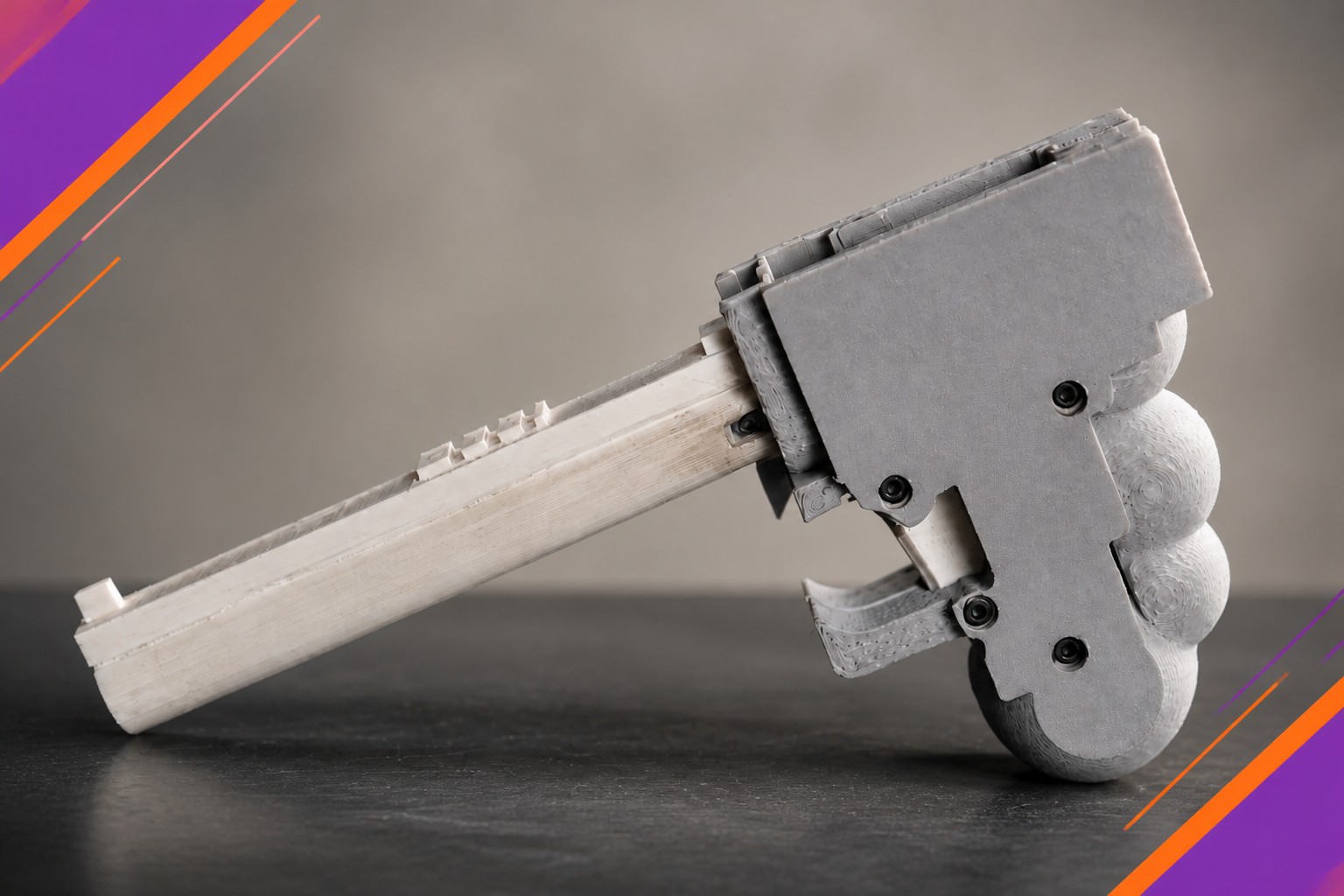
Wilson told The Verge that the WASP is “the first gun created by AI.” Its unusual design resembles images of old firearms that might emerge from a hallucination, but reports say it works and fires live ammunition.
The WASP continues Wilson’s work on what he called the world’s first 3D-printed firearm, which he made 13 years ago. But the more consequential project may be GatGPT itself. Wilson describes it not as AI that created one weapon, but as AI capable of creating weapons.
He says he designed the WASP by talking to GatGPT in natural language. In theory, that could let someone with no firearms expertise use the tool to select components and design a pistol.
A lower barrier, fewer safeguards
The WASP has no serial number, unlike ordinary firearms. If GatGPT works as described, it could make it easier to produce “ghost guns”: homemade firearms made outside government oversight and difficult to trace. Some are sold as kits for self-assembly; others are custom-designed. Luigi Mangione used such a weapon to shoot UnitedHealthcare CEO Brian Thompson.
Wilson considers access to firearms a “fundamental human right.” The tool’s promise of natural-language design sits uneasily beside that stated goal: Wilson says anyone could use the same approach, even where doing so is illegal.
Justin Wagner, senior vice president of legal affairs and policy at gun-safety organization Everytown, told The Verge that Wilson acknowledges the project’s aim is to lower the barrier so anyone can obtain a firearm, regardless of background-check results or legal eligibility. Wagner said Wilson wants everyone to be able to design and manufacture weapons, and called that dangerous.
The rules are already contested
Recent efforts to restrict homemade firearms have run into obstacles. In August, a federal judge overturned the Bureau of Alcohol, Tobacco, Firearms and Explosives rule on ghost guns adopted under the Biden administration. It required serial numbers on kits and parts for 3D-printed firearms and background checks by manufacturers.
New York and California, meanwhile, passed laws requiring 3D-printer manufacturers to install software that blocks firearm printing. Those laws have drawn debate in the 3D-printing community.
I think the announcement’s quietest point is also the hardest to resolve: it describes a tool for designing firearms, but offers no account of how access to that tool is limited. That gap matters more than whether the WASP is a clever proof of concept, especially when the stated ambition is to make firearm design available to anyone.
Daily AI news
Every day we pick what actually matters in AI and explain it plainly — no hype, no filler. Subscribe if you want to follow where the industry is going.
Only what matters — every day
Follow on X