
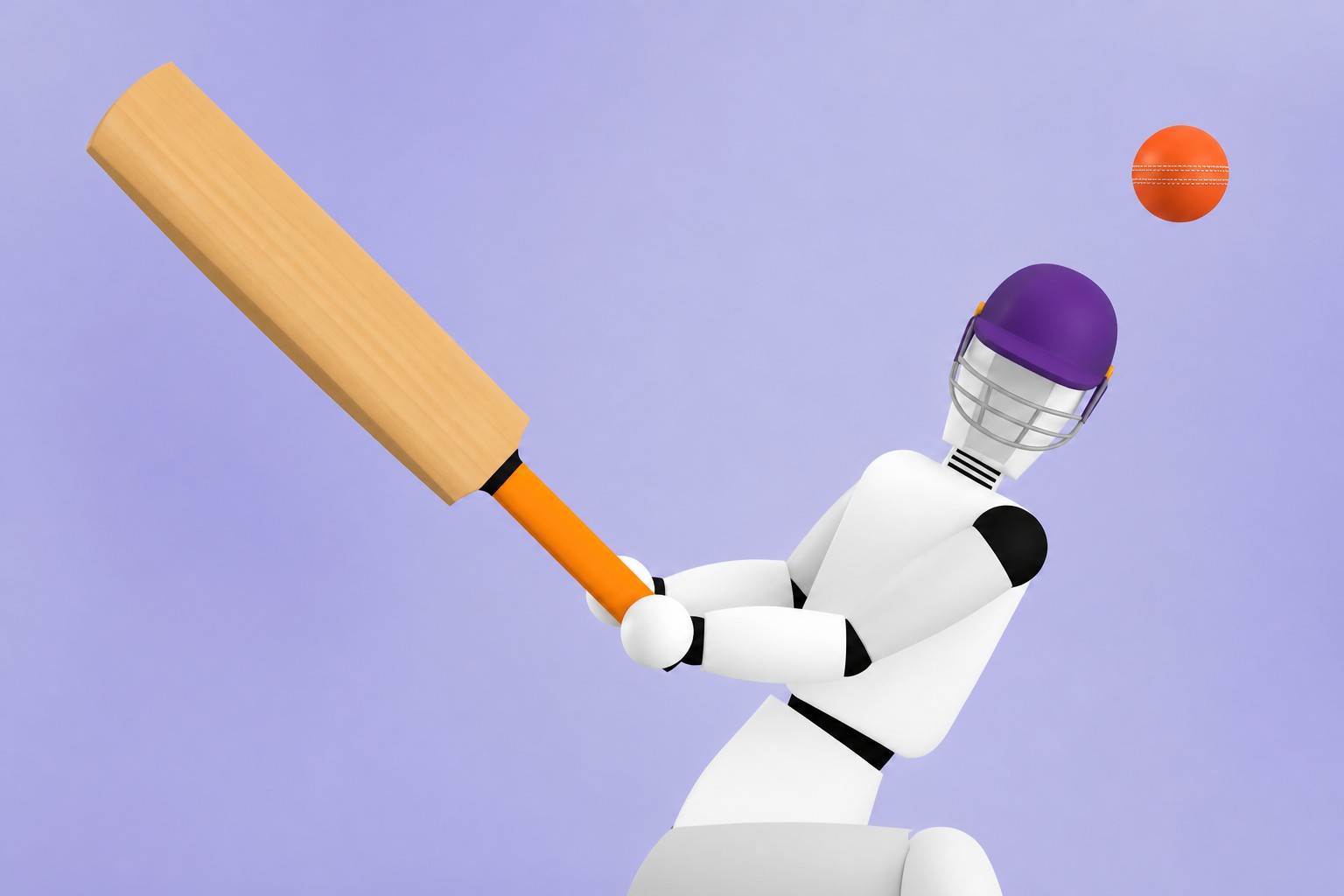
The most consequential use of AI in cricket right now is not a machine that can bowl. It is a database. A platform called EquiPlay has gathered more than 2,000 coaching assessments of 300 young cricketers, filled in by 28 coaches inside one first-division club's player development programme, and turned them into a record of who gets rated well, by whom, and how those ratings move as a player ages. No cricketer is being replaced by anything. The coaches are the ones being measured.
Adila Ahmed Shafi, a professor at the University of Gloucestershire and a board member at Gloucester CC, describes the aim as making coaching judgement visible rather than replacing it. The platform standardises how coaches score players, tracks how a player's game changes over time, and uses AI to turn the scores back into written feedback. The point of standardising is comparison: whether different groups of players develop differently, and whether a club's own scoring runs systematically kinder to some of them.
That answers a question clubs have historically been unable to ask. They knew who entered the academy. They had very little visibility into how those players progressed once inside. If boys from state schools start falling behind at 15, the data shows it, and a club can build a support programme around that specific drop-off. Ethnicity, socio-economic background, school, where a player lives: all of it becomes checkable rather than assumed.
Freddie Wilde, an analyst for teams in the Indian Premier League and The Hundred and head of cricket analytics at CricViz, says AI has touched nearly every part of his working day. The line between conventional analysis and AI-assisted analysis keeps blurring — models improve, tools get faster, more of the available information actually gets processed. For Wilde the practical effect is autonomy. Work that used to need a data engineer or a data scientist is now something an analyst can attempt alone. That, he argues, is the first real change: not a replacement for the player, coach or analyst, but a wider reach for each of them.
For a batter it can mean knowing where a bowler is most likely to put the ball and which risk is worth taking. For a bowler, finding a weakness at a particular angle, bounce or field setting. The final decision stays with a person. Wilde also lists what selection still resists entirely: team culture, character, the balance of a dressing room.
All of which sits a long way from the version of this story that gets attention. Last month China hosted the second World Humanoid Robot Games, where more than 500 robots competed at football, athletics and boxing. Plenty of them stumbled or needed human help. One of them ran 100 metres in 8.64 seconds.
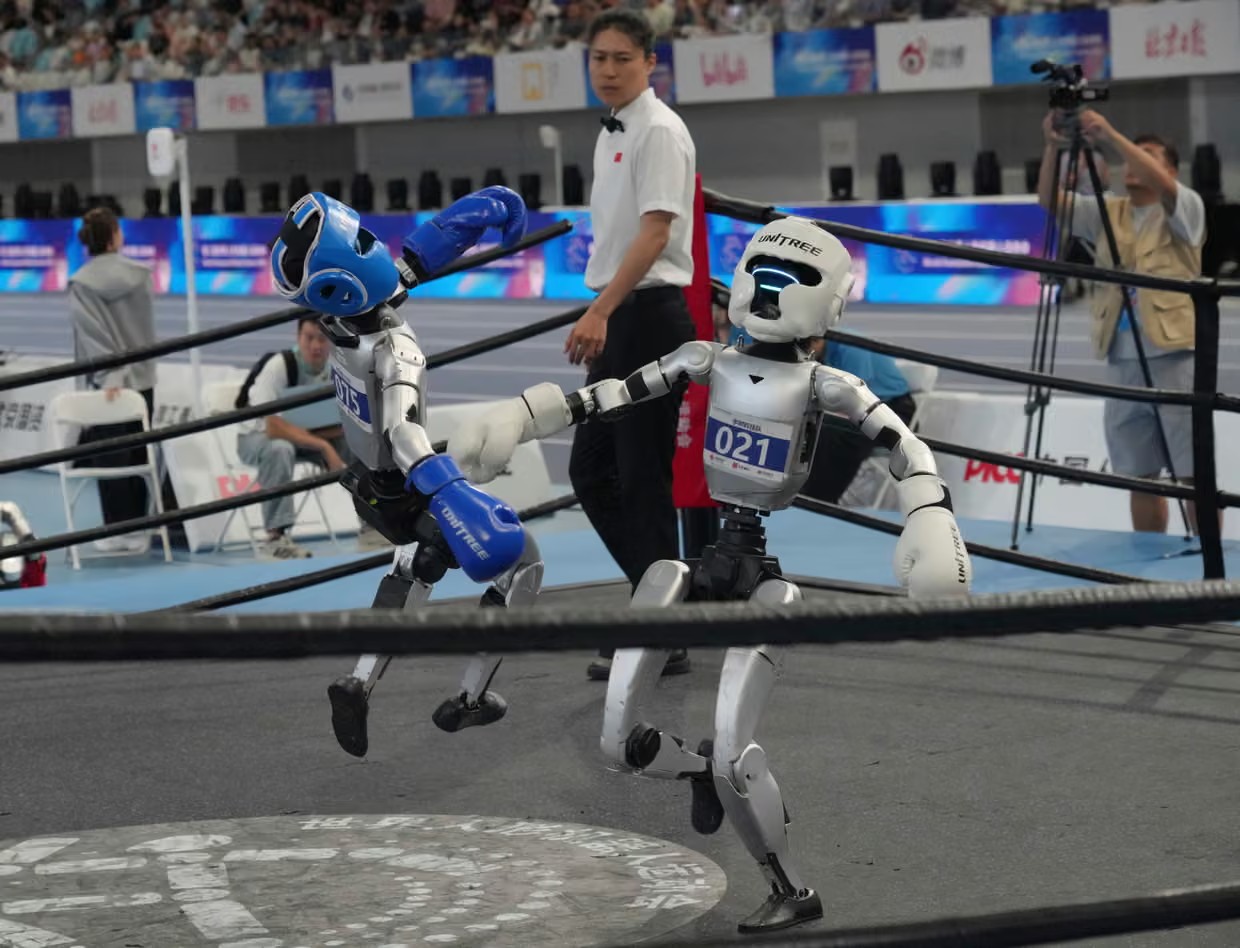
Humanoid robots at the World Humanoid Robot Games in Beijing entertained the crowd and offered a sober view of the future
Source: theguardian.com
Ray Kurzweil's law of accelerating returns holds that technological progress is exponential: the line barely moves, then reaches the knee of the curve and turns vertical. Leading AI researchers think that stage has already begun. Daniel Kokotajlo, a former OpenAI researcher, warned last week that humanity may be building a new species that ends up running the world. The cricket version of that anxiety is narrower and stranger: whether the new species could bowl an unplayable doosra, the delivery that spins the wrong way, or read a grassy pitch where the ball changes direction off the bounce.
The harder question is not capability but consent. Technology already helps umpires, and DRS was absorbed because a human stayed at the centre of the decision. Once an AI could get every verdict right, the umpire's authority becomes a convention rather than a function, and the boundary between assistance and replacement stops being obvious. That part is still speculation. The quiet transformation is the one already running in the systems that measure players and help develop them.
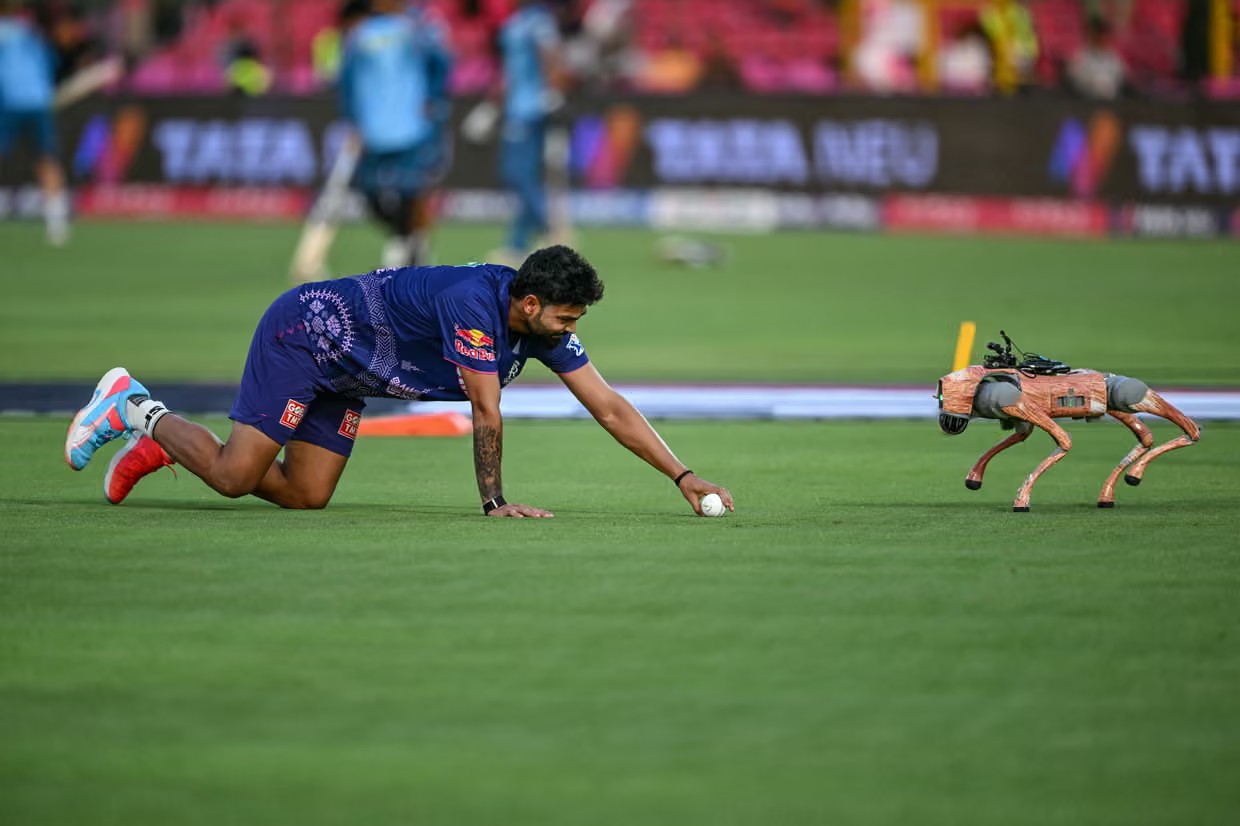
Kumar Kartikeya of Rajasthan Royals talks to Champak the robot dog before an IPL match between Rajasthan Royals and Gujarat Titans
Source: theguardian.com
Media faces the same trade in a cruder form. A match report could land seconds after the close of play with a machine's name on it, and editors might well be delighted — no more waiting for a writer to find another unfamiliar metaphor for Harry Brook's latest failure. The writer of The Spin also teaches journalism, at the University of East London and St Mary's University Twickenham, and reports that more and more student work carries the obvious fingerprints of AI. He does not treat that as automatically bad; plenty of people already reach for a model to draft an email or to find the right words for a difficult thought. The problem starts afterwards. He now finds himself training editors rather than only reporters, because students have to learn to check and rework what the machine hands them. The craft is shifting from producing the text to judging what in it is worth keeping.
This is where the column's fear lands, and I think it is aimed slightly wrong. The risk it names is homogenisation: if prose, jokes and observations all come out of the same set of language patterns, cricket writing ends up with fewer sentences you could identify as Gideon Haigh's or Mike Atherton's and more fast, tidy versions of how cricket is supposed to be written. That is probably true. But the flattening did not start with the model, and the column says so itself in a line worth more than the argument around it: the sport is already becoming a parade of interchangeable franchises where the same players hit the same sponsor-branded maximums in every time zone. The writing converged because the thing being written about converged first. AI made uniform prose cheap; it did not make cricket uniform.
The more interesting gap is in the analytics section, which raises a problem and then walks past it. EquiPlay exists to expose bias in human judgement, which is an overdue use of the technology. But it does that by treating coach ratings as data, and coach ratings are exactly the subjective artefact the project set out to distrust. Standardising them makes them comparable; it does not make them correct. A club that finds no disparity in its numbers will be tempted to conclude it has no problem, when what it may have is a consistent one. Nothing in the account says who audits the audit.
Wilde's defence of the sport is that live cricket stays real because it cannot be fully predicted or staged in advance. Information and plans matter; execution matters more, and so do memory, uncertainty and meaning.
The column tests that by asking an AI tool to write something profound about cricket's human future. The system replied that as technology advances the spirit of cricket will endure, reminding everyone the game is made not only of statistics but of passion, unpredictability and the eternal bond between players and supporters. A bit vague, the writer concedes, but acceptable. That, he says, is exactly why he dislikes it.
Acceptable is the whole problem. A doosra no machine can bowl is a line the sport can point at and defend. A closing paragraph a machine can write well enough to print is not a line at all — it is a job already gone, conceded without anyone having to lose the argument first.