
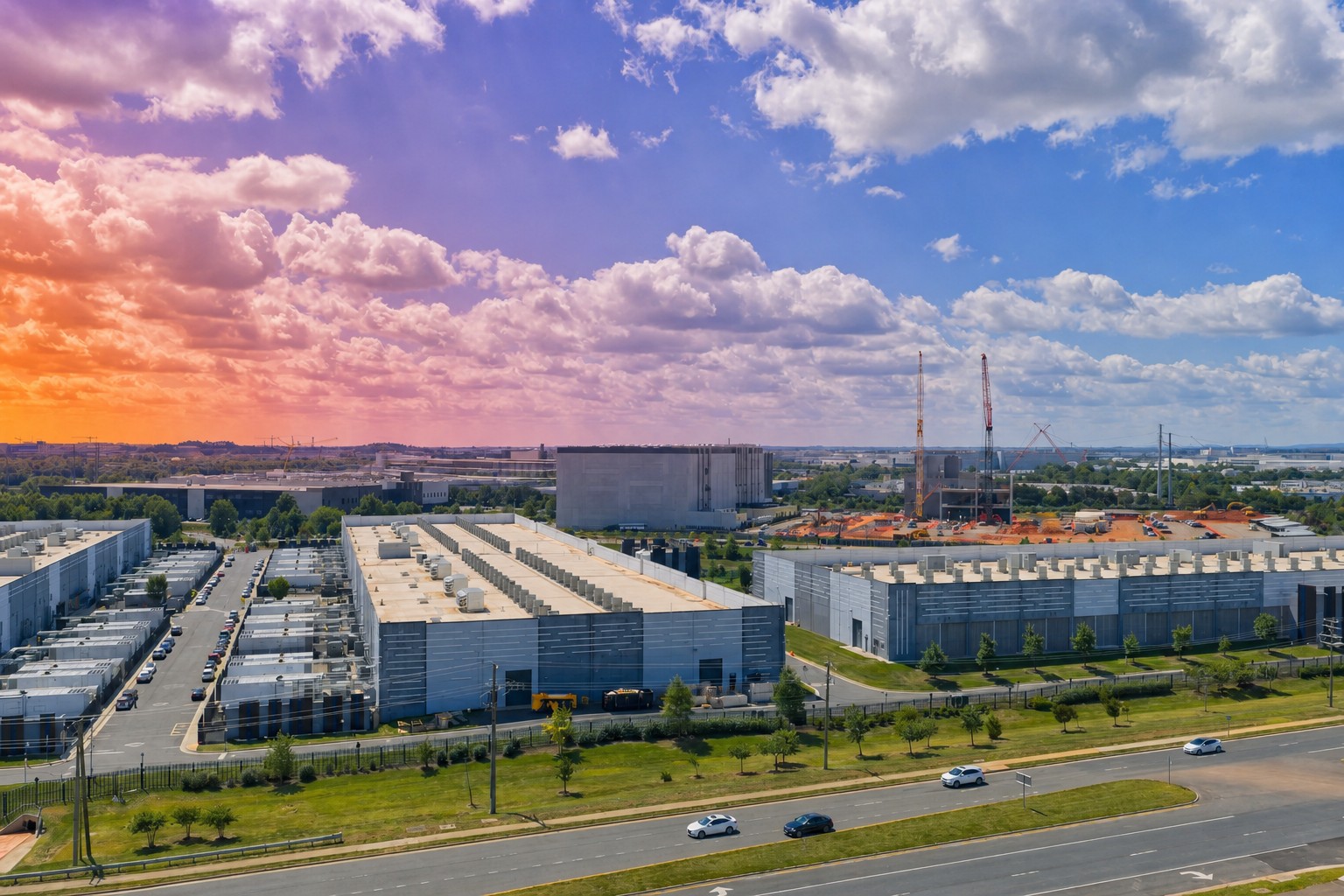
Crusoe has raised $3 billion at a $30 billion valuation, according to reports. The company builds the large data center complexes used by customers including Oracle and OpenAI. It was founded in 2018 to do something else entirely: mine cryptocurrency using the associated gas that oil and gas producers normally flare off at the wellhead. Last month Crusoe met with investment bankers from Goldman Sachs and Morgan Stanley to discuss a possible initial public offering in the near term, Axios reported.
The flared-gas origin story is usually told as a curiosity, and it deserves better. A bitcoin miner and an AI data center developer are selling the same underlying thing: access to electricity in places where electricity is cheap, stranded, or otherwise being wasted. The mining rigs were never the asset. The siting, the power contracts and the ability to put compute where the energy already is — those carried over intact when Crusoe changed what it plugged into the grid. The pivot looks abrupt in a company timeline and looks almost mechanical from the asset side.
That is also why the customer names matter more than the valuation. Oracle and OpenAI are among the very small number of buyers currently capable of absorbing data center capacity at the scale Crusoe builds it, and both are named in the reporting. A developer with that client list is not selling speculative capacity into a spot market; it is building against commitments from counterparties whose own spending plans set the ceiling on its growth.
The IPO meetings are the part I would read closely. A company that has just taken $3 billion privately and is simultaneously talking to Goldman Sachs and Morgan Stanley about going public soon is not hedging — it is staging. Private capital covers the buildout now; the public market is where the long-run capital intensity of this business eventually has to be financed, because data centers consume money at a rate that private rounds refill slowly and repeatedly. Raising and preparing to list at the same time reads like a company that expects the next number to be larger than $3 billion.
What the reporting does not contain is conspicuous. There is no named lead investor, no participant list, no revenue figure, no contracted capacity, no disclosed terms. A $30 billion valuation is circulating with no operating numbers attached to it — which is normal for a private round and is exactly the gap an S-1 would close. If Crusoe does file, the interesting disclosure will not be growth; it will be customer concentration and the length of the contracts behind it.
Crusoe spent its first years exposed to the price of a volatile commodity it could not influence. My read is that it has now traded that exposure for a different one: dependence on a shorter list of much larger counterparties, whose capital expenditure decisions it influences even less.