
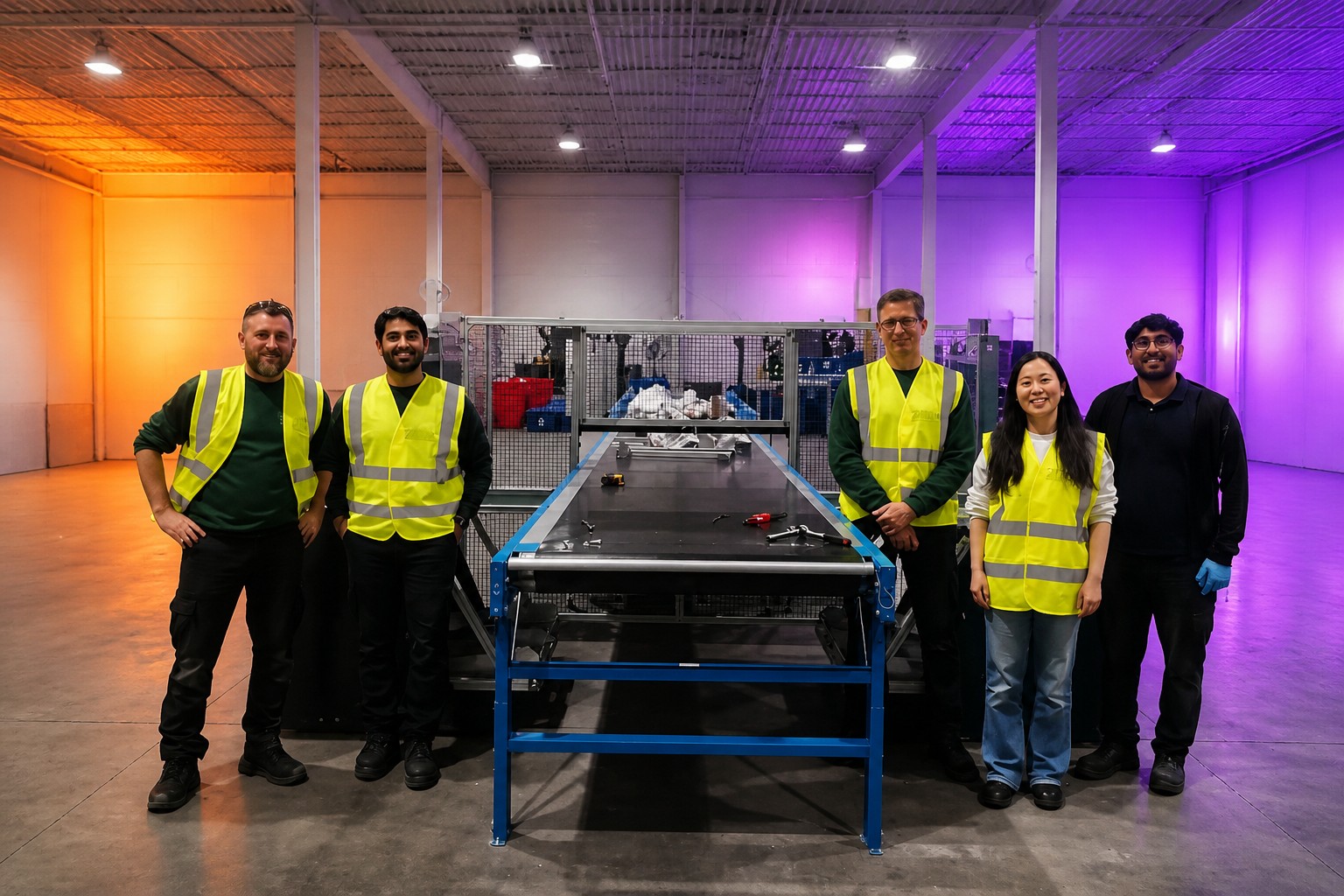
A different approach to the sorting line
H.E.R.O. uses a claw gripper rather than the vacuum systems offered by some competitors, including Glacier and RecycleEye. Danu Robotics says its main distinction is software: it applies AI to improve the system continuously.
The company has letters of interest from two large customers and more than 200 potential customers in its sales pipeline. Those figures suggest demand, but they are not the same as deployments or signed business. The $500,000 in contracts is the clearest evidence so far that customers are willing to pay.
The financial case depends on what a robot can recover. Danu Robotics founder Ma estimates that one installation could generate an additional $485,000 a year for a facility. The upfront investment would be $160,000, with annual maintenance of $24,000. Ma says H.E.R.O. will cost less and work more effectively than competing systems.
Ma’s interest in the problem began while she was a software developer at a London bank. The office had separate bins for different kinds of waste, but she once saw their contents sent to the same general waste stream. She concluded that recycling often depended on people sorting waste by hand, and that technology could make the process more effective.
Beyond recycling plants
Danu Robotics’ next task is to make H.E.R.O. more durable, compact and versatile. Ma sees a portable version working in places such as events, shopping centers, hospitals and airports, sorting waste where it is produced rather than at a dedicated facility.
I think the expansion opportunity is less proven than the economics at a sorting center. A recycling facility already has a direct financial reason to recover materials; the announcement does not say how the robot would be paid for, or what performance it would deliver, in a hospital or airport. That is the gap between a machine designed for a defined workflow and a product meant to travel across many settings.
Danu Robotics will take part in Startup Battlefield 200 at TechCrunch Disrupt, held October 13–15 at Moscone Center in San Francisco. The immediate test is whether the contracts and sales pipeline turn into installations—and whether the recovery value holds up outside the founder’s estimate.
Daily AI news
Every day we pick what actually matters in AI and explain it plainly — no hype, no filler. Subscribe if you want to follow where the industry is going.
Only what matters — every day
Follow on X