
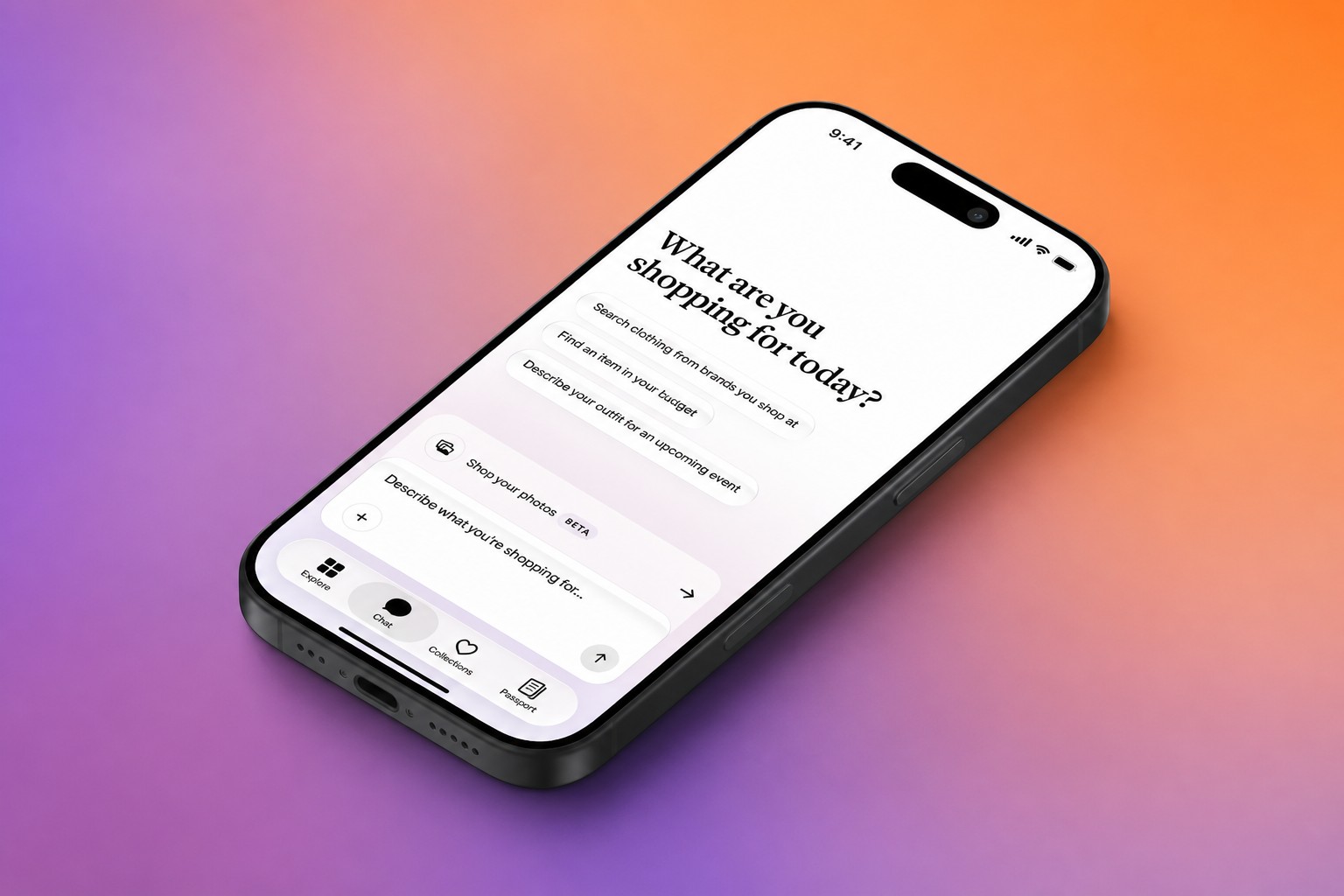
Daydream, a fashion shopping app that launched last year, has added two features built on Apple Intelligence. Users can open a photo from the Photos app inside Daydream and have the service break the outfit into individual pieces and match them against its catalogue. And they can search Daydream through Siri, by voice or typed text, without opening the app at all. Both features move the moment of discovery off Daydream's own screen and onto Apple's.
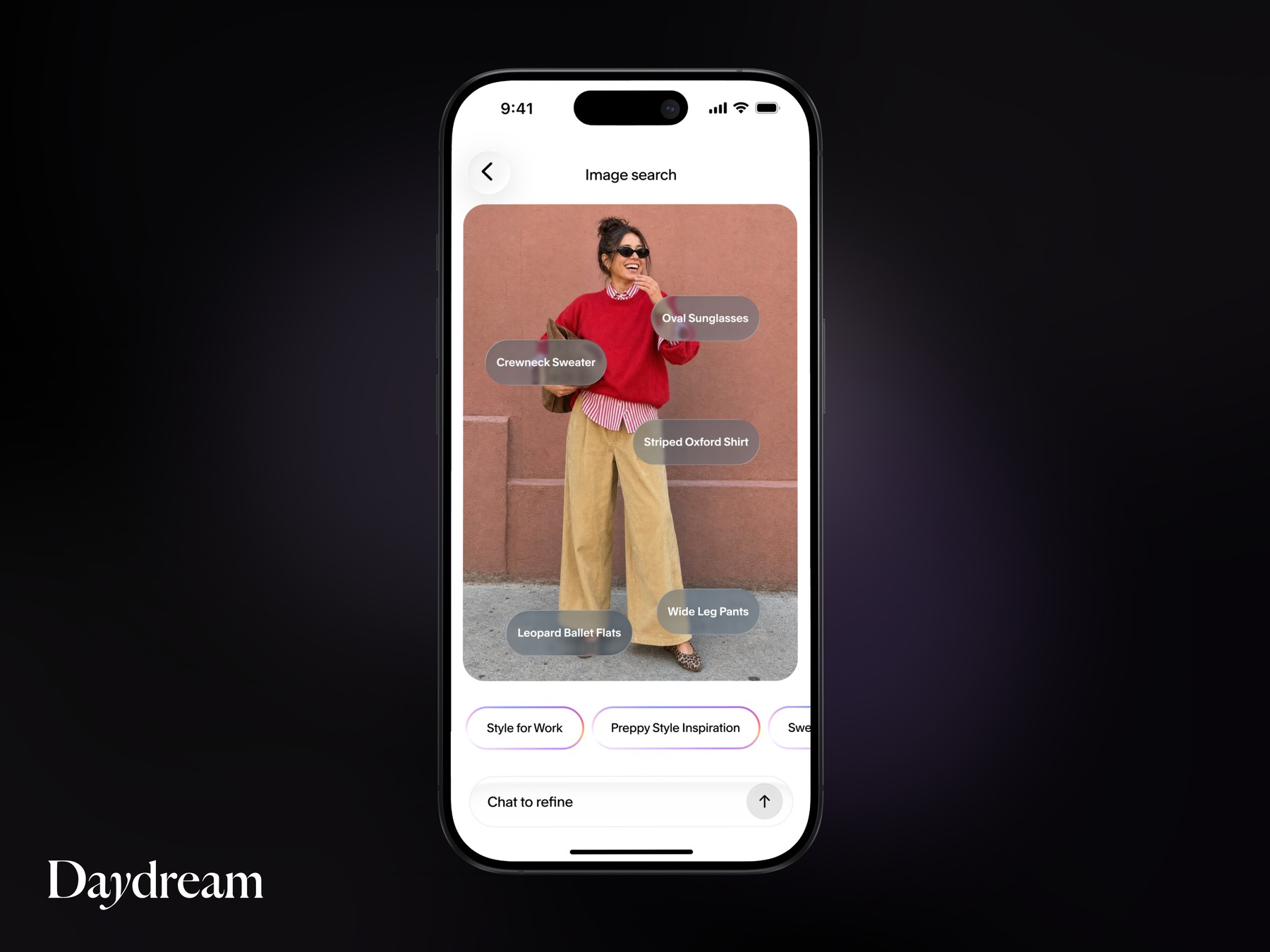
The photo feature uses Apple's image-context recognition, and the intended starting point is a screenshot — an outfit saved from Instagram or Pinterest. Daydream picks out the sweater, the trousers, the shoes and the accessories in the frame and matches each against products in its selection. If an item is still being sold, the app can find a store where it is available. If it has sold out, Daydream offers similar options instead.
Source: techcrunch.com
It also handles modifications to what it finds. A user who likes the sweater in the photo but wants it in red can say so, co-founder and chief executive Julie Bornstein told TechCrunch.
The Siri feature is the more ambitious of the two. A user can ask Siri to find them a blazer in Daydream for a business meeting next Monday, and Daydream returns personalised results. Personalisation depends on the Style Passport profile — clothing size, favourite brands, personal style and budget — which is to say the results are only as good as the onboarding the user bothered to complete.
Daydream says more than 1.5 million shoppers use the app, browsing products from over 325 retailers and 10,000 brands, including Anthropologie, Dolce & Gabbana, Uniqlo, J.Crew, Reformation, Gucci and Nordstrom. It joins a growing field of AI product-search tools that already includes Google and Amazon, along with smaller companies such as Onton and Alta. Bornstein's argument against the incumbents is a supply argument, not a model one: many visual search tools do not understand fashion well enough, so they return imprecise results, products from little-known or unreliable brands, or links to images from which nothing can actually be bought.
That critique is the most honest thing in the announcement, and it also explains what Daydream is really selling. Identifying a sweater in a photograph stopped being hard some time ago; every large platform can do it. Knowing that this specific sweater exists, is in stock, and can be purchased from a named retailer is a catalogue problem, and catalogues are expensive, slow and unglamorous to assemble. The 325 retailers and 10,000 brands are the asset. The 1.5 million shoppers, next to Google and Amazon, are not.
Which makes the Siri integration a strange bet to celebrate. Daydream describes these features as a step toward a shopping agent that understands a person's style well enough to help across everyday situations rather than inside a single app, and says it intends to push further into on-device intelligence and into the moments when people already find things they like. But an agent that is invoked by saying "in Daydream" to Siri is not the agent — it is a supplier the agent calls. The company has described, with some precision, the product Apple would be best placed to own, and then volunteered to be the inventory layer underneath it.
Nothing in the announcement addresses the part that decides whether any of this works: how many of those 1.5 million shoppers buy anything, and what Daydream earns when they do. Photo-to-product search is a demo that converts well in a video and poorly in a quarter. The catalogue is the moat, the retailer relationships are the revenue, and the two new features are distribution — rented from a platform owner who can end the arrangement, or replicate it, whenever the category looks worth taking.