
The workflow is the product
Many robotics startups begin with a machine or a model and then look for work to give it. Destro took the reverse approach: it built a software layer for logistics that directs robots and tells people what to do.
Founder Manfan Pavar told TechCrunch that Destro’s advantage is partly that it does not manufacture robots. He has a master’s degree in robotics from NYU Tandon and spent about eight years in the United States working in supply chains and robotics. Pavar says the company understands customer problems well and expects to reach positive cash flow by the end of this year.
The use case came into focus through Richard Brunelle, automation director for Yusen Logistics’ U.S. logistics operation. He oversees automation at about 30 U.S. sites, which use fixed systems such as conveyors and sorters and are testing technologies including trailer-unloading robots and autonomous floor scrubbers.
Yusen’s U.K. division has already built a fully autonomous site, and the company is working through a similar plan for the United States. When Brunelle met Pavar, Destro was working on picking and packing: sorting goods into individual orders. Brunelle saw that the same system could address cross-docking, where goods are unloaded from one truck, sorted, and assembled into mixed loads for trucks bound for end customers.
He asked whether Destro could adapt its software to that process. Brunelle said he did not know of other companies working on the problem. Destro decided it could repurpose its tool and took on the work.
One system for people, carts and trucks
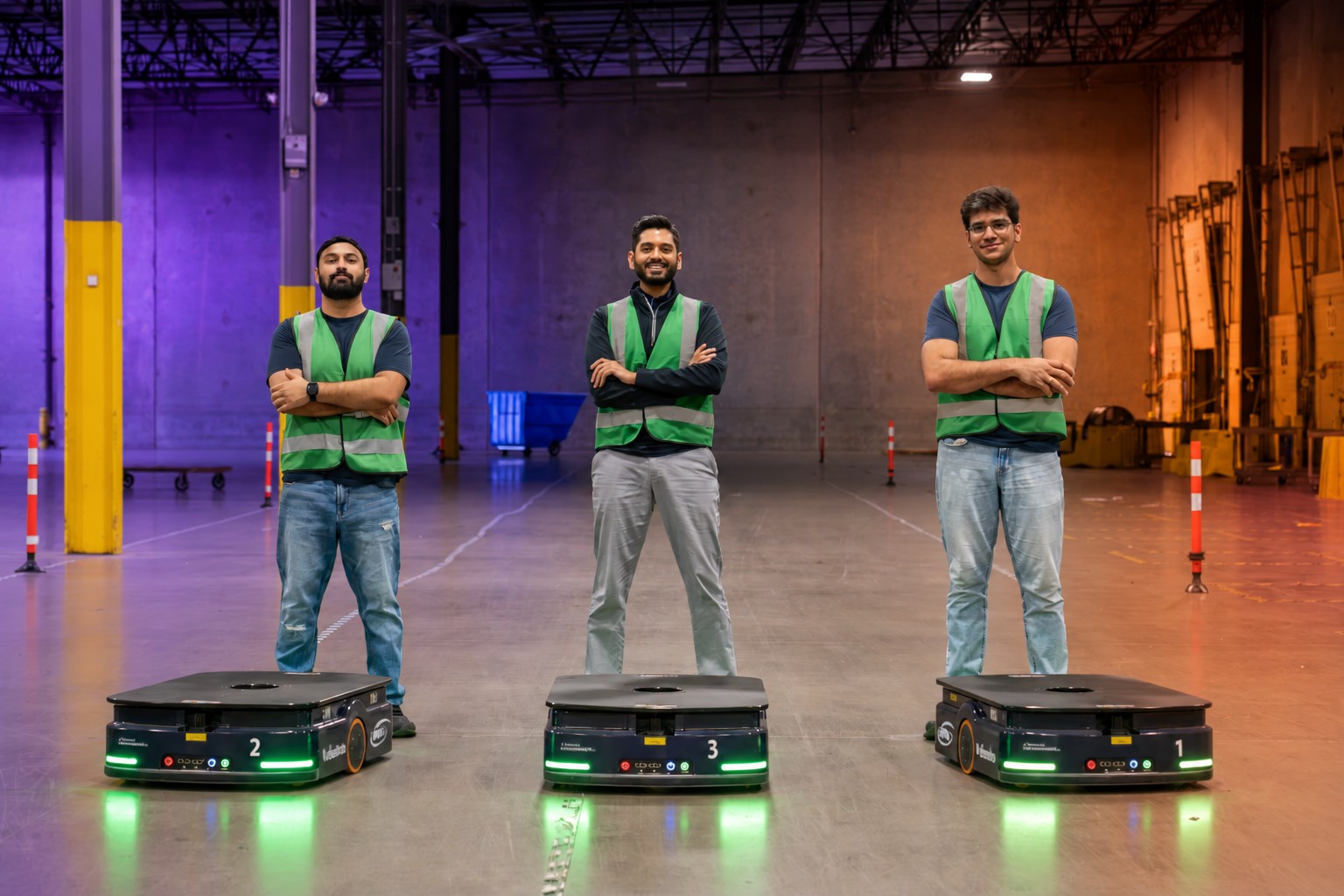
The first pilot launched at a Yusen site in the northwestern United States. It uses three Miva Robotics robots to move carts, controlled by Destro’s Vision operating system. Vision uses open vision-language-action models, which analyze camera images and instructions to control a robot’s movements.
People unload goods from trucks into separate carts. The robots find full carts and move them to the right locations. Brunelle and Pavar say Destro’s Mothership operating system makes the process more efficient by coordinating people, carts and trucks.
Brunelle said the system reduces manual work and eliminates paper-based tracking, organizing the process in one system.
Yusen had also discussed the job with two other large robotics startups, but neither fit its workflow. One robot could move carts between locations but did not manage loading and unloading. Another solution offered fleet-management tools, but left a person responsible for coordinating the whole operation. Yusen chose Destro because it could automate that coordination.
Destro is expanding the initial pilot into a full deployment with 26 robots and starting another pilot at a Yusen site in Southern California with 17 robots. Pavar wants to take the loading and transfer process to thousands of other warehouses doing similar work.
Base10 Partners and Bonfire Ventures led Destro’s seed round, with CoFound Partners also participating.
The hard part is what the software cannot do
I think Destro’s clearest case is not that its software makes robots smarter, but that it can make a whole operation work with the robots available today. That is a more grounded pitch than building a general-purpose machine—but it depends on the software being able to handle the messy exceptions that make warehouse work hard.
The current approach may struggle with tasks that require dexterous movement and object manipulation. General-purpose robot bodies and open-source models have not yet shown they can manage those tasks. It is also unclear whether companies building foundation models, dexterous robotic hands or general-purpose humanoids will offer their technology to Destro—or try to take over the market themselves.
Pavar argues that Destro can build value on top of advances in AI models and robot components, treating them as platforms for a more complex operational layer. For now, the more immediate test is whether customers can make that layer work across real sites and processes.
Brunelle has not found a suitable task for a bipedal humanoid robot, though he is considering a pilot with a wheeled humanoid. Yusen, he said, does not automate simply because a technology looks interesting: it must improve a real operation through greater efficiency, consistency and flexibility, ultimately benefiting customers.
That standard is both Destro’s opening and its constraint: the company can avoid betting on a particular robot, but it still has to prove its coordination layer can deliver measurable value wherever the workflow changes.
Daily AI news
Every day we pick what actually matters in AI and explain it plainly — no hype, no filler. Subscribe if you want to follow where the industry is going.
Only what matters — every day
Follow on X