
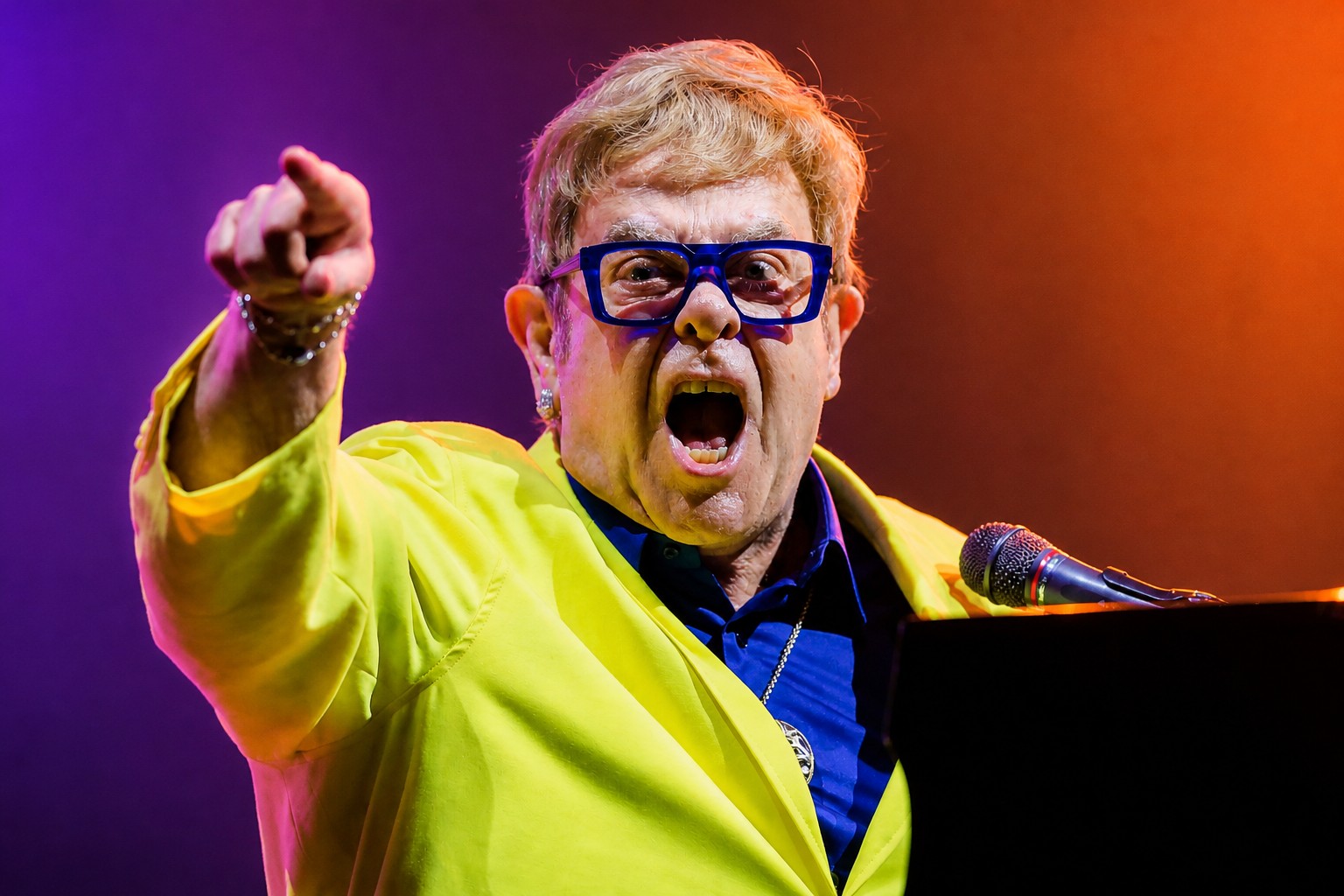
Elton John made a surprise appearance at the 2026 Aria Awards, urging the Australian government to protect musicians’ copyright from AI companies. The singer backed the Not AI’s To Take campaign, which calls on companies to get permission to use creative works to train AI and pay their creators. The campaign brings together organisations from the music, film, television and media industries. Its supporters warn that the copyright changes sought by AI companies could put a creative industry worth A$70 billion and 600,000 jobs at risk.
Elton John backs Australian musicians in dispute with AI companies
What the campaign wants
In a pre-recorded address at Australia’s biggest music event, the British singer urged Anthony Albanese’s government not to allow works by Australian artists to be used without their full consent, and to look after the next generation of musicians. John has long admired the talent and creativity of Australian artists, and hosted the first Aria ceremony back in 1987.
At the ceremony at Sydney’s Hordern Pavilion, Australian musicians Jack River, DOBBY, Josh Pyke and KLP also spoke on behalf of the campaign. Jimmy Barnes, Paul Kelly and Peter Garrett joined the initiative as well; they were among the artists who announced its launch this week.
DOBBY warned that without copyright protections, companies would gain access not only to lyrics and songs by Yothu Yindi, Missy Higgins, Gurrumul and Jimmy Barnes, but also to works by Elton John, Beyoncé and The Beatles. He urged Australia not to become the weak link that lets the rest of the world down.
The campaign is backed by dozens of organisations representing the music industry, writers, publishers, film, television and media. They include News Corp, Foxtel, Seven Media and Guardian Australia. It has also won support from the Australian Recording Industry Association (Aria): on Wednesday, the campaign slogan appeared on a billboard outside Hordern Pavilion.
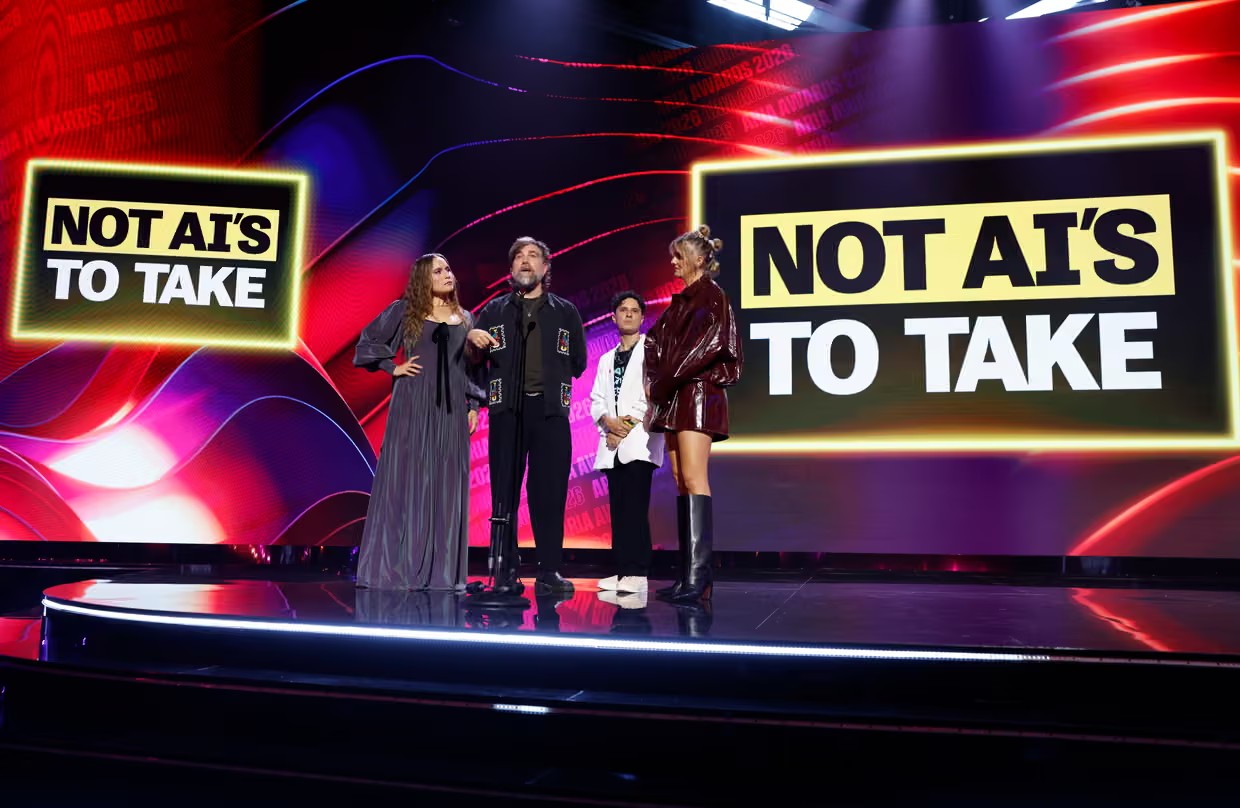
Australian musicians Jack River, Josh Pyke, Dobby and KLP (L-R) address the ceremony on behalf of the Not AI’s To Take campaign Photograph: Brendon Thorne/Getty Images
Source: theguardian.com
Greens senator Sarah Hanson-Young said parliament should take note that representatives of The Guardian and News Corp, along with Peter Garrett, were backing the same position.
How musicians explain their position
On the Aria red carpet, musician Ben Lee told Guardian Australia that people should not be allowed to use someone else’s intellectual property without limits — for example, by filming a movie inside a cinema. In his view, corporations should be subject to the same laws: if AI companies want to train models on Australian music, they should pay its creators.
Rapper Miss Kaninna told Guardian Australia that the government cares about billionaires, not artists. She also called for more money and time to be invested in music programmes for local communities, including low-income communities, and for support for the Australian music industry, which she described as being on the brink.
Other musicians spoke about AI’s impact at the ceremony. Joff Bush, composer of the animated series “Bluey”, thanked the real people who worked on its soundtrack after winning the Best Children’s Album award. Tim Minchin spoke up for human nature in all its imperfection, vulnerability and hope. He said art helps people reach out to one another and becomes beautiful through human creativity; preserving that means standing up for this view and acting on it. Minchin ended his speech with a crude joke about AI that drew cheers from the audience.
Danny Rogers, co-founder of the Laneway festival, called for urgent action after it won the Best Music Festival award. Original, live music, he said, depends on talented, dedicated and creative people. Rogers warned that the improper use of AI poses a real threat to the industry, and that change could come faster than many expect.
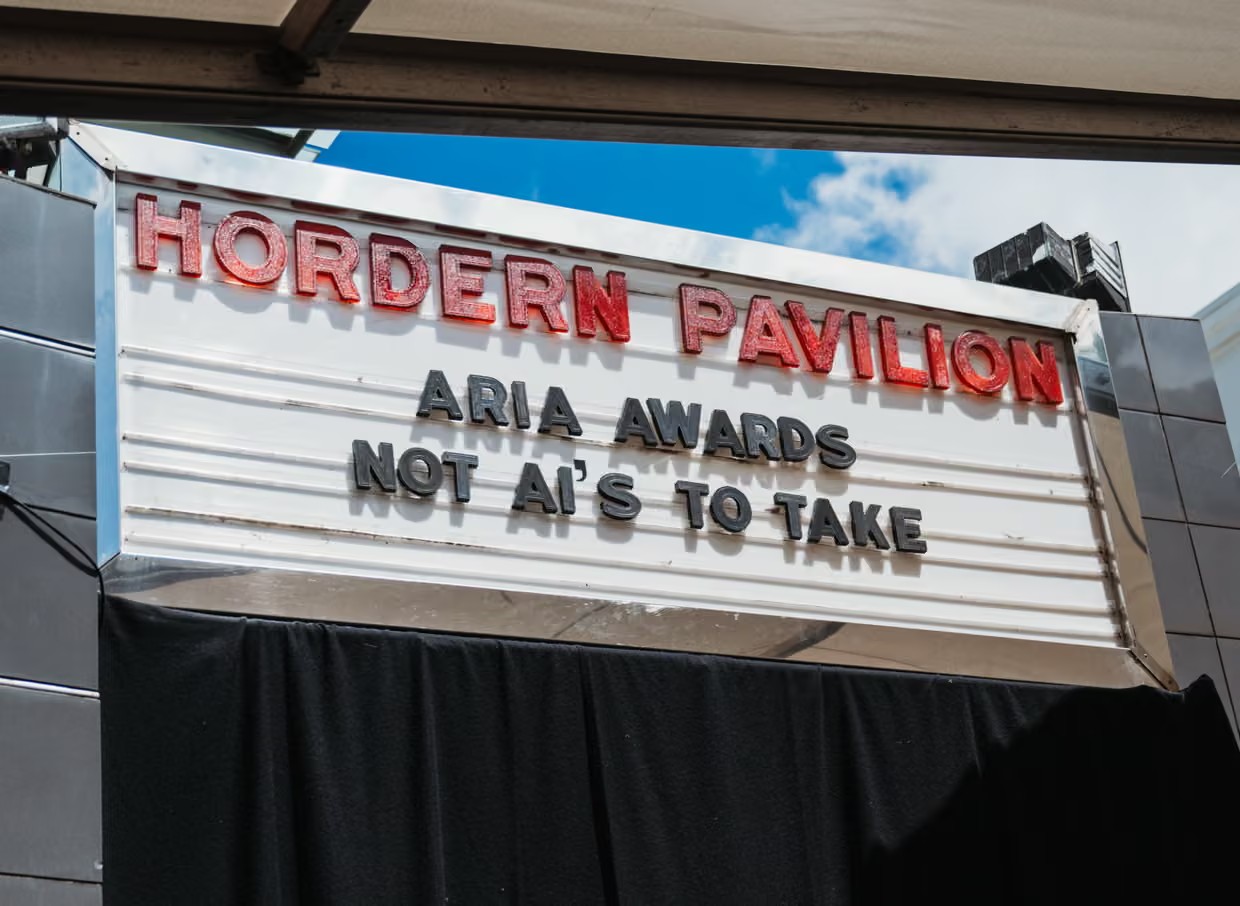
The billboard on Sydney’s Hordern Pavilion on Wednesday. Photograph: Instagram/aria_official
Source: theguardian.com
The dispute over rules and timing
Prime Minister Anthony Albanese previously called it “theft” when creative workers are not paid for their work, and said creators need compensation. Some AI companies, by contrast, argue that current copyright rules make individual licensing agreements difficult to reach. They say they need clarity on copyright to invest and train models in Australia.
Anthropic has proposed an opt-out model for data collection: creative works could be used by default unless the rights holder objects.
A spokesperson for Attorney-General Michelle Rowland told Guardian Australia on Tuesday that the government intends to support creative workers. Any changes to copyright law, the spokesperson said, should give them meaningful control over how their work is used and ensure fair compensation.
The government is expected to introduce a long-delayed package of AI legislation in late 2026 or early 2027. The proposals will cover data centres, online safety, productivity and copyright.
Dataist’s take: the dispute comes down to who controls the use of creative works in AI training, and on what terms. Creators want permission and payment, while some companies are calling for greater legal certainty. The government has so far promised control and compensation, but specific legislative proposals are not expected before late 2026.
Daily AI news
Every day we pick what actually matters in AI and explain it plainly — no hype, no filler. Subscribe if you want to follow where the industry is going.
Only what matters — every day
Follow on X